
Blockchain-Driven Agricultural Finance: The Rise of Tanssi and São Paulo's TerraLogs
The intersection of blockchain technology and agricultural finance is gaining traction in emerging markets, with Brazil's São Paulo state and fintech firm Tanssi leading the charge. Their collaborative initiative, TerraLogs, represents a groundbreaking effort to leverage institutional-grade blockchain solutions for rural development. This analysis explores the implications of this project, the broader adoption challenges in emerging markets, and why investors should pay attention to this nascent but promising sector.
TerraLogs: A Case Study in Institutional-Grade Blockchain Adoption
São Paulo's TerraLogs program, set to launch in December 2025, is a blockchain-based microloan initiative targeting small-scale rural producers. The program offers loans of up to R$15,000 (approximately $2,800) via a mobile app and physical payment terminals, with Tanssi's private blockchain underpinning the infrastructure. This choice of technology is strategic: unlike public blockchains, which face issues like unpredictable fees and network congestion, Tanssi's private blockchain ensures predictable transaction costs and system reliability.
The project builds on a successful 2023 pilot in Santo Antônio da Alegria, where a closed token system distributed municipal aid while restricting fund usage to specific goods and services. This prior success demonstrates the viability of blockchain for public financial management, particularly in contexts where transparency and accountability are critical. For São Paulo, a state representing nearly 40% of Brazil's GDP, TerraLogs could serve as a scalable model for rural credit systems in emerging markets.
Why Institutional Adoption Matters in Emerging Markets
Blockchain's potential in agricultural finance lies in its ability to address systemic inefficiencies. Traditional systems in rural areas often suffer from fragmented data, lack of trust, and high transaction costs. By digitizing documentation and enabling real-time transaction tracking, blockchain reduces friction and fraud while enhancing traceability. For instance, smart contracts can automate loan disbursements and repayments, minimizing the need for intermediaries and lowering operational costs.
However, institutional adoption remains a hurdle. A 2025 study on blockchain in emerging markets highlights challenges such as inadequate digital infrastructure, inconsistent regulatory frameworks, and high implementation costs. São Paulo's partnership with Tanssi circumvents some of these barriers by using a private blockchain tailored to public-sector needs. This hybrid approach balances decentralization with control, a critical factor for governments wary of ceding oversight to public networks.
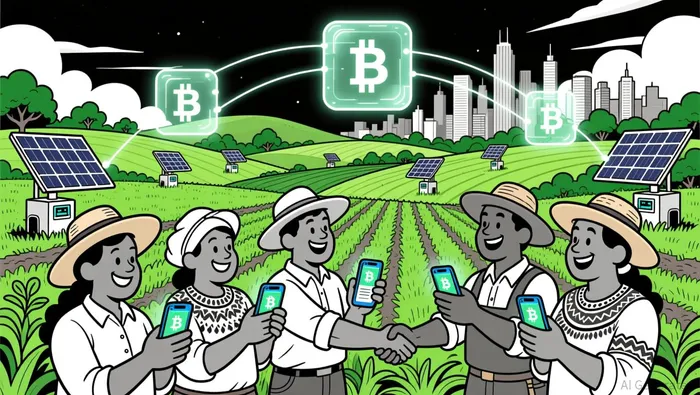
The Bigger Picture: Blockchain as a Catalyst for Rural Development
The TerraLogs initiative aligns with global trends in blockchain adoption for agriculture. Companies like Walmart and Carrefour have already deployed blockchain to track food supply chains, improving transparency and consumer trust. In emerging markets, where smallholder farmers often lack access to formal credit, blockchain-based microloans could democratize financial services. By creating immutable records of transactions and repayment histories, these systems enable lenders to assess creditworthiness more accurately, reducing risk.
Moreover, blockchain's role in fostering a circular economy and supporting decentralized autonomous organizations (DAOs) in agriculture suggests long-term transformative potential. For São Paulo, TerraLogs is not just a fintech experiment-it's a step toward redefining how rural economies interact with digital infrastructure.
Investment Implications and Future Outlook
For investors, the TerraLogs project underscores the growing institutional interest in blockchain for real-world applications. Tanssi's collaboration with São Paulo validates the company's technology in a high-stakes environment, potentially attracting further partnerships in other emerging markets. However, scalability will depend on addressing challenges like interoperability with existing financial systems and securing regulatory buy-in.
The future of blockchain in agricultural finance may hinge on standardization and cost reduction. As platforms mature and public-private partnerships strengthen, we could see a proliferation of similar initiatives in regions like Southeast Asia and Africa, where rural populations are underserved by traditional banking. For now, São Paulo's TerraLogs stands as a proof of concept-a beacon for how blockchain can bridge the gap between institutional finance and grassroots economic development.







Comentarios
Aún no hay comentarios