
Blockchain-Based Entertainment Ticketing in Asia: A Lucrative Investment Opportunity Amid Rapid Digitalization
The global event ticketing industry is undergoing a seismic shift, driven by blockchain technology's ability to combat fraud, streamline transactions, and enhance user engagement. Nowhere is this transformation more pronounced than in Asia's emerging markets, where rapid digitalization, surging event demand, and integration with local payment systems are creating a fertile ground for blockchain-based solutions. For investors, this represents a high-conviction opportunity in a sector projected to grow at a blistering pace over the next decade.
Market Growth: A Perfect Storm of Demand and Innovation
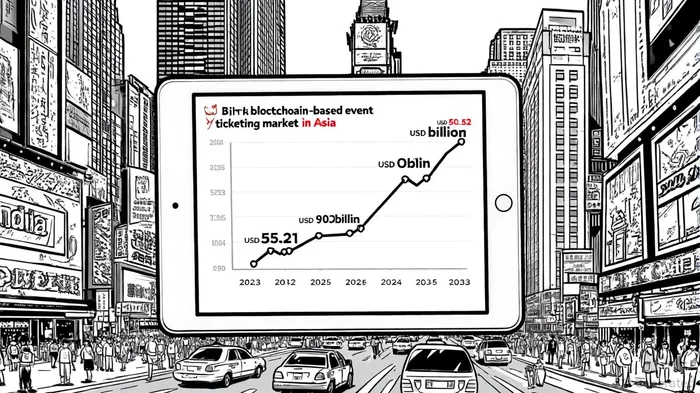
Asia-Pacific is poised to dominate the blockchain-based ticketing market, with the region's event ticketing system market valued at USD 55.21 billion in 2024 and projected to reach USD 90.52 billion by 2033, growing at a compound annual growth rate (CAGR) of 6.67% [3]. This trajectory is further accelerated by a 61.8% CAGR from 2025 to 2030, as blockchain adoption outpaces traditional systems in countries like India, China, and Southeast Asia [3]. The surge is fueled by a 25% annual increase in concerts, sports events, and cultural festivals, coupled with rising smartphone penetration (now exceeding 70% in markets like Indonesia and Vietnam) and the integration of blockchain with local payment gateways such as UPI, Alipay, and WeChat Pay [3].
The global blockchain-based ticketing market, meanwhile, is forecasted to expand from USD 52.18 billion in 2024 to USD 99.31 billion by 2032, with Asia-Pacific accounting for a disproportionate share of growth due to its tech-savvy population and regulatory experimentation [5]. Notably, blockchain's ability to reduce fraud by up to 60% in the next five years is a critical differentiator, addressing a systemic pain point that has plagued traditional ticketing for decades [2].
Case Studies: From NFT Ticketing to Hybrid Systems
Asia's emerging markets are already showcasing blockchain's potential through pioneering platforms and events. SeatLabNFT and GUTS Tickets, for instance, have deployed NFT-based systems that combine tamper-proof ticketing with dynamic engagement features such as exclusive content, virtualCYBER-- meet-and-greets, and tiered loyalty rewards [1]. In March 2025, a major UK music festival issued 150,000 NFT tickets via SeatLabNFT, leveraging smart contracts to cap resale prices and automate royalty distribution to artists—a model now being replicated in South Korea's K-pop concerts and Japan's e-sports leagues [3].
The Southeast Asia Blockchain Week (SEABW) 2025 in Bangkok exemplifies the region's strategic embrace of blockchain. The event, which drew investors, developers, and policymakers, highlighted how NFT ticketing can foster transparency and collaboration in large-scale gatherings [4]. Similarly, the Sacramento Kings' 60% reduction in ticket fraud after adopting NFT ticketing underscores the technology's scalability and effectiveness [1].
Hybrid systems that blend blockchain with traditional ticketing are also gaining traction. Platforms like YellowHeart enable seamless integration, allowing event organizers to leverage blockchain's security without overhauling existing infrastructure [1]. This pragmatic approach is critical in markets where regulatory clarity and consumer adoption vary widely.
Technological Synergies and Scalability Solutions
Blockchain's integration with complementary technologies is further amplifying its appeal. AI-driven analytics optimize pricing and demand forecasting, while IoT-enabled sensors verify attendance in real time, reducing counterfeit risks [4]. Scalability—a historical weakness of blockchain—has been addressed by Layer 2 solutions like Polygon and Optimism, which slash transaction costs and processing times, making mass-market adoption feasible [3].
Challenges and the Path Forward
Despite the optimismOP--, hurdles remain. Regulatory uncertainty, particularly in China and India, could stifle innovation if governments impose restrictive frameworks on NFTs and decentralized systems. Additionally, consumer education is needed to demystify blockchain's benefits, especially in less digitally mature markets. However, the rapid development of user-friendly interfaces and partnerships with local payment providers are mitigating these risks.
For investors, the key is to target platforms with proven traction in Asia's high-growth corridors. NFT ticketing platforms with a 30% CAGR projection [4] and blockchain-as-a-service (BaaS) providers enabling event organizers to deploy decentralized systems without technical expertise are particularly compelling.
Conclusion: A High-Conviction Bet in a Disruptive Sector
Asia's blockchain-based event ticketing market is not just a niche innovation—it's a systemic reimagining of how value is exchanged in entertainment and events. With a confluence of digital infrastructure, cultural demand for immersive experiences, and technological maturation, the region offers a unique window for investors to capitalize on a sector poised to redefine its industry. As the lines between physical and digital events blur, blockchain is proving to be the ultimate infrastructure for trust—a commodity no event organizer can afford to ignore.






Comentarios
Aún no hay comentarios