
Blockchain and AI Level Playing Field for SMEs in Global Trade
Ant Group Chairman Eric Jing has outlined a vision for the future of financial services, emphasizing the role of blockchain smart contracts and artificial intelligence in addressing challenges related to equitable income distribution and empowering small and medium enterprises (SMEs). Speaking at the Singapore FinTech Festival on November 14, 2025, Jing highlighted how layered and collaborative intelligent agent systems could benefit from transparent, automated solutions to allocate rewards fairly based on contributions.
Jing proposed that blockchain-based smart contracts could serve as a foundational tool to ensure transparency and fairness in these systems. When multiple intelligent agents collaborate on tasks, determining how to distribute earnings proportionally remains a key hurdle. By leveraging blockchain infrastructure, income generated from services—such as payments or digital commerce—could be automatically and equitably split among participants in real time. Jing noted that digital currency integration could further enhance this model, enabling seamless, trustless transactions without intermediaries.
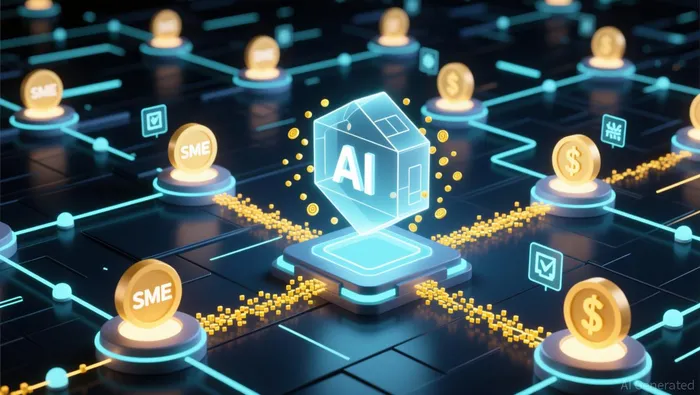
Beyond blockchain, Jing underscored Ant Group's commitment to democratizing AI for SMEs, positioning the technology as a critical enabler for global competitiveness. At the Singapore event, he described AI-powered tools as virtual CFOs and COOs for small businesses, streamlining operations in complex international trade environments. Antom, the company's merchant services arm, has already deployed AI-driven solutions like Antom Copilot, which reduces payment integration time by over 90% and improves chargeback resolution efficiency. The firm also launched EPOS360, a unified platform combining point-of-sale systems, payments, and lending to help micro and small enterprises scale operations.
Public-private collaboration, particularly with regulatory bodies like Singapore's Monetary Authority (MAS), was another focal point. Jing praised MAS's regulatory sandboxes for fostering innovation while managing risks, citing initiatives like Project Guardian and PathFin.ai as exemplary partnerships. Project Guardian, which explores tokenized money and cross-border settlements, demonstrates how blockchain can facilitate real-time, transparent transactions for SMEs engaged in global trade. Meanwhile, PathFin.ai collaborations have advanced AI models, including Ant International's Falcon Time-Series Transformer, which improves cash flow forecasting and reduces hedging costs in volatile markets.
Jing's remarks align with broader trends in China's AI landscape, where firms like Alibaba and Huawei are accelerating their own AI-driven initiatives. Alibaba's Qwen app, for instance, has already surpassed 10 million downloads since its relaunch, reflecting growing consumer and business demand for agentic AI tools. However, Jing emphasized that regulatory clarity and collaboration remain essential to responsibly scale these technologies while mitigating risks such as algorithmic bias or market manipulation.







Comentarios
Aún no hay comentarios