
Blockchain Adoption in Traditional Banking: Strategic Partnerships as the Catalyst for Financial Infrastructure Modernization
The financial sector is undergoing a seismic shift as traditional banks increasingly adopt blockchain technology to modernize infrastructure, driven by strategic partnerships with fintechs and blockchain entities. From 2023 to 2025, these collaborations have transformed speculative experimentation into operational necessity, addressing inefficiencies in cross-border payments, asset tokenization, and compliance while aligning with evolving regulatory frameworks.
Strategic Partnerships: Bridging Legacy Systems and Innovation
Traditional banks are no longer viewing blockchain as a disruptive threat but as a strategic tool to enhance competitiveness. JPMorgan ChaseJPM--, for instance, partnered with OnDeck Capital to streamline small business lending using FinTech platforms, enabling faster loan approvals and expanding customer access, according to a systematic review. Similarly, HSBC's commitment to tokenizing $20 billion in assets by March 2025-alongside its blockchain-based deposit service in Hong Kong-demonstrates how institutions are leveraging distributed ledger technology (DLT) to reduce costs and improve transparency, as detailed in Why Traditional Banks Must Embrace Blockchain.
These partnerships are not limited to transactional efficiency. JPMorgan's Kinexys platform, which processed its first commercial transactions in 2024, exemplifies blockchain's viability in cross-border payments and foreign exchange settlements, as noted in the Anaptyss analysis. By integrating blockchain, banks can bypass intermediaries, cut settlement times from days to minutes, and reduce fraud risks. For example, Ripple's collaborations with banks on blockchain-based payment networks have enabled real-time, secure transactions, positioning DLT as a cornerstone of global financial infrastructure, according to a Ripple report.
Regulatory Clarity: A Catalyst for Institutional Adoption
Regulatory uncertainty historically hindered blockchain adoption, but 2024–2025 saw significant clarity. The European Union's Markets in Crypto-Assets (MiCA) regulation and streamlined U.S. oversight-such as the removal of prior approval requirements for crypto activities-have created a conducive environment for institutional participation, as discussed in the Anaptyss article. In the UK, Fnality International's blockchain-based payment network is nearing implementation, designated as a systemically important payment system by the Treasury, a development also noted in the Ripple report.
New York's Department of Financial Services further underscored this shift by mandating banks engaged in cryptocurrency activities to deploy blockchain analytics tools for compliance, a requirement highlighted in the Anaptyss piece. Such measures address risk management concerns while encouraging innovation. As noted by the systematic review, blockchain is projected to contribute significantly to global GDP by 2025, with the financial sector leading the charge.
Case Studies: Operational Transformation and New Financial Products
Blockchain's impact extends beyond cost reduction to enabling novel financial services. Hitachi's use of Hyperledger Fabric to streamline contract management across thousands of suppliers highlights how DLT enhances supply chain transparency and security, a use case examined in the Anaptyss article. Similarly, Trust Your Supplier's collaboration with IBM reduced supplier onboarding times by 70% and cut verification costs by 50%, showcasing blockchain's role in risk mitigation, as reported by the same Anaptyss analysis.
In trade finance, the Marco Polo Network's blockchain solution automated smart contracts, eliminating intermediaries and enabling secure, transparent transactions between exporters and importers-another case detailed in the Anaptyss piece. Renault's blockchain-based compliance platform further illustrates the technology's potential to ensure component traceability and regulatory adherence, reducing costs by millions annually, according to the Anaptyss coverage.
Challenges and the Road Ahead
Despite progress, challenges persist. Scalability, energy consumption, and cross-chain interoperability remain technical hurdles, while talent shortages in blockchain development hinder adoption, as the systematic review documents. However, institutions are investing in API-first architectures and upskilling programs to address these gaps, according to the Anaptyss analysis.
Looking ahead, the synergy between banks and blockchain will likely accelerate. By 2025, 90% of U.S. and European banks are actively exploring DLT, with global spending reaching $19 billion annually, estimates reported in the Anaptyss piece. Stablecoin transaction volumes, which hit $700 billion monthly in early 2025, signal growing reliance on blockchain for faster, cheaper transactions, per the Ripple report. Central bank digital currencies (CBDCs), such as China's digital yuan, further underscore the urgency for traditional banks to integrate blockchain to remain relevant, a point emphasized in the Anaptyss coverage.
Conclusion
Blockchain adoption in traditional banking is no longer a speculative endeavor but a strategic imperative. Through partnerships with fintechs and blockchain entities, banks are modernizing infrastructure, reducing costs, and unlocking new revenue streams. As regulatory frameworks mature and technological barriers diminish, the integration of DLT will redefine financial services, creating a hybrid ecosystem where traditional and decentralized systems coexist. For investors, this transition represents a transformative opportunity to capitalize on the next wave of financial innovation.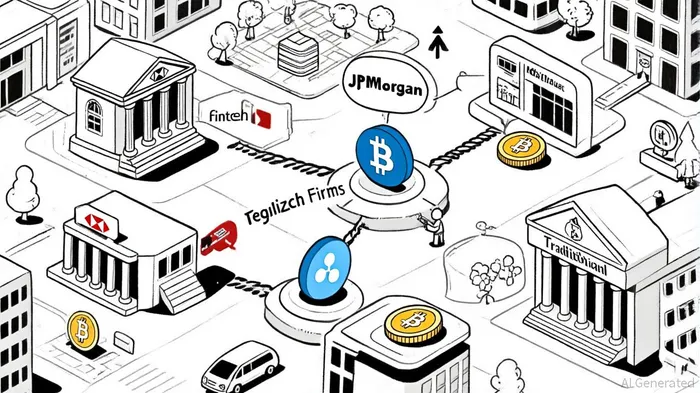







Comentarios
Aún no hay comentarios