
Blink Charging's Strategic Turnaround and Expansion in the EV Charging Market: Navigating Restructuring and Growth in a High-Stakes Industry
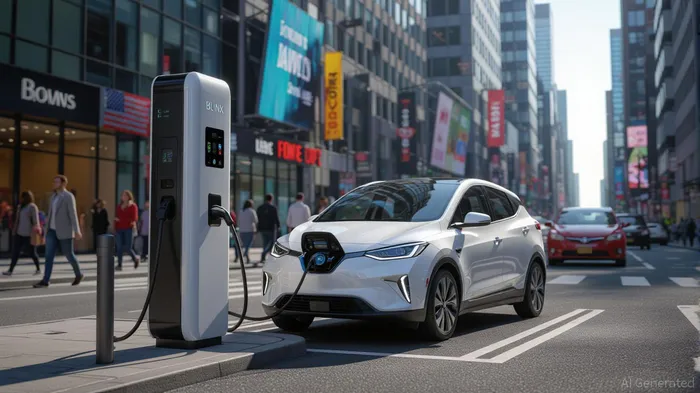
The electric vehicle (EV) charging industry is at a pivotal inflection pointIPCX--, driven by surging demand for sustainable transportation and aggressive policy support. Blink Charging Co.BLNK-- (NASDAQ: BLNK) has positioned itself as a key player in this transformation, but its path to profitability has been anything but smooth. Over the past year, the company has undertaken a bold strategic overhaul, including aggressive cost-cutting, strategic acquisitions, and a pivot toward high-margin service revenue. This article examines Blink's operational restructuring, recent M&A activity, and its potential to capitalize on the explosive growth of EV infrastructure.
Operational Restructuring: A Double-Edged Sword
Blink's restructuring efforts, dubbed the “BlinkForward” initiative, have been both a necessity and a calculated risk. In 2024, the company announced a 14% global workforce reduction, followed by a more aggressive 20% cut in May 2025. These moves are expected to generate annualized savings of over $11 million, though they come with upfront costs of $1–1.5 million in severance and restructuring expenses. The goal is clear: streamline operations, reduce cash burn, and build a leaner, more agile organization.
The financial results reflect the mixed outcomes of this strategy. Q1 2025 saw a 45% revenue drop to $20.8 million, driven by a sharp decline in product sales, while service revenue grew 35% to $6.8 million. By Q2 2025, total revenue had rebounded 38% sequentially to $28.7 million, but gross margins plummeted to 7% from 32% in Q2 2024. The company also reported a $32 million net loss in Q2, largely due to $16.5 million in one-time charges. However, BlinkBLNK-- reduced operating expenses by 22% year-over-year, cutting $8 million in annualized costs through compensation reductions and operational efficiencies.
While the restructuring has improved cost discipline, it raises questions about the long-term impact on innovation and employee morale. The EV charging market is highly competitive, and Blink's ability to maintain its technological edge while cutting costs will be critical.
Strategic M&A: Bolstering Capabilities and Market Reach
Blink's recent acquisitions and partnerships have been pivotal in reshaping its business model. In July 2025, the company acquired Zometriq, a firm specializing in AI-driven fleet management software and interoperable AC Level 2 chargers. This move addresses a key gap in Blink's portfolio, particularly in price-sensitive markets like fleets and multifamily housing. Zometriq's advanced load management capabilities also position Blink to reduce infrastructure costs for customers, a differentiator in an industry where grid integration is a major challenge.
Equally significant is Blink's partnership with Axxeltrova Capital in the UK, structured as a £100 million Special Purpose Vehicle (SPV) to accelerate growth under the Local Electric Vehicle Infrastructure (LEVI) program. This non-dilutive capital model allows Blink to expand its UK footprint without equity financing, preserving margins and enhancing financial flexibility. The SPV is a masterstroke in a capital-intensive industry, enabling rapid deployment of EV chargers while minimizing risk.
Blink has also expanded its international presence through partnerships like the one with Group Bernaerts, a Belgian office property company. By the end of 2025, Group Bernaerts aims to double its Blink chargingBLNK-- stations from 88 to 176, underscoring the growing demand for EV infrastructure in multi-tenant environments. These partnerships align with Blink's sustainability goals and reinforce its position in Europe, a market expected to see significant EV adoption in the coming years.
Long-Term Profitability: A Race Against Time
The EV infrastructure market is projected to grow from $7 billion in 2025 to $100 billion by 2040, driven by U.S. policies like the Infrastructure Investment and Jobs Act and the Inflation Reduction Act. Blink's focus on high-margin service revenue—up 46% year-over-year in Q2 2025—positions it to benefit from this trend. The company's owner-operated model, which saw 339% year-over-year growth in revenue from U.S. DC chargers, is a key driver of recurring income.
However, challenges remain. The “chicken-and-egg” dilemma of EV adoption and infrastructure development persists, and Blink's recent financial struggles highlight the need for disciplined execution. The company's cash reserves of $25.3 million as of June 30, 2025, provide some flexibility, but continued losses and high upfront costs for charger installations could strain liquidity.
Investment Implications
Blink's strategic moves—cost-cutting, M&A, and non-dilutive capital partnerships—demonstrate a clear focus on long-term value creation. The company's ability to pivot toward service revenue and leverage AI-driven solutions could differentiate it in a crowded market. However, investors must weigh the risks: execution risks in restructuring, competition from larger players like TeslaTSLA-- and ChargePointCHPT--, and the need for sustained capital investment.
For those with a long-term horizon and a tolerance for volatility, Blink presents an intriguing opportunity. The EV charging market is poised for explosive growth, and Blink's strategic agility could position it as a key player. That said, near-term profitability remains uncertain, and the company's success will hinge on its ability to execute its BlinkForward plan while maintaining technological innovation.
In conclusion, Blink Charging's strategic turnaround is a work in progress. While the path to profitability is fraught with challenges, the company's proactive approach to restructuring, M&A, and market expansion offers a compelling case for investors who believe in the future of EV infrastructure.







Comentarios
Aún no hay comentarios