
Blank-Check Companies and Market Readiness: Assessing Silicon Valley Acquisition Corp's IPO as a High-Risk, High-Reward Opportunity
The SPAC market has long been a double-edged sword for investors. While these blank-check companies offer a shortcut to public markets, their post-merger performance has historically lagged behind traditional IPOs. Silicon Valley Acquisition Corp (SVAQ), a SPAC targeting transformative businesses in fintech, AI, and energy transition, has recently filed for a $200 million IPO[1]. This move positions it at the intersection of a rebounding SPAC market and high-growth sectors, but also exposes it to the inherent risks of speculative capital allocation.
The Investment Thesis: Sectors and Management Expertise
SVAQ's focus on sectors like AI-driven infrastructure, energy transition, and fintech aligns with macroeconomic tailwinds. For instance, AI infrastructure funding in Silicon Valley hit $2.56 billion in April 2025 alone[2], while energy transition projects have benefited from the Inflation Reduction Act's tax credit stackability[3]. The SPAC's management team, led by Dan Nash, brings a track record of executing over $48 billion in M&A and SPAC transactions[4], suggesting a strategic edge in identifying undervalued targets.
However, the SPAC's success hinges on its ability to navigate sector-specific challenges. Energy transition companies, for example, face regulatory uncertainties and financing headwinds exacerbated by the collapse of Silicon Valley Bank (SVB), which previously supported climate-tech startups[5]. Similarly, fintech's growth is constrained by high interest rates and regulatory scrutiny, though AI-native fintech firms continue to outperform legacy players[6].
Market Trends and SPAC Rebound
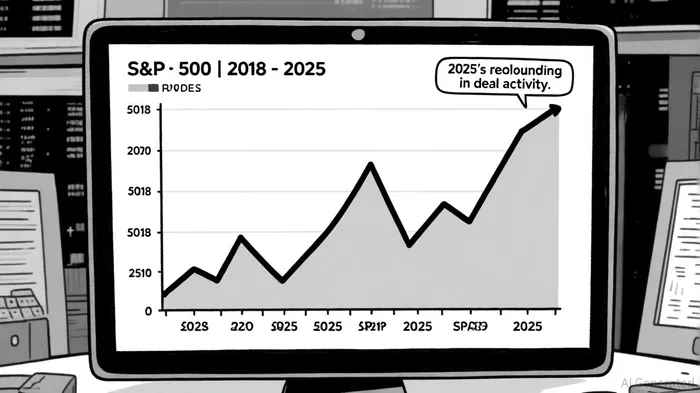
The 2025 SPAC market is showing signs of recovery, driven by central bank rate cuts and improved macroeconomic conditions[7]. Yet, historical data reveals a sobering reality: SPACs have underperformed the S&P 500 by over 50% in most years since 2009[8]. This underperformance stems from inflated valuations, lack of rigorous underwriting, and post-merger operational challenges. For SVAQ, the key question is whether its focus on “transformative” businesses can overcome these systemic risks.
Risks and Mitigation Strategies
SVAQ's investment thesis is not without pitfalls. The energy transition sector, for instance, is vulnerable to stranded assets from phased-out fossil fuel projects and mispriced climate-related risks[9]. Meanwhile, SPACs in general face scrutiny over governance and liquidity, as seen in the EnovixENVX-- merger controversy[10]. To mitigate these risks, SVAQ must prioritize diversification and leverage its management team's expertise in capital markets.
Conclusion: A Calculated Gamble
SVAQ's IPO represents a high-risk, high-reward proposition. While its management team and sector focus offer compelling upside, investors must weigh these against the SPAC's structural weaknesses and sector-specific headwinds. For those with a long-term horizon and appetite for volatility, SVAQ could unlock value in transformative industries. But for risk-averse investors, the historical underperformance of SPACs serves as a cautionary tale.







Comentarios
Aún no hay comentarios