
Blackstone's $25B Pennsylvania Play: How Natural Gas and Data Centers Are Fueling the AI Revolution
Pennsylvania, long synonymous with coal and steel, is now positioning itself as a linchpin of the AI era. Blackstone's $25 billion investment in the state's energy and digital infrastructure—aimed at catalyzing an additional $60 billion in follow-on capital—represents a masterclass in leveraging strategic synergies between two critical assets: abundant, low-cost natural gas and state-of-the-art data centers. The move underscores a bold thesis: the next phase of AI scalability hinges not just on algorithms, but on the physical infrastructure to power them.
The Natural Gas Advantage: Pennsylvania's Secret Weapon
At the heart of this strategy is Pennsylvania's status as a natural gas powerhouse. Producing 20% of the nation's supply, the state offers energy costs that are 30-40% lower than in coastal markets like California or New York. For hyperscalers like AmazonAMZN--, Google, and Microsoft—whose AI models consume energy equivalent to small cities—this is a game-changer.
Blackstone's joint venture with PPLPPL--, a regional utility, will construct gas-fired power plants to supply the relentless energy demands of AI workloads. This isn't just about cost; it's about reliability. Natural gas plants can ramp up or down far more quickly than coal or nuclear facilities, making them ideal for the fluctuating power needs of training AI models.
Blackstone's track record in infrastructure—its portfolio includes toll roads, ports, and renewable energy—suggests confidence in the project's long-term returns.
QTS: Building the AI “Nervous System”
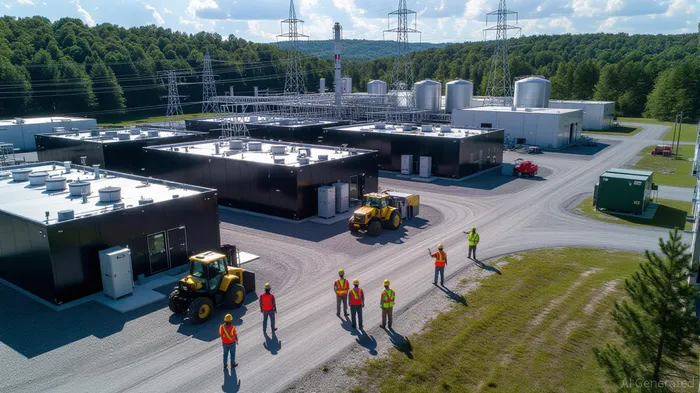
While energy is the fuel, data centers are the nervous system. Partner QTS, the world's largest independent data center operator, is securing prime sites in Northeastern Pennsylvania to build facilities that can handle the exponential growth of AI data. These centers won't just serve hyperscalers; they'll also power smaller firms and even government agencies.
QTS's Request for Information to communities highlights a smart expansion strategy: decentralizing data infrastructure to avoid over-reliance on coastal hubs. This distributed model could reduce latency and redundancy costs—a critical edge as AI applications scale into real-time applications like autonomous vehicles or medical diagnostics.
Job Creation: A Catalyst for Economic Renaissance
The project's 6,000 annual construction jobs and 3,000 permanent roles are more than just numbers. Pennsylvania's manufacturing and energy sectors have been in decline for decades, and the skills overlap—electrical engineering, HVAC, and IT—position this as a retraining opportunity. Blackstone's labor partnerships, including apprenticeships with unions, signal a commitment to long-term community buy-in.
This isn't just about infrastructure; it's about rebuilding a region. The “Fast Track” permitting system and community outreach programs aim to minimize delays, ensuring the first phase breaks ground by late 2028.
Why This Is a Must-Watch Play for Investors
The synergy between energy and data isn't just a Pennsylvania story—it's a template for the AI age. Here's why investors should pay attention:
- Cost Leadership: Companies with access to low-energy data centers will have a structural advantage in AI training costs.
- Regulatory Tailwinds: The U.S. government's push for “onshore” AI infrastructure (to avoid reliance on China's manufacturing) aligns perfectly with Pennsylvania's geography.
- Multipronged Returns: The investment spans both energy infrastructure (gas plants) and digital real estate (data centers), diversifying risk while capitalizing on AI's growth.
For investors, this could mean looking beyond Blackstone's stock to sectors like:
- Energy utilities (e.g., PPL, which is a partner in the venture).
- Data center REITs (e.g., QTS Realty Trust, which is directly involved).
- Regional banks with exposure to Pennsylvania's economic revival.
Risks and Considerations
No infrastructure project is without hurdles. Permitting delays, environmental opposition, and shifts in energy markets (e.g., faster-than-expected renewables adoption) could disrupt timelines. However, Blackstone's ability to fast-track approvals and its deep-pocketed balance sheet mitigate these risks.
Conclusion: A New Era for “Old Economy” States
Blackstone's bet on Pennsylvania flips the script on traditional narratives about the “Rust Belt.” By marrying 21st-century AI needs with 19th-century industrial strengths—energy and labor—the investment could redefine what it means to be a tech hub. For investors, this isn't just about chasing AI trends; it's about backing the physical backbone of the digital revolution.
In a world where AI's growth is constrained as much by energy as by code, Pennsylvania's blend of low-cost power and strategic infrastructure could set the standard. Watch this space—it's where the future of work, energy, and technology collide.





Comentarios
Aún no hay comentarios