
BlackRock's GIP and the $38 Billion AES Takeover: A Strategic Inflection Point for ESG-Aligned Infrastructure
The potential $38 billion acquisition of AESAES-- Corporation by BlackRock's Global Infrastructure Partners (GIP) represents a pivotal moment in the convergence of infrastructure consolidation and ESG-aligned utility investing. As the world grapples with the urgent need to decarbonize energy systems, this deal underscores the growing strategic value of renewable energy assets and the role of institutional investors in accelerating the transition.
Strategic Infrastructure Consolidation: A Catalyst for Scale
BlackRock's GIP, which acquired AES, is part of a broader trend of infrastructure consolidation driven by the need for scale, innovation, and capital efficiency. With over $170 billion in assets under management following its 2024 acquisition of GIP, BlackRockBLK-- has positioned itself as a dominant player in the global infrastructure sector, according to a Reuters report. The AESAES-- deal, valued at $38 billion, would further expand its footprint in renewable energy, a sector critical to meeting corporate and governmental net-zero targets.
AES, a leader in renewable energy solutions, operates a diverse portfolio of wind, solar, and energy storage projects across 15 countries, according to its 2023 sustainability report. Its existing power deals with tech giants like Google, Microsoft, and Amazon highlight its strategic relevance in a market where corporate demand for clean energy is surging, according to Sustainalytics. By acquiring AES, GIP could consolidate its position in the renewable energy value chain, leveraging AES's operational expertise and BlackRock's capital to accelerate project development and scale.
ESG Alignment: Promise and Paradox
The ESG implications of the deal are complex. On one hand, AES's renewable energy projects align with global decarbonization goals. Its 2023 Sustainability Report emphasizes commitments to reducing greenhouse gas (GHG) emissions and improving energy efficiency. However, the company's reliance on coal and natural gas for electricity generation creates a paradox: while it contributes positively to societal infrastructure and tax revenues, its GHG and non-GHG emissions remain significant, according to MarketBeat's sustainability profile. According to The Upright Project, AES's ESG impact is mixed, with notable negative contributions in emissions and human capital management.
BlackRock's ESG strategy, meanwhile, has faced scrutiny. Despite its recent enhancements to sustainability characteristics-such as adding Paris Aligned Benchmark (PAB) exclusions to certain funds-critics argue the firm has retreated from aggressive climate advocacy. A 2024 report by Forbes noted that BlackRock scaled back support for ESG-related shareholder proposals, voting for only 4% of such proposals. This shift reflects broader political pressures in the U.S., where ESG investing has become a polarizing issue.
Yet, the GIP acquisition signals a reengagement with ESG principles. GIP's portfolio includes 21 GW of operating renewable assets and 23 GW under development, according to GIP's ESG numbers, aligning with BlackRock's stated goal of achieving net-zero emissions across its investment portfolio by 2050. The AES deal could amplify this alignment, provided BlackRock prioritizes transitioning AES's fossil fuel assets to renewables.
Challenges and Opportunities in ESG-Driven Utility Investing
The utilities sector is undergoing a seismic shift. A 2025 PwC survey revealed that nearly all North American utilities are increasing ESG spending, though many lag in tying these goals to executive compensation. AES's potential acquisition by GIP could address this gap by injecting capital into ESG initiatives and aligning performance metrics with sustainability outcomes.
However, challenges persist. AES's current ESG risk rating of 6,256 out of 14,380 companies (per Sustainalytics) indicates room for improvement in risk management. Additionally, BlackRock's growing influence over critical infrastructure raises concerns about regulatory oversight and public interest. Advocacy groups like Public Citizen have warned that concentrated ownership could prioritize financial returns over equitable access to energy.
Expert Perspectives: A Mixed Outlook
Industry analysts are divided. Some view the deal as a win for ESG investing, citing the potential for accelerated renewable energy deployment. Others caution that BlackRock's recent retreat from ESG activism-exemplified by its exit from the Net Zero Asset Managers (NZAM) initiative-could undermine long-term climate goals.
FERC's approval of the GIP acquisition under a 2010 blanket authorization highlights regulatory complexities. While this streamlined process facilitated the deal, it also underscores the need for updated frameworks to ensure ESG alignment in infrastructure investments.
Conclusion: A Defining Moment for ESG and Infrastructure
The BlackRock-GIP-AES deal epitomizes the tension between ESG aspirations and the realities of infrastructure investing. While it offers a pathway to scale renewable energy projects and meet corporate sustainability targets, its success will depend on BlackRock's ability to balance political pressures with its climate commitments. For investors, the transaction signals a strategic inflection point: infrastructure is no longer a niche asset class but a cornerstone of the global transition to a low-carbon economy.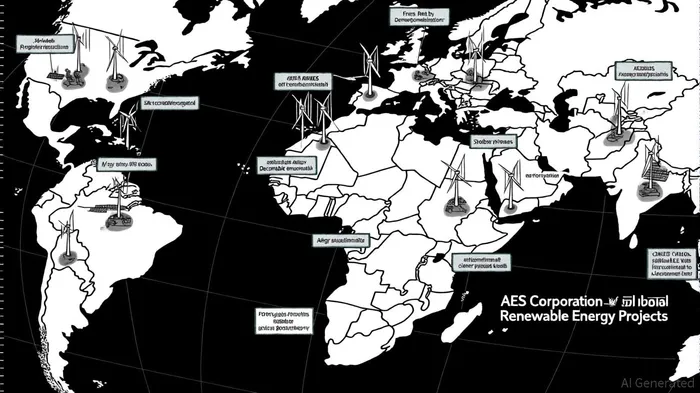







Comentarios
Aún no hay comentarios