
BlackRock's ETF Warning and the Implications of a Bitcoin Flash Crash on Global Crypto Markets
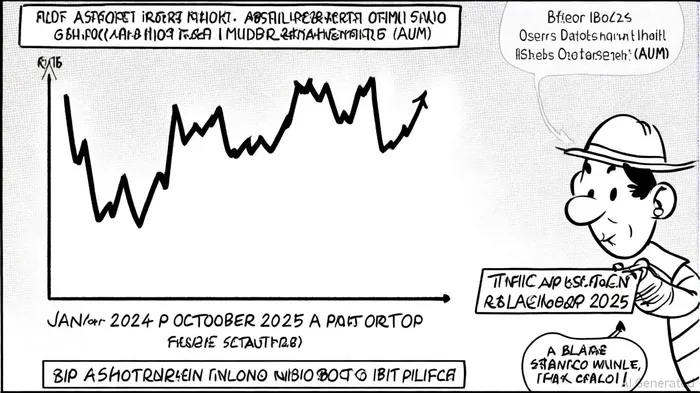
In October 2025, BlackRock's iShares BitcoinBTC-- Trust (IBIT) stood as a titan in the ETF landscape, nearing $100 billion in assets under management (AUM) and dominating 57% of U.S. Bitcoin ETF inflows, as shown in the IBIT rally report. This meteoric rise, driven by institutional adoption and a low 0.25% expense ratio, has positioned Bitcoin as a "strategic asset" within traditional finance, according to 99Bitcoins. Yet, the same month witnessed a harrowing $500 billion crypto market flash crash, triggered by geopolitical volatility and leveraged trading dynamics, exposing systemic risks that even regulated vehicles like IBITIBIT-- cannot fully insulate against, as Forbes warned.
The Dual Edge of ETF Growth
BlackRock's IBIT has become a cornerstone of Bitcoin's institutionalization, with $61.38 billion in cumulative inflows since its January 2024 launch. Its success reflects a broader shift: Bitcoin ETFs now hold 1.296 million BTC, or 6.5% of the total supply, creating a tightly interconnected market where ETF flows directly influence price action, according to WorldCoinIndex. However, this concentration amplifies vulnerabilities. As Bloomberg's Eric Balchunas noted, IBIT's $244.5 million annual revenue underscores its profitability but also highlights the fragility of a market where 70% of trading volume occurs on offshore, unregulated platforms like Binance, a point underscored in Swen LDN's analysis.
The October flash crash-sparked by former President Trump's surprise 100% tariff announcement on Chinese imports-exposed these risks. Leveraged traders faced $19 billion in liquidations within 24 hours, while synthetic stablecoins like USDeUSDe-- depegged by 38%, unraveling DeFi collateral chains, as OneSafe documented. Despite this, IBIT demonstrated resilience, with its price dropping only 3% on October 10 compared to Bitcoin's 13% plunge, according to that coverage. This discrepancy, however, masked deeper issues: ETFs operate on traditional market hours, leaving investors exposed to 24/7 crypto volatility, as Forbes warned.
Systemic Risks: From Quantum Threats to Leverage Feedback Loops
BlackRock's warnings extend beyond immediate volatility. Its updated IBIT prospectus now includes a cautionary note on quantum computing, a speculative but plausible long-term risk that could break Bitcoin's cryptographic security, as Bitcoin.com News reported. While experts debate the immediacy of this threat, the firm's filings also highlight more tangible vulnerabilities: regulatory ambiguities, environmental concerns, and the fragility of blockchain infrastructure (e.g., network forks, private key theft), as BeInCrypto explains.
The October crash further revealed leverage-driven feedback loops. Over 20 public companies use debt-often convertible notes-to fund Bitcoin purchases, creating forced selling pressures during downturns, as the Coinbase warning highlighted. Centralized finance (CeFi) and decentralized finance (DeFi) interdependencies exacerbated the crisis: automated liquidations on DeFi platforms pressured CeFi desks to recall loans, triggering cascading sell-offs, according to CryptoSlate. This interconnectedness raises questions about whether Bitcoin ETFs, despite their regulatory veneer, could act as conduits for systemic risk rather than stabilizers.
Portfolio Resilience: Navigating the New Normal
For investors, the October 2025 crash underscores the need for diversified, hedged strategies. BlackRockBLK-- recommends a modest 1–2% Bitcoin allocation, emphasizing its low correlation with traditional assets, as 99Bitcoins suggested. However, given the asset's volatility, advanced risk management tools-such as dynamic position sizing, options-based hedging, and AI-driven liquidity monitoring-are becoming essential, as Millionero described.
Institutional players are also reevaluating custody and operational resilience. BlackRock's partnership with Anchorage Digital Bank to secure IBIT's holdings reflects a broader trend toward robust infrastructure, as WorldCoinIndex reported. Meanwhile, regulators face mounting pressure to address gaps in ETF arbitrage mechanisms and offshore derivatives oversight, a point raised by one analysis.
Conclusion
BlackRock's IBIT has undeniably transformed Bitcoin's role in global finance, but the October 2025 flash crash serves as a stark reminder: digital assets remain a double-edged sword. While ETFs offer regulated access, they also amplify systemic risks through leverage, interconnectedness, and regulatory blind spots. For portfolios to thrive in this environment, resilience must be engineered-not assumed. As BlackRock's filings caution, the future of Bitcoin investing will demand not just strategic allocation, but a relentless focus on risk mitigation in an era of unprecedented volatility.





Comentarios
Aún no hay comentarios