
Black Economic Empowerment in South Africa’s Financial Sector: A Catalyst for Inclusive Growth and Investment Opportunity
The Black Economic Empowerment (BEE) initiative in South Africa has long been a cornerstone of economic transformation, aiming to redress historical imbalances by promoting equity in ownership, management, and economic opportunities. In the financial sector, BEE-compliant asset managers and insurers are increasingly positioned as engines of inclusive growth, blending social impact with long-term investment potential. While specific financial metrics remain sparse, emerging trends and strategic shifts suggest these entities are not only aligning with national transformation goals but also carving out a compelling narrative for investors seeking both ethical and financial returns.
BEE-Compliant Asset Managers: Growth and Strategic Resilience
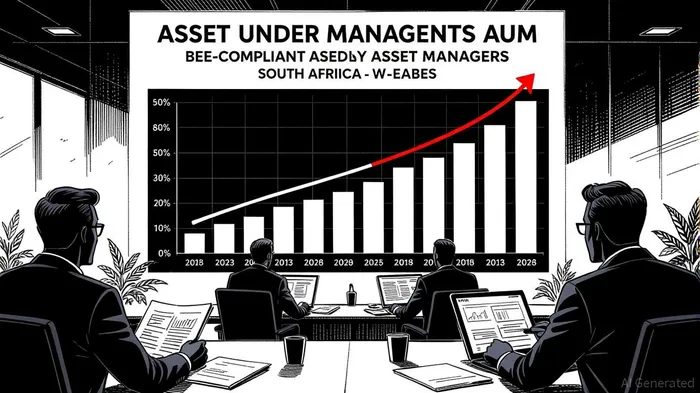
The asset management sector has seen notable progress in BEE alignment. According to the Manager Watch™ Annual Survey 2025 by Alexander Forbes, total assets managed by BEE-compliant asset managers in South Africa grew by 6% from June 2023, with the top 10 managers retaining the largest market share [1]. This growth underscores the sector’s resilience amid macroeconomic volatility. Notably, Coronation, a key player in the space, reported a 2% increase in assets under management (AUM) over the past year, placing it fourth in the rankings [1]. While these figures are modest, they reflect a broader trend of consolidation and strategic focus among BEE-compliant managers.
The sector’s long-term potential is further bolstered by its alignment with global ESG (Environmental, Social, and Governance) trends. For instance, the JSE All Share Index has historically outperformed property and money market investments over 5–15 year horizons [1], suggesting that BEE-compliant managers with equity-focused strategies could deliver competitive returns. However, challenges such as regulatory complexity and limited access to capital for smaller managers remain barriers to scaling.
BEE-Compliant Insurers: Navigating Challenges and Opportunities
The insurance sector, though less data-rich, presents a mixed picture. Santam, Guardrisk, Hollard, and Old Mutual dominate the non-life insurance market, but their collective market share has slightly declined in 2024 amid rising reinsurance costs and the emergence of insurtech startups [1]. Despite these pressures, BEE-compliant insurers are making strides in transformation. The life assurance sector, in particular, has advanced initiatives to improve equity participation and skills development, though gaps persist at junior levels [2].
A critical development is the sector’s pivot toward digital innovation and sustainability. Major banks like Absa and Standard Bank—whose strategies often mirror those of insurers—have reduced credit loss ratios to 89 basis points in 2024 through improved risk management and AI-driven analytics [1]. These innovations, coupled with a focus on climate transition initiatives, position BEE-compliant insurers to attract capital from impact-focused investors. For example, Nedbank’s partnership with Norfund to invest R575 million in Pele Green Energy—a BEE infrastructure project—highlights the sector’s growing role in sustainable finance [1].
Economic Transformation and Investment Potential
The long-term investment appeal of BEE-compliant entities lies in their dual mandate: driving economic inclusion while generating returns. The Department of Trade, Industry and Competition’s support for employee share ownership programmes (ESOPs) illustrates this duality, though their effectiveness remains debated due to liquidity constraints [1]. Nonetheless, the broader B-BBEE policy evolution—shifting from scorecard compliance to systemic transformation—signals a maturing ecosystem where investors can align with structural change.
For asset managers, the focus on equities and ESG integration offers a pathway to outperform traditional benchmarks. Insurers, meanwhile, must navigate regulatory and technological disruptions while leveraging their role in inclusive finance. The recent emphasis on climate resilience and digital transformation—evident in banks’ cloud-based solutions and cybersecurity investments [1]—suggests that insurers with agile, tech-enabled models will be better positioned to capture market share.
Conclusion
While the lack of granular ROI and AUM growth data for BEE-compliant insurers limits immediate quantification of their investment potential, the qualitative and strategic indicators are promising. These entities are increasingly embedded in South Africa’s economic transformation agenda, with their success tied to broader societal goals. For investors, the key lies in balancing short-term data gaps with long-term vision: supporting firms that not only meet BEE criteria but also innovate in areas like sustainability, digital inclusion, and skills development. As the financial sector continues to evolve, BEE-compliant asset managers and insurers may well emerge as pivotal players in building an equitable and resilient economy.
Source:
[1] Manager Watch™ Annual Survey 2025 by Alexander Forbes, [https://issuu.com/alexanderforbescomms/docs/manager_watch_annual_survey_2025]
[2] Life assurance sector makes transformation strides despite challenges, [https://www.dailymaverick.co.za/article/2024-03-06-life-assurance-sector-makes-transformation-strides-but-bee-equity-and-skills-challenges-remain/]







Comentarios
Aún no hay comentarios