
BKW’s Strategic Debt Financing and Its Implications for Renewable Energy Expansion
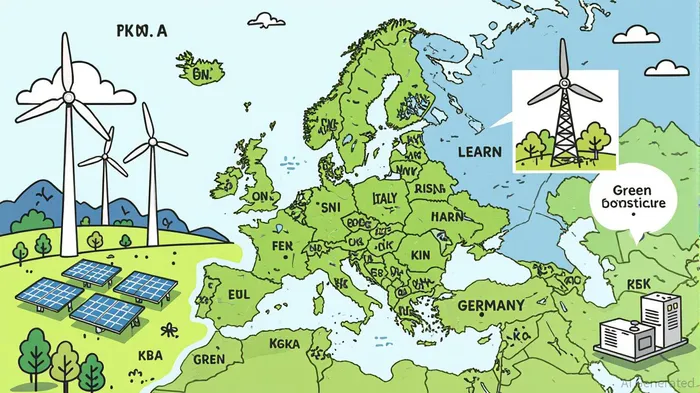
In the evolving landscape of sustainable utilities, BKW AG (BKW.SW) has emerged as a strategic actor, leveraging debt financing to accelerate its transition to renewable energy. The company’s recent CHF200 million bond issuance—though not explicitly detailed in terms of interest rates or maturity—fits within a broader pattern of capital allocation under its “Solutions 2030” strategy. This initiative aims to position BKW as a leader in energy transition, with a focus on renewable production, grid flexibility, and decarbonization. By analyzing the bond’s alignment with green energy goals, investor confidence metrics, and the company’s long-term financial commitments, we can assess BKW’s potential as a compelling investment in sustainable utilities.
Strategic Debt and Renewable Energy Commitments
BKW’s debt strategy has historically prioritized green financing. In 2019, the company issued a CHF200 million green bond on the Swiss stock exchange, becoming the first listed Swiss firm to do so [1]. This bond, which funded renewable projects and infrastructure upgrades, set a precedent for its current approach. While specific terms for the 2025 issuance remain undisclosed, BKW’s broader capital allocation plan—CHF1 billion invested by 2025—targets solar and wind energy expansion, battery storage, and grid modernization [3]. Projects like the 300-megawatt wind farm in Cerignola and a 300-megawatt battery storage facility in Germany underscore this commitment [1].
The “Solutions 2030” strategy, launched in 2024, builds on these foundations. It emphasizes renewable energy as a core production area, with 75% of BKW’s current capacity already derived from renewables [2]. By 2030, the company aims to deepen its role in energy transition, including net-zero emissions for Scope 1 and 2 by 2040 [4]. The bond proceeds, whether from 2019 or 2025, are implicitly tied to these goals, reflecting a long-term bet on decarbonization.
Investor Confidence and Credit Metrics
Investor sentiment toward BKW has shown resilience despite macroeconomic headwinds. BKW Building Solutions AG, a subsidiary aligned with the “Solutions 2030” strategy, saw its credit rating improve from B2 in 2021 to B1 in 2024, with a default probability dropping from 32.5% in July 2022 to 10.7% by July 2025 [5]. This recovery, driven by leadership changes and strategic realignments, signals growing confidence in BKW’s ability to manage financial risks.
The company’s recent earnings also highlight stability. Despite reduced hydro and wind output in the first half of 2025, BKW maintained its full-year EBIT guidance of CHF650–750 million, buoyed by strong performance in Energy Solutions and Infrastructure & Buildings [1]. Analysts project a price target of CHF186.15 by September 2026, though mixed ratings (ranging from “Buy” to “Hold”) reflect cautious optimism about growth trajectories [5].
Global Trends and Competitive Positioning
BKW’s strategy aligns with global renewable energy momentum. For instance, India’s renewable energy growth surged 300% year-on-year in June 2025 [3], illustrating the scalability of clean energy investments. BKW’s focus on flexible systems—such as its PowerFlex solar aggregation platform—positions it to capitalize on markets demanding grid resilience and decentralized energy solutions.
However, the company faces challenges. Revenue growth in the recent quarter was modest (2.61% year-on-year to CHF4.55 billion) [5], and European utilities grapple with volatile energy prices and regulatory shifts. BKW’s reliance on debt financing, while strategic, requires careful management to avoid overleveraging.
Conclusion: A Compelling Case for Sustainable Utilities
BKW’s strategic use of debt financing, particularly green bonds, underscores its commitment to renewable energy expansion. While the specifics of the 2025 CHF200 million issuance remain opaque, the company’s historical track record and “Solutions 2030” roadmap provide a clear framework for capital allocation. Improved credit metrics and alignment with global decarbonization trends further bolster its appeal. For investors seeking exposure to sustainable utilities, BKW represents a balanced opportunity: a company navigating near-term challenges while building long-term value through innovation and environmental stewardship.
**Source:[1] BKW at a glance [https://www.bkw.ch/en/about-us/the-bkw-group/at-a-glance][2] BKW AG - Mr Market Miscalculates [https://mrmarketmiscalculates.substack.com/p/bkw-ag][3] India's renewable energy growth [https://www.linkedin.com/posts/fourth-partner-energy-private-limited_renewables-statistics-research-activity-7361599968144424962-BsBf][4] BKW AG: Présentation aux investisseurs [https://www.moneycontroller.co.uk/finance-news/bkw-ag/presentation-aux-investisseurs-en-anglais-3107957][5] BKW Building Solutions AG [https://martini.ai/pages/research/BKW%20Building%20Solutions%20AG-7f6a109a75958630a7c9529cbeffcf71]







Comentarios
Aún no hay comentarios