
Bittrex Bankruptcy and the Hidden Risks in Crypto Exchange Fund Recovery
Bittrex's Bankruptcy: A Case of Regulatory and Operational Failure
Bittrex's downfall was precipitated by the SEC's enforcement actions, which highlighted the exchange's failure to comply with Bank Secrecy Act/Anti-Money Laundering (BSA/AML) requirements from 2014 to 2018. According to a SEC enforcement action against Bittrex Inc., the exchange did not adequately screen transactions involving sanctioned countries or file suspicious activity reports during this period. The subsequent bankruptcy filing further complicated matters, with regulatory compliance researcher Pasha Onur identifying over $500 million in false transactions submitted to the court. These discrepancies could undermine creditors' ability to recover funds, as the integrity of Bittrex's financial records is now under scrutiny, according to a Lookonchain analysis of Bittrex's suspicious transactions.
The situation mirrors the 2022 collapse of FTX, where opaque financial practices and a lack of segregation between customer and corporate funds led to a $8 billion shortfall. Similarly, Mt. Gox's 2014 bankruptcy, triggered by a hack, has taken over a decade to resolve, with creditors only beginning to receive repayments in 2024. These cases underscore a recurring theme: centralized crypto exchanges often operate with insufficient transparency, leaving investors vulnerable to systemic risks.
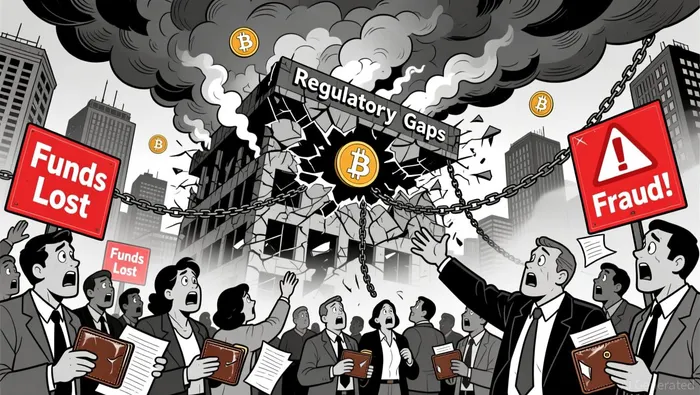
Systemic Vulnerabilities in Crypto Exchange Practices
The Bittrex bankruptcy highlights broader issues in the crypto industry's due diligence practices. Unlike traditional financial institutions, many crypto exchanges lack standardized reporting requirements or third-party audits. For instance, Bittrex's post-2018 compliance measures-such as blocking IP addresses from sanctioned countries and hiring a Chief Compliance Officer-were reactive rather than proactive, as a Harris Beach Murtha analysis of Bittrex's BSA/AML compliance notes. This reactive approach is insufficient in an environment where regulators like FinCEN and OFAC are intensifying scrutiny.
The lack of transparency is further exacerbated by the complexity of blockchain transactions. While blockchain's immutable ledger offers potential for accountability, exchanges often control private keys to customer funds, creating a single point of failure. In Bittrex's case, the presence of "hot and cold wallets" with conflicting transaction records illustrates how even blockchain-based systems can be manipulated if not properly audited, as the Lookonchain analysis notes.
Investor Protections: A Work in Progress
The aftermath of crypto exchange collapses has forced creditors to navigate prolonged and uncertain recovery processes. Mt. Gox, for example, began repaying creditors in July 2024 with $11.4 billion in assets, including 142,000 BTC, but extended full repayment until October 2025, as reported by Coinotag. Similarly, FTX initiated creditor payouts in May 2025, with smaller creditors receiving distributions while larger holders await reimbursement, according to a Tron Weekly update. The surge in Bitcoin's price since these collapses has also shifted creditors' preferences toward crypto-based repayments, as higher valuations offer greater returns, as the Tron Weekly update notes.
However, these ad hoc solutions highlight the absence of a standardized framework for investor protections. Unlike traditional brokerage accounts, which are often insured by entities like the SIPC in the U.S., crypto investors remain largely unprotected. The SEC's recent enforcement actions, including the Bittrex settlement, signal a push for stricter compliance but fall short of creating a comprehensive safety net.
The Path Forward: Lessons for Investors and Regulators
For investors, the Bittrex case underscores the importance of due diligence. Key steps include:
1. Prioritizing Regulated Platforms: Opt for exchanges licensed under frameworks like the SEC's guidelines or the EU's MiCA regulation.
2. Demanding Transparency: Scrutinize exchanges' compliance practices, including AML protocols and third-party audits.
3. Diversifying Holdings: Avoid concentrating assets in a single exchange to mitigate risk.
Regulators, meanwhile, must address gaps in oversight. The SEC's enforcement actions are a start, but broader measures-such as mandatory fund segregation, real-time transaction monitoring, and insurance mechanisms-are needed to restore trust.
Conclusion
The Bittrex bankruptcy is not an isolated incident but a symptom of systemic flaws in the crypto industry. As the sector matures, investors must remain vigilant while regulators close critical gaps in transparency and due diligence. Without these reforms, the hidden risks of crypto exchange fund recovery will continue to haunt the market, eroding confidence in digital assets.







Comentarios
Aún no hay comentarios