
Bittensor (TAO): The Decentralized AI Coordination Layer Poised to Disrupt High-Growth Sectors
The AI revolution is no longer a distant promise but a present-day reality, with decentralized infrastructure emerging as a critical battleground. BittensorTAO-- (TAO), a blockchain protocol designed to decentralize artificial intelligence, is uniquely positioned to capture multiple high-growth sectors-including AI, energy, robotics, and biotech-through its subnet ecosystem and token economics. Unlike centralized AI incumbents or speculative crypto assets, TAO's architecture enables cross-sector innovation by commoditizing AI services and incentivizing open-source collaboration.
Decentralized AI Coordination: The Subnet Ecosystem
Bittensor's core innovation lies in its subnet architecture, which functions as a competitive, incentive-driven marketplace for AI computation. Each subnet is a specialized AI service or community, such as data scraping (Subnet 13). By mid-2025, the network had expanded to 128 active subnets, with growth accelerating at a 50% annual rate. This scalability is driven by a meritocratic system where miners earn TAOTAO-- tokens based on performance and stake-weighted incentives, ensuring high-quality outputs while fostering innovation.
Key subnets like Chutes AI (Subnet 64) and Targon Compute (Subnet 4) demonstrate the ecosystem's real-world utility. Chutes generates over $360,000 monthly in revenue by providing on-demand GPU compute services, while Targon offers secure inference-as-a-service for enterprises. These examples highlight how Bittensor's decentralized model reduces reliance on monopolistic tech platforms, enabling cost-effective, open-source solutions.
Token Economics: Scarcity and Institutional Appeal
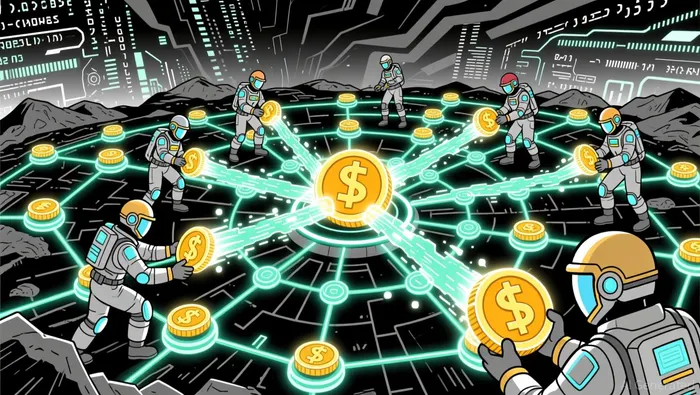
TAO's tokenomics mirror Bitcoin's scarcity model, with a capped supply of 21 million tokens and a first halving event scheduled for December 14, 2025. Daily emissions will drop from 7,200 to 3,600 TAO per day, creating a supply squeeze that could drive demand. This deflationary mechanism, combined with the introduction of dynamic TAO in February 2025, has made subnets directly investible, attracting institutional participation. Custodians like BitGo and Crypto.com now support subnet tokens, while funds such as Yuma Asset Management and Stillcore Capital offer exposure to Bittensor's ecosystem.
The dTAO upgrade further enhances token utility by enabling subnet-specific alphaALPHA-- tokens (α) and EVM compatibility, allowing Ethereum smart contracts to interact with Bittensor's blockchain. This integration with DeFi ecosystems-via projects like TaoFi, which is building a TAO-backed stablecoin-positions TAO as a hybrid infrastructure asset, bridging AI, blockchain, and decentralized finance.
Cross-Sector Expansion: Energy, Robotics, and Biotech
While Bittensor's energy sector applications remain underreported, its decentralized AI infrastructure is well-suited for optimizing smart grids and IoT-based energy management. For instance, IoT-powered smart grids leverage real-time analytics and bi-directional energy flows to enhance grid stability and integrate renewables. Bittensor's partnerships with projects like Project Rubicon-a liquid staking protocol bridging subnets to the Base L2 blockchain via ChainlinkLINK-- and Aerodrome- demonstrate its potential to scale AI-driven energy solutions.
In robotics, Bittensor's subnets support lightweight AI models for on-device inference, reducing latency and bandwidth costs. Subnets like Ridges AI have already outperformed centralized models like Anthropic's Claude 4 on coding benchmarks. Similarly, in biotech, subnets focused on protein folding and drug discovery are gaining traction, leveraging decentralized compute power to accelerate R&D.
Competitive Advantage: Decentralized vs. Centralized AI
Centralized AI players, such as Google and Microsoft, face inherent limitations in scalability, data privacy, and cost efficiency. Bittensor's decentralized model addresses these pain points by distributing computation across a global network of miners, reducing reliance on proprietary infrastructure. For example, Sportstensor (Subnet 100) and TaoFi showcase how niche applications can thrive in a decentralized environment, achieving product-market fit without competing directly with tech giants.
Moreover, TAO's token economics create a self-sustaining ecosystem where innovation is rewarded. Unlike speculative crypto assets, which lack real-world utility, Bittensor's subnets generate revenue through services like inference-as-a-service and data curation. This dual focus on decentralization and monetization ensures long-term value accrual for stakeholders.
Investment Thesis: A Superior Infrastructure Play
Bittensor's first-mover advantage in decentralized AI, combined with its cross-sector adaptability, makes it a compelling investment. The network's institutional adoption- evidenced by the launch of a Bittensor ETP on Nasdaq Stockholm and a $750,000 investment from TAO Synergies-signals growing legitimacy. Additionally, the upcoming halving event in December 2025 could catalyze a price surge, mirroring Bitcoin's historical trends.
For investors, TAO represents a unique opportunity to capitalize on the convergence of AI, blockchain, and IoT. Its subnet ecosystem not only challenges centralized AI incumbents but also provides a scalable infrastructure for emerging sectors like energy and biotech. As the world transitions to decentralized technologies, Bittensor is poised to become a foundational asset in the AI-driven economy.






Comentarios
Aún no hay comentarios