
Bittensor's Halving: A Supply Shock with 5x Price Potential in a Decentralized AI Boom?
The BittensorTAO-- (TAO) network is on the cusp of a transformative event: its first halving, scheduled for December 14, 2025. This mechanism, modeled after Bitcoin's deflationary design, will slash daily token emissions from 7,200 to 3,600 TAOTAO--, reducing the rate at which new tokens enter circulation by 50%. For investors, this represents a critical inflection point in TAO's economic model, with implications for scarcity, network dynamics, and institutional adoption. When combined with Bittensor's rapid growth in decentralized AI infrastructure and strategic partnerships, the case for a multi-bagger move in TAO becomes compelling.
Scarcity as a Catalyst: The Halving's Supply Shock
The halving event is more than a technical adjustment-it's a deliberate design to create artificial scarcity. By reducing emissions, Bittensor aims to curb inflationary pressure and align token supply with growing demand from miners, validators, and AI subnet operators. According to a report by CoinEx, the halving will bring TAO's total supply closer to its 21 million cap, a structure that mirrors Bitcoin's scarcity narrative. This scarcity-driven model is expected to reduce sell pressure from miners, who currently stake 71.67% of the circulating supply according to a detailed analysis, and shift incentives toward long-term value retention.
Historically, halving events in BitcoinBTC-- have been associated with price surges due to reduced supply and increased demand. While TAO's market is smaller and more nascent, the same principles apply: as the token becomes scarcer, its utility and staking value could drive upward price action. Analysts at Grayscale note that the halving coincides with the launch of the Grayscale Bittensor Trust and European ETPs, which provide institutional-grade exposure to TAO and subnet tokens. These products could amplify demand, particularly as macroeconomic conditions favor risk-on assets.
Network Effects: AI Subnets and Ecosystem Growth
Bittensor's value proposition extends beyond tokenomics. The network has evolved into a decentralized AI infrastructure layer, with 128 active subnets as of mid-2025-up from 70 in Q2 2025 according to a detailed analysis. These subnets, ranging from AI inference and data labeling to drug discovery and GPU compute, are generating real-world revenue. For example, the Chutes subnet (SN64) is projected to earn $2.4 million annually, while Targon Compute (SN4) could generate $10.4 million according to IBS insights. Such monetization signals a shift from speculative token speculation to utility-driven adoption.
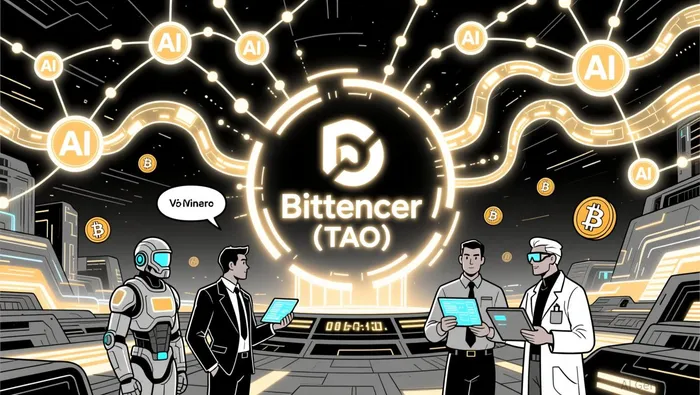
User adoption has also surged, with active wallets tripling quarter-over-quarter and the network processing billions of model queries monthly according to analysis. This growth is further amplified by the introduction of Dynamic TAO (dTAO) in February 2025, which allows emissions to be market-driven and subnet-specific according to industry insights. By enabling liquidity pools and higher yields through subnet staking, Bittensor is creating a flywheel effect: more subnets attract more users, which in turn drives higher demand for TAO and subnet tokens.
 |
Bittensor's interoperability with PolkadotDOT-- and EthereumETH-- further strengthens its institutional appeal according to industry analysis. These collaborations enable cross-chain liquidity and expand TAO's reach into broader blockchain ecosystems. Meanwhile, the launch of subnet-specific alphaALPHA-- tokens-such as those for Chutes and Targon-has created new avenues for liquidity and yield generation according to industry insights. As institutional investors seek exposure to decentralized AI infrastructure, these innovations position TAO as a bridge between traditional finance and Web3.
The 5x Price Potential: A Convergence of Forces
The combination of scarcity, network effects, and institutional validation creates a powerful case for TAO's price appreciation. With the halving reducing supply and the network's AI subnets generating real revenue, TAO is transitioning from a speculative asset to a utility token with defensible fundamentals. The introduction of ETPs and subnet tokens further diversifies demand drivers, attracting both retail and institutional capital.
Historical precedents suggest that halving events can unlock multi-year bull runs. If TAO follows a similar trajectory, a 5x price move from current levels could materialize by 2026, particularly if macroeconomic conditions remain favorable and AI adoption accelerates. However, risks remain: broader crypto market volatility, regulatory shifts, and execution risks in subnet monetization could temper expectations.
For investors, the key takeaway is clear: Bittensor's halving is not just a technical event-it's a catalyst for a broader narrative of scarcity, utility, and institutional adoption. In a world where decentralized AI infrastructure is becoming increasingly critical, TAO's unique positioning could justify a significant re-rating.







Comentarios
Aún no hay comentarios