
Bitnomial's XRP and RLUSD: Pioneering DeFi-Traditional Asset Integration in the U.S. Market
A New Era of Margin Trading
Bitnomial's recent expansion of its digital asset margin program to include RLUSD and XRP marks a watershed moment. As the first U.S. derivatives clearing organization to accept stablecoins as collateral, Bitnomial allows institutional and retail traders to use these assets for leveraged perpetuals, futures, and options, according to Bitnomial's announcement. This innovation eliminates the need for off-chain conversions between fiat and crypto, reducing settlement friction and enhancing liquidity. For instance, RLUSD-a USD-pegged stablecoin-offers the stability of traditional currency with the programmability of blockchain, enabling traders to maintain USD-equivalent value on-chain, according to a Morningstar release.
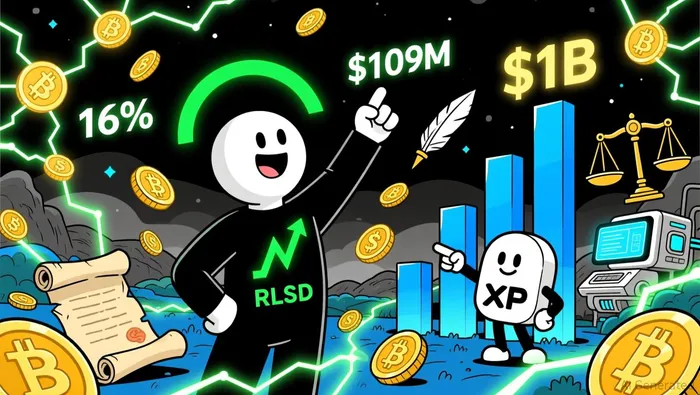
The integration of XRP further diversifies collateral options, catering to both speculative and institutional demand. Ripple's Jack McDonald emphasized that RLUSD's adoption reflects a shift from speculative use cases to real-world applications, such as tokenized energy projects and cross-border settlements, according to a Coinotag report. Meanwhile, XRP's open interest surged past $1 billion by November 2025, signaling growing institutional confidence, per Coinedition.
Performance Metrics and Market Adoption
Quantitative data underscores the rapid adoption of RLUSD and XRP in the U.S. market. RLUSD's trading volume rose 16% in early September 2025, reaching $109 million, despite a broader altcoin downturn, according to Coinotag data. This surge is attributed to increased demand for liquidity and real-world-asset (RWA) tokenization, as traders seek stable, regulatory-compliant tokens for settlement. XRP, meanwhile, saw a 3.3% dip during the same period but maintained resilience, supported by its role in institutional products like XRP ETFs (e.g., XRPI and XRPR) and Ripple's expanded liquidity infrastructure, according to TradingNews.
Adoption rates for these assets are accelerating. Bitnomial's Botanical platform, which extends margin collateral access to retail traders, has streamlined on-ramping for everyday users. Analysts project that XRP-USD could reach $5 by 2025 and $8–$10 by 2026, driven by ETF inflows and macroeconomic tailwinds, per CoinDesk.
Strategic Implications for DeFi and Traditional Finance
Bitnomial's initiatives align with broader trends in stablecoin usage, which accounted for nearly 30% of crypto transactions in the first half of 2025, as reported by LiveBitcoinNews. By leveraging RLUSD and XRP, the platform bridges the gap between DeFi's capital efficiency and traditional finance's regulatory rigor. For example, institutional traders can now deploy digital asset portfolios without sacrificing compliance, while market makers benefit from reduced capital lock-up.
Experts highlight the transformative potential of this integration. "Stablecoins are no longer just speculative assets-they're foundational infrastructure," said Jack McDonald, noting that RLUSD's adoption in derivatives trading signals a maturation of the stablecoin market, in a PR Newswire release. This shift is further amplified by Ripple's acquisition of Hidden Road Partners and the launch of Ripple Prime, which enhance cross-margining capabilities and institutional liquidity, as reported by Bitcoinist.
Conclusion: A Blueprint for the Future
Bitnomial's integration of RLUSD and XRP exemplifies the next phase of DeFi-traditional asset integration. By prioritizing regulatory compliance and capital efficiency, the platform is setting a precedent for how blockchain-based assets can coexist with legacy systems. As stablecoin transaction volumes exceed $10 trillion in 2025, the role of RLUSD and XRP in derivatives trading will likely expand, offering investors a hybrid model that balances innovation with stability. For stakeholders, the key takeaway is clear: the future of finance lies in seamless interoperability between decentralized and traditional ecosystems.






Comentarios
Aún no hay comentarios