
Is BITF a High-Risk Bet Amid Crypto Volatility?
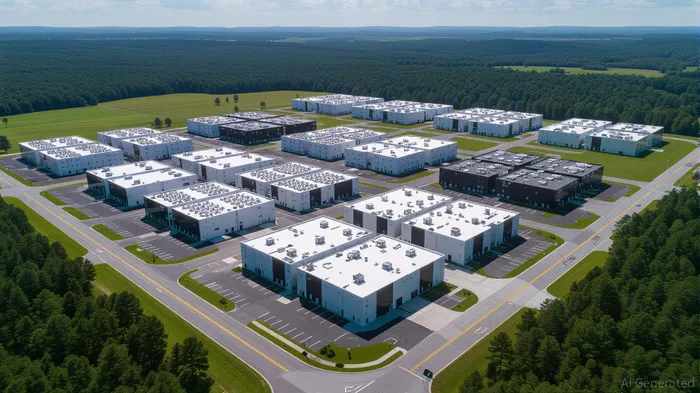
In the fragmented and volatile crypto market of 2025, Bitfarms Ltd.BITF-- (BITF) has emerged as a polarizing player. Its recent stock rebound, coupled with aggressive BitcoinBTC-- monetization, share buybacks, and a pivot to high-performance computing (HPC)/AI infrastructure, has sparked debate: Is BITFBITF-- a speculative gamble or a strategically positioned contender in a high-growth sector? To answer this, we must dissect its exposure to Bitcoin price swings, operational risks, and capital allocation decisions in a market where crypto volatility and macroeconomic uncertainty reign supreme.
Bitcoin Exposure: A Double-Edged Sword
BITF's financials are inextricably tied to Bitcoin. In Q2 2025, the company sold 1,052 BTC at an average price of $95,500, generating $100 million in proceeds. As of August 11, 2025, it held 1,402 BTC, valued at approximately $164 million at the time. This represents 71% of its total liquidity ($230 million), with Bitcoin's year-to-date rally of 24.9% (to $116,950 as of August 8) amplifying its balance sheet strength. However, this exposure is a high-stakes bet. A 20% drop in Bitcoin's price would erase $32 million in value from its holdings, directly impacting liquidity and operational flexibility.
The company's Bitcoin One program, which generated $11 million in realized profits in its first six months, underscores its monetization strategy. Yet, this approach also raises questions: Is BITF leveraging Bitcoin as a strategic asset or merely a cash flow tool? The latter risks short-term gains at the expense of long-term stability, especially as the company transitions to HPC/AI infrastructure.
Operational Costs and Debt: A Balancing Act
BITF's Q2 2025 operating loss of $40 million—driven by $15 million in non-cash impairment charges (from Argentina shutdown) and $37 million in depreciation—highlights its cost structure. While these are non-cash items, they signal the challenges of managing a capital-intensive business in a sector prone to rapid technological obsolescence.
The company's $300 million debt facility with Macquarie Group, however, offers a lifeline. The initial $50 million tranche, secured at 8% interest (with in-kind payments for the first three months), funds Panther Creek's development. This project, with a potential 500 MW capacity, is BITF's crown jewel. Yet, the debt's covenants—such as maintaining a $25 million cash buffer and depositing additional funds if Bitcoin prices fall below thresholds—introduce operational rigidity. If Bitcoin's price dips, BITF may face liquidity constraints, forcing it to sell Bitcoin at inopportune times.
Buyback Strategy: A Vote of Confidence or a Desperate Move?
BITF's share buyback program, which repurchased 10% of its public float (4.9 million shares) at $1.24 per share, signals management's belief in undervaluation. With a market cap of roughly $150 million (as of August 2025), the buyback represents a 3.3% stake in the company. This is a compelling use of capital, especially given BITF's robust liquidity. However, the program's success hinges on the stock's ability to sustain its recent rebound.
Strategic Moves and Sector Tailwinds: Justifying the Rebound
BITF's pivot to HPC/AI infrastructure is its most defensible move. Panther Creek's proximity to AI hubs like AmazonAMZN-- and CoreWeaveCRWV--, combined with its 500 MW potential, positions BITF to capitalize on the AI industrial revolution. The company's 1.3 GW energy pipeline, 80% U.S.-based, aligns with surging demand for energy-efficient compute infrastructure. Additionally, its U.S. GAAP transition and New York City office signal a broader effort to appeal to traditional investors.
Yet, the fragmented crypto market remains a headwind. BITF's reliance on Bitcoin sales for liquidity exposes it to regulatory and price risks. The SEC's evolving stance on digital assets—such as the proposed SAB 122—could further complicate its accounting and operational strategies.
Risk-Reward Analysis: A High-Risk, High-Reward Play
BITF's recent stock rebound is justified by its strategic initiatives and liquidity strength. However, its heavy Bitcoin exposure, operational losses, and debt obligations make it a precarious bet. For investors, the key question is whether BITF can execute its HPC/AI vision without relying on Bitcoin's price action.
Investment Advice:
- Bull Case: Investors bullish on Bitcoin and AI infrastructure may view BITF as a speculative play. Its Panther Creek project and buyback program offer upside if the company successfully transitions to HPC/AI.
- Bear Case: Those wary of crypto volatility or regulatory risks should avoid BITF. A Bitcoin price correction or operational misstep could trigger a sharp decline in its stock.
In conclusion, BITF is a high-risk bet with a compelling long-term thesis. Its strategic moves align with sector tailwinds, but its reliance on Bitcoin and debt make it unsuitable for risk-averse investors. For those with a high-risk tolerance, BITF's current valuation and growth potential warrant a closer look—but with caution.





Comentarios
Aún no hay comentarios