
Bitcoin Whale Activity and Market Sentiment: Strategic Accumulation Amid Declining Bullish Momentum
On-Chain Signals: Centralization, Volatility, and Contrarian Cues
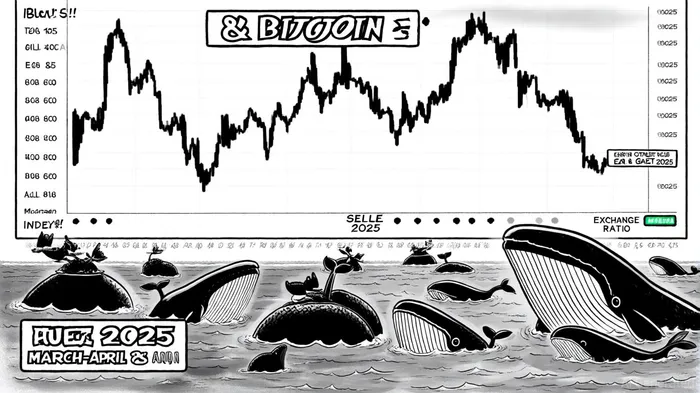
The top 100 BitcoinBTC-- addresses now control 28% of the total supply, with the top 10 alone holding 6%, according to Gate's whale-watch report. This concentration has intensified as whales reactivate dormant wallets, moving 892,000 BTC since January 2025. While this suggests renewed selling pressure, it also reflects a strategic redistribution of assets. For instance, the Exchange Whale Ratio-a metric tracking large inflows to exchanges-hit a monthly peak in October, a peak tracked by GatePORTAL-- and often associated with short-term stress. Historically, this ratio has correlated with heightened volatility, as whales dominate trading flows and amplify price swings, according to a ScienceDirect study.
Yet, amid the bearish noise, there are bullish undercurrents. Whale wallets have accumulated over 250,000 BTC in recent months, with large holders buying during dips below $94,000, a trend noted by Cointific. This mirrors the 2021 bull run, where whales absorbed supply during fear-driven selloffs, as documented in a Dow Theory Letters piece. The contrast is stark: while retail investors panic-sell, whales treat volatility as a liquidity vacuum to be exploited.
Investor Psychology: Fear as a Catalyst for Accumulation
The Crypto Fear & Greed Index hit an extreme low of 22 in October 2025-the lowest since April 2025, according to Yahoo Finance. Such levels historically signal buying opportunities, as fear drives retail investors to exit while whales step in. On-chain data confirms this: whale addresses moved BTC into cold storage and created new wallets, signaling confidence in a potential market bottom, as Yahoo Finance reports.
This contrarian behavior is rooted in behavioral economics. Retail investors often exhibit panic-driven selling during corrections, exacerbating volatility, as noted in a Deseret News analysis. Whales, however, leverage fear to accumulate at discounted prices. For example, a major whale purchased $792 million in Bitcoin during the October selloff, stabilizing the price near $119,000, per a Bitcoin Magazine NL report. Such actions act as a buffer against further declines, creating a floor for retail panic.
Historical Precedents: Accumulation as a Precursor to Rallies
History offers compelling parallels. During the March 2020 pandemic crash, the Fear & Greed Index plummeted to 8, and whales began accumulating, signaling a market bottom, according to historical Fear & Greed data. Similarly, in 2017, whale-led accumulation during fear-driven dips preceded a 20x rally, as described in a CoinCentral article. These patterns suggest that extreme fear, when met with whale accumulation, often marks inflection points.
The 2025 context adds nuance. While the Exchange Whale Ratio suggests short-term volatility, the sustained accumulation by large holders-particularly institutions-points to long-term confidence. For instance, Bitcoin ETF inflows surged $1.5 billion in a week, with regulated vehicles absorbing whale-sold BTC, a development highlighted by Cointific. This institutional participation mitigates the risk of a prolonged bear market, as deep-pocketed buyers provide liquidity during selloffs.
Strategic Positioning: Navigating the Contradictions
For investors, the key lies in balancing short-term caution with long-term optimism. The October crash and subsequent whale activity suggest a market in transition. Here's how to position:
1. Hedge Against Volatility: Use options or futures to protect against further downside while maintaining exposure to Bitcoin's long-term trajectory.
2. Monitor Whale Metrics: Track the Exchange Whale Ratio and wallet concentration. A sustained drop in the ratio (below 0.35) could signal a shift to accumulation mode, as warned in a BeInCrypto piece.
3. Leverage Fear-Driven Entry Points: When the Fear & Greed Index dips below 30, consider dollar-cost averaging into Bitcoin, mirroring whale strategies suggested by a Bitget analysis.
Conclusion
Bitcoin's 2025 narrative is a tug-of-war between bearish sentiment and whale-led accumulation. While the October crash and Exchange Whale Ratio peak highlight near-term risks, historical patterns and institutional confidence suggest a potential reversal. For investors, the lesson is clear: fear is not a signal to flee but an opportunity to align with the whales' playbook.







Comentarios
Aún no hay comentarios