
Bitcoin Whale Activity and Deleveraging Signals in a Volatile Market
Whale Accumulation: A New Guardrail for Price Stability
Bitcoin's recent 25% plunge below $95,000 on November 14, 2025, was met with an unexpected surge in whale activity. Wallets holding over 1,000 BTC hit a four-month high of 1,384, signaling aggressive accumulation by large holders during the selloff. This behavior contrasts sharply with retail-driven corrections of the past, where panic selling often exacerbated price declines. Instead, whales are acting as a stabilizing force, locking in discounted BTCBTC-- and signaling confidence in the asset's long-term value proposition.
This trend aligns with broader institutional buying. Firms like MicroStrategy (MSTR) have continued to add BTC during dips, with MSTRMSTR-- acquiring 8,178 BTC at an average price of $102,171 on November 17. Such actions reinforce the narrative that BitcoinBTC-- is transitioning from a speculative asset to a strategic reserve asset, with institutions playing a gatekeeper role in managing volatility.
Deleveraging as a Catalyst for Rebound
The recent selloff was not just a function of market fear-it was a structural deleveraging event. Open Interest (OI) in Bitcoin futures dropped 11.32% over seven days, a classic sign of forced liquidations and risk reduction. While this initially drove prices lower, historical patterns suggest such corrections often precede significant rebounds. For example, after a 30-day dip linked to the gold top rally in 2025, Bitcoin rebounded sharply, a pattern analysts now cite as a template for current conditions.
The Fear & Greed Index, at an extreme low of 10-the lowest since the 2020 pandemic-further underscores the depth of this deleveraging. Extreme fear metrics typically mark capitulation points, where contrarian buyers step in. This dynamic is already playing out: the Bitcoin Exchange Reserve has fallen to 2.3 million BTC, its lowest level since July 2018, signaling reduced selling pressure and increased scarcity.
UTXO Activity and Whale Transfers: The On-Chain Playbook
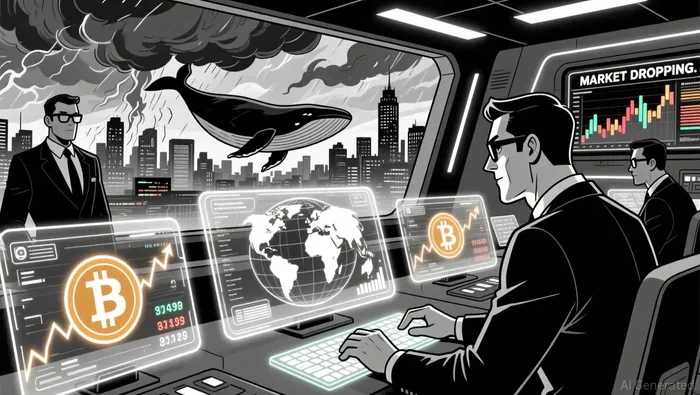 UTXO (Unspent Transaction Output) activity, a proxy for on-chain engagement, has shown mixed signals. While UTXO metrics declined during the recent downturn, whale wallet transfers tell a different story. The 4% price rebound from $89,300 to $91,775 in Q4 2025 coincided with a surge in whale accumulation, suggesting that large holders are using volatility as a buying opportunity.
This divergence highlights a critical insight: UTXO activity reflects short-term retail sentiment, while whale movements indicate long-term positioning. For instance, Tether's recent addition of 8,800 BTC to its treasury-bringing total holdings to 86,000 BTC-signals growing institutional confidence in Bitcoin as a hard asset. Such moves are part of a broader trend where firms are treating Bitcoin as a reserve asset, akin to gold or real estate.
Macro Shifts and the Road Ahead
The macroeconomic backdrop further supports a bullish case. Fed rate cuts in late 2025 have reduced the opportunity cost of holding non-yielding assets like Bitcoin, while spot ETF inflows (despite recent outflows) remain a net positive. Tiger Research's Q4 2025 valuation report raised Bitcoin's price target to $200,000, citing both fundamental strength and macroeconomic tailwinds.
However, risks persist. Derivatives markets show increased leverage, with open interest in Bitcoin futures rising by 36,000 BTC in a week-the largest increase since April 2023. This suggests retail and speculative traders are re-entering the market, potentially amplifying future volatility. Investors must balance the long-term bullish case with short-term caution.
Positioning for the Next Leg
For investors, the key takeaway is clear: on-chain metrics are not just reactive-they are predictive. Whale accumulation, deleveraging events, and UTXO dynamics collectively suggest Bitcoin is entering a phase of consolidation. While the immediate path remains volatile, the structural shift toward institutional dominance and reserve asset status provides a strong foundation for future gains.
As the market digests these signals, the focus should shift from short-term noise to long-term positioning. For those with a multi-year horizon, the current environment offers a unique opportunity to accumulate at discounted levels, with on-chain data acting as both a compass and a confirmation tool.







Comentarios
Aún no hay comentarios