
Bitcoin's Vulnerability to Near-Term Correction: A Derivatives and Sentiment Deep Dive
Bitcoin's derivatives market and investor sentiment in Q3 2025 paint a complex picture of bullish potential and looming risks. While technical indicators and institutional inflows suggest a possible rally toward $130,000–$135,000, elevated leverage, fragile support levels, and macroeconomic uncertainties point to a heightened vulnerability to near-term correction.
Derivatives Market Signals: A Double-Edged Sword
Bitcoin futures open interest has surged to $42 billion, nearing its 2025 peak, reflecting intense speculative activity[3]. This metric, while indicative of robust participation, also signals systemic fragility. High open interest combined with rising funding rates—currently trending upward—suggests a dominance of leveraged long positions[6]. Historically, such conditions have preceded sharp corrections when funding fees become unsustainable, triggering cascading liquidations[6].
Funding rates themselves tell a nuanced story. A brief dip into negative territory in late June 2025—a contrarian bullish signal—coincided with prior 80% and 150% price rallies in 2023 and 2024[6]. However, recent stability in funding rates, coupled with a concentration of short liquidations near $111,320, hints at a potential short squeeze[6]. This dynamic could propel BitcoinBTC-- higher in the short term but also amplifies volatility if long positions are forced to close.
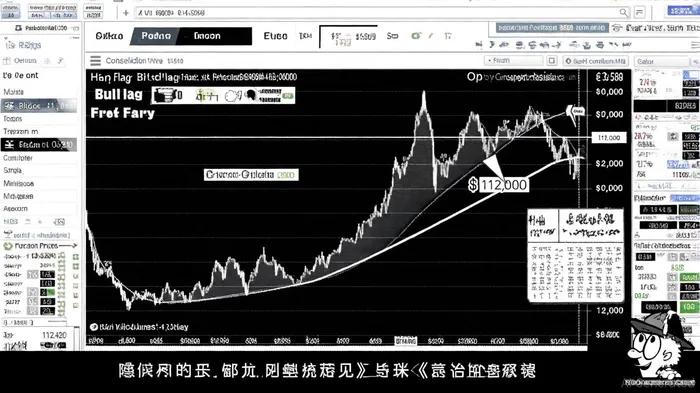
Technical patterns further complicate the outlook. On-balance volume (OBV) has risen despite Bitcoin's consolidation between $102,000 and $112,000 since May 2025, signaling accumulation[2]. A similar OBV divergence in March–April 2025 preceded a 57% rally. However, a breakdown below the $100,000 support level—a scenario warned by analyst Benjamin Cowen—could trigger a deeper correction toward $92K–$95K[1].
Investor Sentiment: Fear as a Contrarian Signal
Bitcoin's Fear & Greed Index has plunged to 28 in late September 2025, entering the “Fear” zone[3]. This follows an extreme fear reading below 10 in April 2025—the lowest since the FTX collapse—and is often interpreted as a contrarian indicator[4]. Yet, fear alone cannot offset structural risks.
Retail and institutional positioning diverge. While U.S. spot Bitcoin ETFs, including BlackRock's iShares Bitcoin Trust, attracted $553 million in inflows on September 12[1], a $980 million institutional sell-off by BlackRock on September 23 underscores fragility[1]. Meanwhile, leverage ratios in the derivatives market have spiked, with the Realized Cap Leverage Ratio hitting 10.2%—among the top 10.8% of trading days since 2018[2]. This heightened leverage increases the likelihood of forced liquidations, particularly if Bitcoin fails to hold key support levels.
Macro Risks and Geopolitical Uncertainties
The Federal Reserve's September 17 rate cut—a 0.25% reduction—has injected liquidity into markets[4], potentially revitalizing leveraged trading. However, the broader macroeconomic landscape remains mixed. Rising U.S. Personal Consumption Expenditures (PCE) inflation and the expiration of Trump's 90-day tariff freeze in July 2025 reintroduce trade war risks[1]. Analysts like Cowen argue that a strong economy delaying rate cuts could prolong restrictive monetary policies, further pressuring Bitcoin[1].
Geopolitical factors, including China's liquidity injections and U.S. debt dynamics, position Bitcoin as a hedge asset[4]. Yet, these tailwinds may be offset by geopolitical tensions and regulatory uncertainties, particularly in emerging markets where adoption is surging[5].
Conclusion: A Delicate Balance
Bitcoin's Q3 2025 trajectory hinges on its ability to hold critical support levels, such as $107,286 and $105,159[1]. A successful breakout could reignite bullish momentum, aligning with historical bull flag patterns and institutional adoption trends[2]. Conversely, a breakdown risks triggering a cascade of liquidations and a deeper correction.
Investors must navigate this duality with caution. While derivatives data and sentiment extremes suggest a potential rebound, the elevated leverage and macroeconomic headwinds cannot be ignored. As the market approaches October 2025, the interplay between spot-led buying and derivatives-driven volatility will be pivotal in determining Bitcoin's near-term fate.






Comentarios
Aún no hay comentarios