
Bitcoin's Vulnerability to a 50% Correction Amid Shifting Macro Cycles: A Macro-Driven Risk Management Perspective
Macroeconomic Headwinds: Interest Rates and Inflation as Dual Threats
The U.S. Federal Reserve's prolonged high-interest-rate environment remains a critical factor. As of late 2025, the U.S. core PCE inflation rate is projected to reach 3.2%, well above the 2% target, according to the EY US outlook, while global inflation remains at 5.43% per the Global Macroeconomic Outlook. High rates suppress speculative demand for assets like BitcoinBTC--, which historically thrive in low-interest environments. For instance, the Bank of England's 4% base rate has bolstered UK bank profits through widened deposit spreads, as reported by Investorempires, illustrating how elevated rates can divert capital toward traditional financial instruments rather than riskier crypto assets.
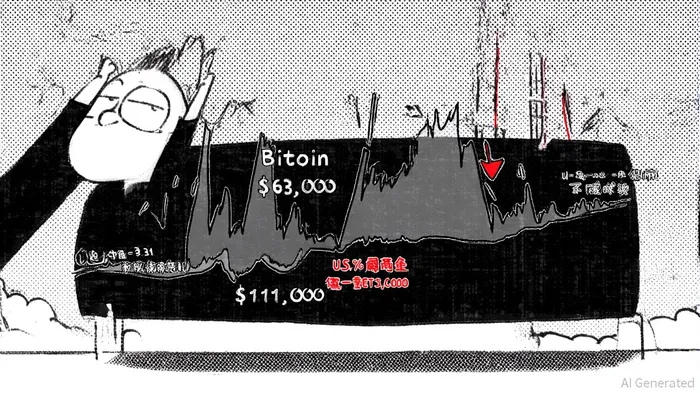
Meanwhile, U.S. real GDP growth is expected to slow to 1.2% in Q4 2025, per EY, compounding concerns about economic stagnation. This weak growth, coupled with rising unemployment (projected to hit 4.8% by early 2026, according to EY), could erode investor confidence in Bitcoin as a speculative play. The asset's recent consolidation near $111,000-trading within a tight range of moving averages-suggests waning buyer strength, as Cryptopolitan observed, a technical indicator often preceding corrections.
Geopolitical Tensions: U.S.-China Dynamics and Quantum Computing Risks
The U.S.-China trade relationship has emerged as a wildcard. While a potential trade meeting on October 31, 2025, briefly boosted Bitcoin's price, as Cryptopolitan reported, the broader implications of U.S. tariffs and China's technological advancements remain a drag. The U.S. government's push for quantum computing under the CHIPS Act raises concerns about Bitcoin's encryption vulnerabilities, a point highlighted in a Coinotag report, potentially deterring institutional adoption.
This geopolitical friction is already reshaping capital flows. Bitcoin spot ETFs saw $20.33 million in inflows on October 23, 2025, as investors sought refuge amid trade tensions, according to a Yahoo Finance report, while EthereumETH-- ETFs faced outflows of $127.47 million. Such shifts highlight how macro-driven uncertainties can polarize investor sentiment, favoring Bitcoin's perceived store-of-value narrative over Ethereum's utility-driven model.
Correction Risk Analysis: When Macro Cycles Collide
The convergence of high inflation, elevated rates, and geopolitical instability creates a perfect storm for Bitcoin. A 50% correction would likely occur if:
1. Inflationary pressures persist, forcing central banks to maintain or hike rates, thereby increasing the opportunity cost of holding non-yielding assets like Bitcoin, as noted in the Investorempires report.
2. U.S.-China trade tensions escalate, triggering a flight to safety in gold and government bonds while crypto markets face regulatory crackdowns, a risk that Coinotag has highlighted.
3. Global GDP growth stagnates, reducing risk appetite and amplifying the dominance of bearish sentiment, according to EY.
Historical parallels exist. During the 2018 bear market, Bitcoin fell from $19,000 to $3,200 amid Fed rate hikes and trade wars. A similar scenario in 2025 is plausible if macroeconomic conditions deteriorate further.
Risk Management Strategies for Macro-Driven Crypto Investments
To mitigate these risks, investors must adopt a multi-layered approach:
1. Diversification: Spread exposure across crypto and traditional assets. For example, pairing Bitcoin with gold or U.S. Treasuries can hedge against inflation and geopolitical shocks, as suggested in a MarketNavigator analysis.
2. Derivatives Hedging: Use futures and options to lock in prices or limit downside risk. The recent volatility in Bitcoin ETFs underscores the value of such instruments, as noted by Yahoo Finance.
3. Regulatory Vigilance: Monitor evolving frameworks like the EU's MiCA and U.S. SEC rules, which could introduce short-term volatility, a point explored by MarketNavigator.
4. Fundamental Analysis: Prioritize projects with strong use cases (e.g., Bitcoin's halving event in 2024) to weather macro-driven corrections, another recommendation from MarketNavigator.
Conclusion
Bitcoin's 50% correction risk in 2025 is notNOT-- a foregone conclusion but a plausible outcome given the current macroeconomic landscape. While the asset's recent resilience-bolstered by institutional buying and ETF inflows-offers hope, investors must remain vigilant. By integrating macro-driven risk management strategies, market participants can navigate the turbulence and position themselves for long-term gains in a crypto-linked market.






Comentarios
Aún no hay comentarios