
Bitcoin's Volatility and Structural Resilience in a Correction: A Tipping Point for Investors?
The Catalysts Behind the Correction
The current selloff is rooted in a combination of macroeconomic uncertainty and structural shifts. According to Bloomberg, the rising probability of a Federal Reserve rate cut has shifted investor sentiment toward risk-off assets, dragging BitcoinBTC-- down with broader market volatility. Simultaneously, the proliferation of U.S. spot Bitcoin ETFs-once a tailwind for institutional adoption-has transformed Bitcoin into a high-beta macro asset, amplifying its sensitivity to global economic signals.
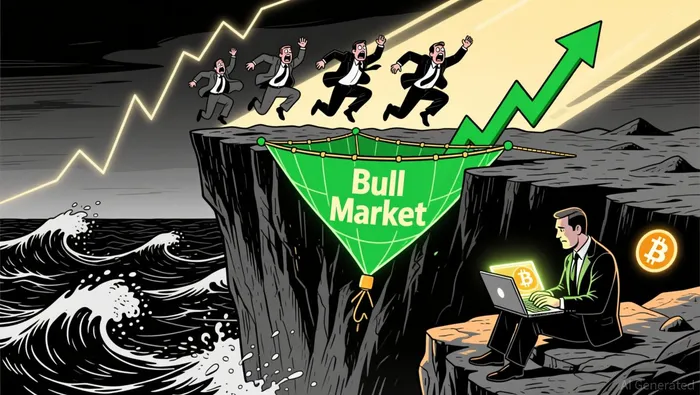
This correction has been brutal in its speed and scale. Data from Yahoo Finance shows Bitcoin wiped out all its 2025 gains in a matter of weeks, triggering over $20 billion in forced liquidations in a single day. The breakdown below the 200-day moving average and the formation of a "death cross" technical pattern have further stoked bearish sentiment.
Structural Resilience: ETFs, Institutions, and On-Chain Signals
Despite the short-term pain, Bitcoin's structural fundamentals remain robust. The launch of U.S. spot Bitcoin ETFs in early 2024 marked a turning point, legitimizing Bitcoin as a mainstream asset class. While ETF inflows have slowed-turning net negative since October-this does not necessarily signal a bear market. As noted by NYDIG's Greg Cipolaro, the shift from inflows to outflows reflects a reversal of the previous positive feedback loop, not a collapse of institutional interest.
On-chain data adds nuance to the narrative. Despite the market's "extreme fear" metrics, whale activity suggests accumulation. A report by Bitget highlights that large holders are increasingly withdrawing Bitcoin from exchange wallets, a classic precursor to price appreciation. This behavior mirrors patterns seen in past corrections, where institutional buyers stepped in to capitalize on discounted prices.
Macro Risks vs. Long-Term Optimism
The macroeconomic backdrop is mixed. On one hand, global liquidity remains at record highs, with central banks easing policy-a historically supportive environment for risk assets. On the other hand, the IMF and OECD have warned of overvalued tech assets and slowing global growth, which could constrain Bitcoin's upside.
According to crypto analyst Fefe Demeny, the current drawdown has overcorrected, creating a favorable risk-rebalance for buyers. Her technical analysis points to oversold conditions and historical parallels to 2020's "Black Thursday" crash, where Bitcoin rebounded sharply after a similar 50% drop. However, skeptics caution that Bitcoin's new role as a macro asset exposes it to systemic risks, such as a U.S. recession or banking crisis.
The Path Forward: Buying Opportunity or Bear Market?
The answer lies in the balance between short-term volatility and long-term structural trends. While the immediate risks-such as a breakdown below $90,000-remain real, the broader narrative of institutional adoption and blockchain infrastructure development continues to strengthen.
For investors, the key is to differentiate between cyclical corrections and secular shifts. If history is any guide, Bitcoin's resilience during past bear markets (2018, 2022) suggests that today's selloff could be a mid-cycle reset rather than a full-blown bear market. However, prudence is warranted: leverage in the crypto market remains high, and a further drop could trigger another wave of deleveraging.
Conclusion
Bitcoin's current correction is a test of both its structural resilience and the patience of its investors. While macroeconomic headwinds and technical bearishness are valid concerns, the underlying forces driving institutional adoption and blockchain innovation remain intact. For those with a long-term horizon, the combination of discounted prices, whale accumulation, and ETF-driven legitimacy could signal a buying opportunity. But for others, the risks of a deeper bear market-triggered by a macroeconomic shock-cannot be ignored.
As the market navigates this inflection point, one thing is clear: Bitcoin's journey is no longer defined by retail speculation alone. It is now a barometer of global capital flows, and its next move will depend on whether the world chooses to bet on its future.






Comentarios
Aún no hay comentarios