
Bitcoin's Volatility and Squeeze Dynamics: A Tale of Psychology and Market Structure in 2023-2025
Bitcoin's journey through 2023 to 2025 has been a rollercoaster of extremes, marked by historic highs, brutal corrections, and a maturing market structure. The cryptocurrency's volatility, once a hallmark of its speculative nature, has evolved into a complex interplay of investor psychology, institutional behavior, and regulatory shifts. As the asset class transitions from niche curiosity to strategic reserve, the forces driving its price swings-and the resulting squeeze dynamics-reveal a market in flux, grappling with its own identity.
The Psychology of Fear and Greed
Bitcoin's volatility is not merely a function of numbers; it is a reflection of human behavior. Behavioral finance studies underscore how cognitive biases-loss aversion, overconfidence, and herd mentality-amplify market swings. During the 2025 liquidity crisis, for instance, panic selling triggered by margin calls created a self-reinforcing cycle of declining prices and forced liquidations, exposing the fragility of leveraged positions. A report by Forbes highlights how crypto traders face heightened anxiety and disrupted sleep patterns due to the 24/7 nature of the market, compounding irrational decision-making.
Institutional participation has further complicated this dynamic. While early adopters treated BitcoinBTC-- as a speculative bet, firms like MicroStrategy and the U.S. government's "Strategic Bitcoin Reserve" have rebranded it as a macroeconomic hedge. Yet, even institutional confidence is not immune to psychological pressures. The approval of spot Bitcoin ETFs in early 2025 initially drew inflows, but later outflows revealed mixed sentiment amid geopolitical tensions and regulatory uncertainty. This duality-between strategic asset and speculative frenzy-has kept Bitcoin's price tethered to sentiment as much as fundamentals. 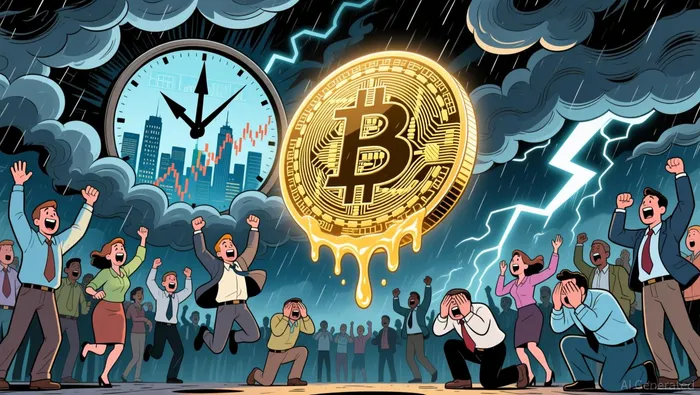
Market Structure: Squeezes, Leverage, and Liquidity
The structural underpinnings of Bitcoin's volatility have also evolved. Short squeeze dynamics emerged as a defining feature in late 2025, particularly around the $87,000 level on Binance, where bearish positions faced liquidation risks. Negative perpetual funding rates signaled seller exhaustion, a classic precursor to market bottoms. Meanwhile, open interest data suggested a cleaner, less leveraged market structure, hinting at a more resilient foundation for recovery.
However, the October 2025 liquidity crisis exposed vulnerabilities. A sharp price drop triggered record liquidations, with leveraged positions-both retail and institutional-collapsing under margin calls. As noted by Alaric Securities, the crisis underscored a lack of two-sided liquidity and hedging mechanisms, making crypto markets prone to cascading failures during macroeconomic shocks. The interplay between leverage and liquidity became a double-edged sword: while derivatives markets expanded open interest surged to $70 billion by mid-2025, they also amplified systemic risks.
Regulatory Clarity and Institutional Hegemony
Regulatory developments have been a critical wildcard. The U.S. Executive Order establishing a Strategic Bitcoin Reserve in March 2025 and the OCC's authorization for banks to custody crypto signaled a shift toward institutional legitimacy. Yet, these developments also introduced new layers of complexity. For example, the approval of Bitcoin ETFs coincided with a surge in institutional buying, but it also drew scrutiny from the SEC's Project Crypto, highlighting the tension between innovation and oversight.
The growing correlation between Bitcoin and traditional assets-its 0.5 average link to the S&P 500 in 2025, up from 0.29 in 2024-reflects this institutionalization. Bitcoin is no longer a standalone speculative asset; it is now a barometer for broader market sentiment, particularly in AI-driven equities and macroeconomic cycles. This integration has both stabilized and destabilized the market: while ETF inflows provided structural support, geopolitical shocks like Trump-era tariffs and U.S. fiscal crises triggered synchronized selloffs.
The Path Forward: Stability or Squeeze?
As Bitcoin enters a new phase, the question is whether its volatility will persist or subside. On one hand, maturing market structure-tighter exchange supply, long-term holder accumulation, and reduced leverage-suggests a more stable foundation. On the other, the interplay of investor psychology and macroeconomic uncertainty ensures that squeeze dynamics will remain a feature, not a bug.
For investors, the lesson is clear: Bitcoin's volatility is not a flaw but a characteristic of its evolving ecosystem. Those who navigate it successfully will need to balance the emotional toll of 24/7 trading with a strategic understanding of leverage, liquidity, and regulatory trends. As the market continues to integrate with traditional finance, the line between crypto and conventional assets will blur-forcing all participants to adapt or be left behind.






Comentarios
Aún no hay comentarios