
Bitcoin's Volatility and Market Stability: Navigating the Perfect Storm of Liquidations and Shrinkage
The Mechanics of Collapse: Leverage and Feedback Loops
The sell-off was not a natural correction but a cascading failure of leveraged positions. Coinglass data reveals that 391,164 traders were liquidated during the downturn, with a single $36.78 million BTC-USD position on Hyperliquid wiping out nearly 2% of the total liquidations. This highlights a critical flaw in the market's design: excessive leverage creates a self-reinforcing cycle where forced selling drives further price declines, amplifying volatility. Notable traders like Machi and the "Anti-CZ Whale" suffered catastrophic losses, underscoring how concentrated risk exposure can destabilize broader markets.
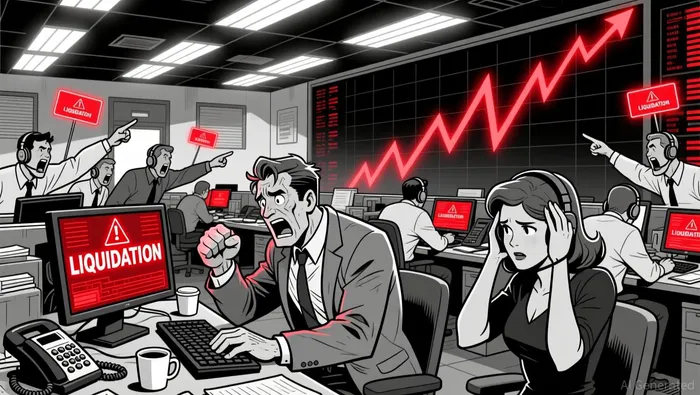
Regulatory uncertainty and institutional profit-taking compounded the crisis. As CoinMarketCap notes, the total crypto market cap dropped 6.21% in a single day to $2.95 trillion, with analysts pointing to a lack of clear policy frameworks and reduced trading volumes as key contributors to the downward spiral. These factors eroded liquidity, making the market more susceptible to panic-driven selloffs.
Opportunities in the Chaos: Options, Discipline, and Long-Term Vision
Yet amid the carnage, opportunities for disciplined investors are emerging. Deribit's $3.9 billion in expiring Bitcoin options, coupled with a put-call ratio of 0.52, signals a strong bias toward upside potential. The max pain price of $98,000 suggests a potential rebound target for call option holders, offering a glimmer of hope for those willing to navigate short-term turbulence. Forbes highlights how savvy traders are adopting strategies to mitigate emotional and financial strain.
Reduction in leverage, capping position sizes, and implementing automated price alerts are becoming table stakes in a market where impulsive decisions often lead to ruin. Elliot Han of C1 Fund argues that volatility is "the price of admission" for long-term crypto investors, emphasizing the need to absorb short-term losses over a decade-long horizon. According to Elliot Han, volatility is "the price of admission" for long-term crypto investors, emphasizing the need to absorb short-term losses over a decade-long horizon.
The Path Forward: Stability Through Structure
The current crisis underscores the necessity of structural reforms. Without robust risk management tools and clearer regulatory guidelines, the crypto market will remain prone to boom-and-bust cycles. However, for those who approach it with caution, the combination of strategic options trading, psychological discipline, and a long-term perspective could position them to capitalize on Bitcoin's eventual recovery.
The road ahead is fraught with peril, but history suggests that markets often find their footing after periods of extreme volatility. The question is not whether Bitcoin will stabilize, but who will be left standing when it does.






Comentarios
Aún no hay comentarios