
Bitcoin's Volatility Amid Macroeconomic Uncertainty: Is Now the Time to Buy the Dip?
Risk-On Sentiment and the Fragility of Passive Strategies
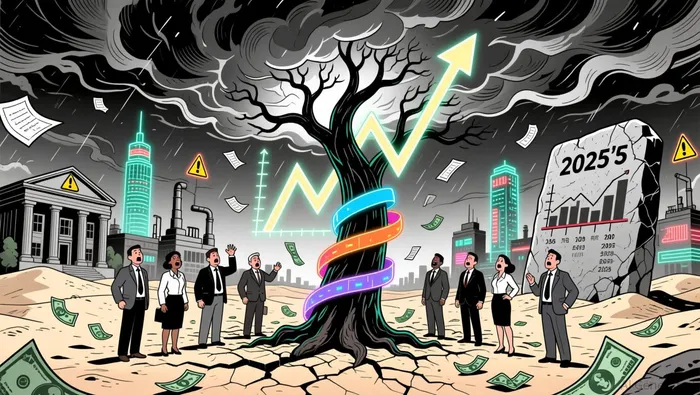
Bitcoin's recent volatility has exposed the vulnerabilities of passive investment models, particularly in companies like StrategyMSTR-- (MSTR), which holds BitcoinBTC-- as its primary asset. Strategy's stock has plummeted nearly 60% over four months, mirroring Bitcoin's price swings and underscoring the risks of relying solely on price appreciation without hedging or yield-generation strategies. This collapse reflects a broader shift in investor behavior: as macroeconomic uncertainty persists, market participants are increasingly favoring dynamic strategies like staking and yield generation over static digital asset treasuries.
The 35% rally in Bitcoin since Donald Trump's November 2024 election has created a bifurcated market. Early adopters remain profitable, but those who entered during peak periods-such as the all-time high of $126,270 in October 2025-are now significantly underwater. This divergence highlights how risk-on sentiment, often driven by political and economic catalysts, can amplify both gains and losses in a highly leveraged asset like Bitcoin.
Liquidity-Driven Cycles and the M2 Correlation
Bitcoin's price movements in 2025 have shown a strong historical correlation with global liquidity metrics, particularly the M2 money supply. According to a report by Sarson Funds Inc., Bitcoin has historically exhibited a 0.5 correlation with global M2 growth, a relationship that has held despite short-term disruptions like the 2025 "Tariff Tantrum". In Q1 2025, as U.S. M2 began expanding again and markets anticipated Federal Reserve rate cuts, Bitcoin outperformed traditional inflation hedges like gold, reinforcing its role as a high-beta asset in liquidity-driven cycles.
The euro's M2 supply, in particular, has shown an even stronger correlation with Bitcoin (r = 0.69), suggesting that Bitcoin may act as a neutral reserve asset during periods of synchronized currency debasement. Meanwhile, stablecoin supply within the crypto ecosystem has emerged as an even more precise indicator of Bitcoin's price trends, with correlations exceeding 95%. These liquidity dynamics indicate that Bitcoin's price is not just a function of speculative demand but also a reflection of broader monetary expansion.
Central Bank Policies and Investor Sentiment
Central bank actions and regulatory developments have further complicated Bitcoin's volatility. The Federal Reserve's 2022 trading rules, which banned senior officials from purchasing cryptocurrencies, were intended to prevent conflicts of interest. However, recent ethics reports revealed violations by former Fed Governor Adriana Kugler, raising questions about the enforcement of such policies and their indirect impact on investor sentiment.
On the regulatory front, the establishment of a U.S. "Strategic Bitcoin Reserve" and the Office of the Comptroller of the Currency's (OCC) guidance allowing federally chartered banks to custody cryptocurrencies have created a more favorable environment for institutional adoption. These developments, coupled with Bitcoin ETF inflows and outflows, suggest that regulatory clarity is gradually reducing friction in the market, even as macroeconomic headwinds persist.
Is Now the Time to Buy the Dip?
The answer hinges on two critical factors: timing and diversification. While Bitcoin's 30% rally in Q2 2025 fueled optimism, its subsequent correction below $90,000 underscores the risks of entering during peak liquidity. For investors with a long-term horizon, the current dip-coupled with historically low correlations to traditional assets-may present an opportunity to accumulate Bitcoin at discounted levels. VanEck's analysis projects a potential rise to $180,000 as global M2 expansion accelerates, a scenario that could materialize if central banks continue to loosen monetary policy.
However, caution is warranted. The collapse of passive Bitcoin treasuries like Strategy highlights the importance of hedging and yield-generation strategies to mitigate downside risk. Investors should also consider Bitcoin's correlation with gold (92% in 2025) and its tendency to lag behind liquidity peaks by 40 days according to analysis. Timing the market remains a challenge, but those who can navigate Bitcoin's liquidity-driven cycles and macroeconomic triggers may find themselves well-positioned for the next bull run.
Conclusion
Bitcoin's volatility in 2025 is a product of both macroeconomic uncertainty and liquidity-driven market cycles. While risk-on sentiment has fueled short-term gains, the fragility of passive strategies and regulatory uncertainties underscore the need for a diversified approach. For those willing to navigate the volatility, the current dip offers a potential entry point-but only for investors who understand the interplay between Bitcoin's price, global liquidity, and macroeconomic shifts.







Comentarios
Aún no hay comentarios