
Bitcoin's Volatility and the Investor Dilemma: Speculation or Strategic Entry?
Bitcoin's 2025 has been a rollercoaster. By Q4, the asset had plummeted nearly 24%, marking one of its worst quarters since the 2018 bear market. Yet, amid the chaos, U.S. spot BitcoinBTC-- ETFs continued to attract net inflows, and on-chain metrics like the MVRV-Z score and aSOPR suggested no immediate collapse. This duality-wild swings paired with institutional resilience-raises a critical question: Is Bitcoin's volatility a barrier to entry or an opportunity for the strategic?
The Volatility Paradox: Risk or Reward?
Bitcoin's annualized volatility has historically been three to four times that of major equity indices. In 2020, its 30-day average volatility stood at 5.17% according to data, but by 2024, signs of maturation emerged, with volatility converging toward levels seen in tech stocks like NVIDIA and Tesla as research shows. However, Q4 2025 shattered that narrative. The asset peaked at $126,210 before a 18% correction, closing the quarter down 23.8% according to reports.
This volatility isn't random. Analysts point to macroeconomic factors-U.S.-China trade tensions and global liquidity shifts-as key drivers. Yet, the same quarter saw institutional confidence remain intact. For example, U.S. spot ETFs continued to draw inflows, particularly in October and November, suggesting that volatility hasn't deterred long-term capital.
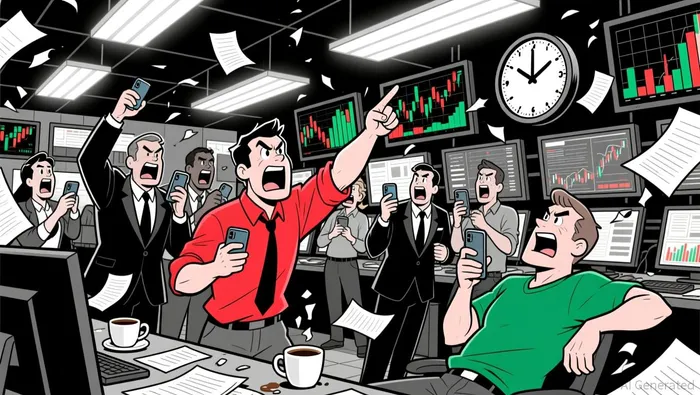
The risk-reward calculus here hinges on time horizons. Short-term traders face the perils of a 24% quarterly drop, while long-term investors might view dips as buying opportunities. As one analyst put it, "Bitcoin's volatility is a tax on patience-but also a reward for it." According to research.
The Psychology of Fear and FOMO
Market psychology in 2025 has been dominated by fear. The Crypto Fear & Greed Index, a composite of volatility, momentum, and social sentiment, spent over 30% of the year in "extreme fear" territory. By late December, it had hit 24, a level classified as "extreme fear". This reflects a broader pattern: investors often chase Bitcoin during rallies (driven by FOMO) and panic during selloffs.
A Kraken survey underscores this: 84% of crypto investors admitted to making decisions based on FOMO, often regretting purchases made near all-time highs. Social media exacerbates this, with viral posts and influencer endorsements creating a "herd mentality" as research indicates. For example, a sudden price spike to $126,000 in Q4 2025 likely triggered impulsive buying, only for many to panic sell when the market corrected according to analysis.
Yet, fear isn't always irrational. High volatility and declining buying volumes in late 2025 reinforced bearish sentiment. The divergence between Bitcoin's performance and traditional assets like gold and equities-where investors felt "structurally rewarded" by ETF approvals but left with underperforming holdings- further deepened pessimism.
Strategic Entry vs. Speculative Bets
The investor dilemma boils down to this: Is Bitcoin a speculative gamble or a strategic asset? The answer lies in balancing data and psychology.
For the strategic investor, Bitcoin's volatility is a feature, not a bug. Historical data shows that volatility tends to decline as markets mature, and 2024's trends suggested a path toward stabilization. Even in Q4 2025, on-chain metrics like stable MVRV-Z scores indicated no immediate crash risk. Moreover, institutional inflows and bullish price targets (e.g., $200,000 by 2026) suggest that volatility could be a tool for disciplined investors to accumulate at lower prices.
For the speculative trader, however, the risks are stark. A 24% quarterly drop is a harsh reminder that Bitcoin's price swings can erase gains quickly. The 84% of investors who acted on FOMO likely learned this the hard way.
Conclusion: Navigating the Dilemma
Bitcoin's volatility is both a challenge and an opportunity. For those with a long-term horizon and risk tolerance, dips like the Q4 2025 correction could represent buying opportunities. For others, the emotional toll of FOMO and panic selling makes it a high-stakes gamble.
The key lies in strategy-not speculation. As the market evolves, volatility may continue to decline, but psychological triggers like fear and greed will always play a role. Investors who can separate emotion from data-using tools like the Fear & Greed Index and on-chain metrics-may find themselves better positioned to navigate Bitcoin's rollercoaster.
In the end, the question isn't whether Bitcoin is volatile. It's whether you're prepared to ride the waves-or let them wash you away.






Comentarios
Aún no hay comentarios