
Bitcoin's Underappreciated Role in Energy Transition and Grid Stability
Bitcoin mining has long been criticized for its energy consumption, but a closer look reveals a paradox: the industry is quietly accelerating the global energy transition. By leveraging renewable energy surpluses, stabilizing grids, and incentivizing new clean energy projects, BitcoinBTC-- mining is becoming an unlikely catalyst for sustainability. For investors, this represents a compelling intersection of technological innovation and environmental impact.
The Renewable Energy Shift in Bitcoin Mining
Bitcoin's energy footprint has drawn scrutiny, but recent data shows a dramatic shift toward renewables. According to a 2025 Cambridge study, 52.4% of Bitcoin mining operations now use sustainable energy sources, including 42.6% from renewables like hydropower and wind, and 9.8% from nuclear energy according to data. This marks a significant jump from 37.6% in 2022 according to the same report. In regions like Texas, miners are strategically located near renewable energy hubs, consuming excess wind and solar power during low-demand periods. A report by ezblockchain.net highlights that Texas miners absorbed surplus renewable energy, saving $18 billion in grid costs and reducing reliance on gas peaker plants according to the report.
Iceland and Canada provide further evidence. Iceland's geothermal-powered mining operations not only benefit from low costs but also stabilize the grid by utilizing surplus renewable output according to research. Similarly, Canadian hydropower projects have integrated Bitcoin mining to reduce curtailment and enhance grid reliability according to case studies. These examples underscore how Bitcoin mining is becoming a flexible load, adapting to renewable energy's intermittency.
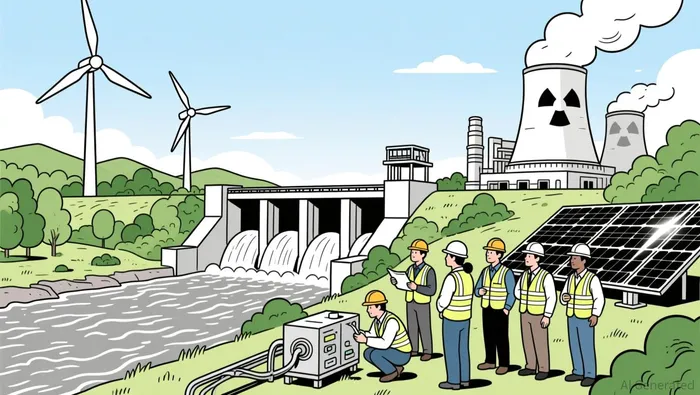
Grid Stability and Demand Response
Bitcoin mining's ability to adjust energy consumption in real-time makes it a powerful tool for grid stability. During Winter Storm Elliott in December 2022, Texas miners curtailed 1.5 gigawatts of power to support grid resilience according to reports. This flexibility is critical for renewable-heavy grids, where production variability can destabilize supply-demand balances.
Innovations like immersion cooling and hydro-cooling further enhance efficiency, reducing energy consumption for cooling and extending hardware lifespans according to industry analysis. Meanwhile, Bitcoin miners are increasingly signing long-term power purchase agreements (PPAs) with renewable developers, providing capital for projects that would otherwise be unviable. A 2025 case study in Chile saw a 2.5 MW solar farm constructed to power a Bitcoin facility, with surplus energy now supporting local communities according to the study. Research indicates such integrations can boost solar farm profitability by 125% by reducing curtailment losses according to industry data.
Expanding Beyond the Usual Suspects
While Texas and Iceland dominate the narrative, Bitcoin's role in energy transition is expanding globally. In Southeast Asia, projects like AFIN's "Green Bitcoin" initiative aim to connect users with clean energy-mined Bitcoin, leveraging solar, wind, and hydro grids according to project documentation. However, the region also faces challenges, including illegal mining operations draining energy resources. Malaysia's national utility reported $1 billion in losses from electricity theft linked to unauthorized mining between 2020 and 2025 according to official reports.
The Middle East is another emerging frontier. The UAE's $34 billion in crypto inflows (July 2023–June 2024) has spurred initiatives like Mining Grid's "Mining Race," emphasizing energy efficiency and sustainability according to financial data. Despite subsidized electricity rates as low as $0.02/kWh, extreme climates necessitate advanced cooling technologies to maintain profitability according to market analysis.
Investment Implications
For investors, Bitcoin's role in energy transition presents two key opportunities:
1. Infrastructure Development: Companies enabling renewable integration (e.g., Soluna's 3.3 MW Bitcoin mining partnership with KULR Technology according to press release) or cooling innovations are well-positioned to benefit.
2. Grid Stability Services: Bitcoin miners acting as demand response tools could monetize grid support through ancillary services markets, creating new revenue streams.
Critics argue Bitcoin's energy use remains excessive, but the data tells a different story. As of 2024, 58.9% of Bitcoin mining uses sustainable energy, far outpacing the global average of 30% according to industry reports. Moreover, Bitcoin is repurposing stranded energy-such as natural gas flaring-reducing emissions by up to 63% according to environmental studies.
Conclusion
Bitcoin mining is no longer just a high-energy industry-it's a driver of renewable adoption and grid innovation. For investors, this represents a unique opportunity to align with the energy transition while capitalizing on Bitcoin's growing role as a decentralized, flexible load. As the sector matures, those who recognize Bitcoin's underappreciated environmental value will be best positioned to profit from the next phase of its evolution.





Comentarios
Aún no hay comentarios