
Bitcoin Tax Policy Developments and Institutional Adoption: A Pathway to Long-Term Price Appreciation
The 2025 regulatory landscape for BitcoinBTC-- has created a pivotal inflection point for institutional adoption, driven by unprecedented clarity in tax policy and enforcement frameworks. As governments in the U.S., U.K., and EU implement standardized reporting requirements and tax structures, the barriers to institutional participation are dissolving, unlocking a new era of capital inflows and price appreciation.
Regulatory Clarity: A Catalyst for Institutional Confidence
The U.S. Internal Revenue Service (IRS) has introduced Form 1099-DA, mandating brokers to report digital asset transactions-including gross proceeds, cost basis, and staking rewards-directly to the IRS, according to a Treasury report. This shift, while increasing compliance complexity, has also eliminated ambiguity around tax liabilities, a critical factor for institutions. For example, the October 2025 Treasury guidance exempting unrealized gains from the 15% Corporate Alternative Minimum Tax (CAMT) has directly benefited firms like MicroStrategy and CoinbaseCOIN--, which now hold Bitcoin as a treasury asset without fear of forced sales to meet tax obligations, as outlined in that Treasury guidance.
In the U.K., HMRC's adoption of the OECD's Crypto-Asset Reporting Framework (CARF) has enforced granular transaction reporting, including full user identities and asset-specific details, as detailed in a Datos Insights analysis. While this has raised compliance costs, it has also reduced arbitrage opportunities and aligned the U.K. with global standards, attracting cross-border institutional capital. Similarly, the EU's Markets in Crypto-Assets (MiCA) regulation has harmonized tax reporting across member states, creating a unified framework that lowers operational risks for multinational institutions, according to Coinbase guidance.
Institutional Adoption: From ETFs to Treasury Holdings
The regulatory clarity post-2025 has directly accelerated institutional adoption. The approval of spot Bitcoin ETFs in 2024, coupled with the rescinding of SAB 121 (a prior SEC barrier to bank participation), has legitimized Bitcoin as a mainstream asset, as discussed in the datos-insights analysis. Major players like BlackRock and Fidelity have already integrated Bitcoin ETFs into retirement accounts, with BlackRock's iShares Bitcoin Trust ETF amassing over $50 billion in assets. This trend is projected to expand as fiduciaries allocate 2–3% of the $100 trillion global institutional asset pool to Bitcoin, generating $3–4 trillion in demand.
The adoption timeline follows a clear S-curve:
1. 2025–2027: Integration of Bitcoin ETFs into pension funds and 401(k) plans.
2. 2028–2030: Expansion into corporate treasuries, driven by the 2028 halving and reduced supply.
3. 2030–2032: Development of custody infrastructure and lending solutions, embedding Bitcoin into financial systems.
Supply Constraints and Price Dynamics
Bitcoin's fixed supply of 21 million coins, combined with halving events that reduce new supply by 50% every four years, creates a stark contrast to the explosive institutional demand. By 2028, the supply of new Bitcoin is projected to be $77 billion at current prices, while institutional demand could reach $3 trillion-a 40:1 supply-demand imbalance. This scarcity, exacerbated by corporate adoption (6.2% of total Bitcoin supply held by businesses as of 2025), positions Bitcoin for sustained price appreciation.
Risks and Mitigations
While regulatory clarity is a tailwind, challenges remain. The IRS's individual account-specific cost basis rules increase compliance burdens for institutions, and cross-border tax arbitrage risks persist. However, innovations like Bitcoin trusts (which allow tax-efficient transfers without triggering taxable events) and multi-jurisdictional custody models are mitigating these risks, as reported in the Treasury coverage.
Conclusion: A New Paradigm for Bitcoin
The 2025 tax policy updates have transformed Bitcoin from a speculative asset into a regulated, institutional-grade investment. As CARF, MiCA, and IRS frameworks reduce uncertainty, institutions are scaling their exposure through ETFs, treasuries, and infrastructure. With supply constraints amplifying demand, Bitcoin's price trajectory is poised for long-term appreciation, making it a cornerstone of diversified institutional portfolios.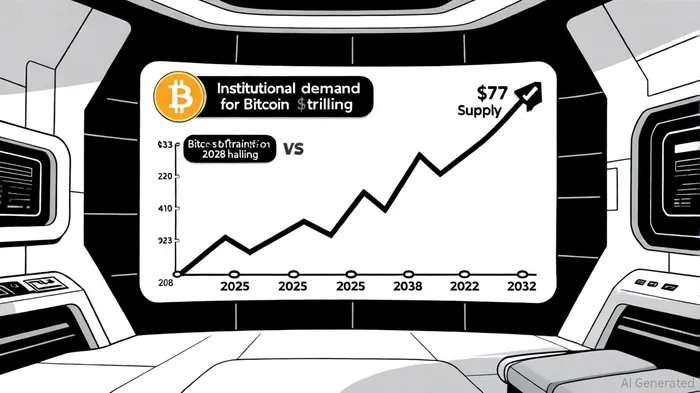





Comentarios
Aún no hay comentarios