
Bitcoin Surges Past $97K Amid U.S.-China Trade Deal Optimism: A Bullish Crossroads?
Bitcoin’s recent climb to $97,000 has reignited debates about its trajectory in 2025, with traders and analysts pointing to U.S.-China trade negotiations as a key catalyst. While geopolitical tensions remain high, whispers of a potential de-escalation have fueled Bitcoin’s resilience against broader macroeconomic headwinds. But is this rally sustainable, or merely a fleeting reaction to market psychology? Let’s dissect the data.
The Technical Case for a Parabolic Breakout
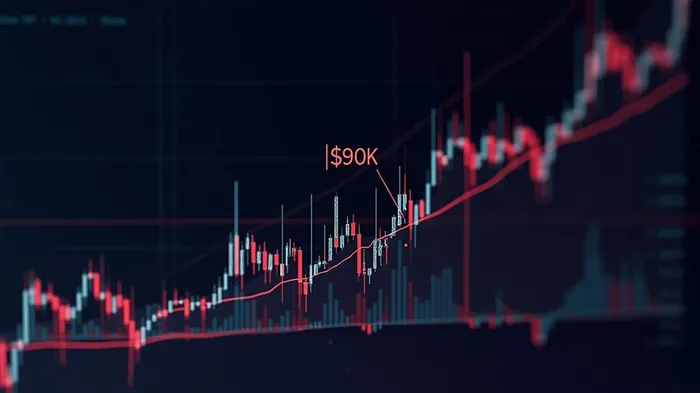
Legendary trader Peter Brandt’s analysis provides a compelling framework. His identification of a parabolic arc pattern—a recurring Bitcoin technical signal—suggests a potential rally to $125,000 by August/September 2025, with a longer-term target of $150,000. This pattern has historically preceded major highs, including Bitcoin’s 2017 $20,000 peak and 2021 $69,000 all-time high. However, Brandt cautions that post-rally corrections often exceed 50%, potentially pulling prices down to $60,000–$75,000—a risk investors must weigh against bullish momentum.
The Geopolitical Pivot: Trade Talks and Bitcoin’s Role
The U.S.-China tariff war has been Bitcoin’s silent ally. With U.S. tariffs hitting 145% and China retaliating at 125%, trade volumes have collapsed. China’s factory activity contracted at the fastest pace in 16 months in April 2025, while U.S. imports are projected to drop 20% year-over-year by late 2025. In this environment, Bitcoin’s rise—up 14% over 30 days—reflects its role as a hedge against fiat instability and geopolitical risk.
Analyst Tracy Jin of MEXC underscores Bitcoin’s dual appeal: its liquidity attracts institutional capital, while programmability (e.g., DeFi applications) fuels speculative demand. “The $95,000 level is a launchpad,” Jin states. “If trade tensions ease, $150,000 by summer and $200,000 by 2026 could be achievable.”
The Institutional Crossroads: ETFs and Apparent Demand
Institutional appetite, however, remains uneven. U.S. spot Bitcoin ETF inflows in 2025 total 28,000 BTC—far below the 200,000 BTC recorded by the same period in 2024. This raises a critical question: Is the current rally driven by retail accumulation or institutional conviction?
Technical metrics offer clues. Bitcoin’s “apparent demand”—a measure of net wallet activity—turned positive in late April, rebounding from -311,000 BTC to +65,000 BTC. Yet momentum remains weak, suggesting existing holders are buying the dip rather than new institutional money flowing in. Without sustained ETF inflows, the $100,000 barrier may prove elusive.
The Trade Deal: Catalyst or Mirage?
China’s Commerce Ministry has stated it is “evaluating” U.S. proposals for talks, but demands tariff removal as a precondition. The U.S., meanwhile, insists on structural reforms—intellectual property, market access—to offset Beijing’s $200 billion Phase 1 deal failure. While both sides signal flexibility (e.g., China’s exemptions for U.S. pharmaceuticals and semiconductors), trust remains scarce.
A breakthrough could supercharge Bitcoin. Nomura’s warning of 16 million Chinese jobs at risk underscores the urgency, while the U.S. auto industry’s tariff exemptions hint at pragmatic de-escalation steps. Yet, as analyst Alex Kuptsikevich notes, Bitcoin’s $3 trillion market cap consolidation and negative funding rates—a rarity seen only four times in two years—signal an impending breakout or crash.
Conclusion: A High-Wire Act Between Bullish and Bearish Forces
Bitcoin’s path forward hinges on two variables: the U.S.-China trade deal and institutional inflows. On one hand, a deal could propel Bitcoin toward $150,000 by year-end, leveraging its status as a macro hedge and liquidity beacon. On the other, a stalemate—or a post-rally correction—could test support levels.
Consider the numbers: - A $150,000 price would represent a 54% gain from $97K, aligning with Brandt’s parabolic model.- China’s 75–80% import drop to the U.S. would amplify Bitcoin’s appeal as an alternative to fiat.- ETF inflows need to rebound to 2024 levels (8 BTC/day vs. current 0.2 BTC/day) to sustain momentum.
Investors must balance optimism with caution. While Bitcoin’s technicals and geopolitical tailwinds are bullish, the absence of institutional capital and the risk of a 50% post-peak correction demand disciplined risk management. As traders say: “Don’t fight the tape”—but ensure you’re prepared if the music stops.






Comentarios
Aún no hay comentarios