
Bitcoin's Struggle for Credibility in a Fractured Monetary Order
The global monetary system is at a crossroads. Central banks, once seen as bastions of economic stability, now face unprecedented challenges to their independence and credibility. Meanwhile, Bitcoin-a decentralized, unregulated asset-has emerged as both a symbol of resistance to centralized control and a lightning rod for geopolitical risk. As the 2023–2025 period has demonstrated, the interplay between central bank autonomy, regulatory evolution, and geopolitical turbulence is reshaping Bitcoin's role as a hard asset.
Central Bank Independence and the Rise of BitcoinBTC-- as a Hedge
Bitcoin's appeal as a hard asset has grown in tandem with concerns over the erosion of central bank independence. Political pressures, rising federal debt, and the weaponization of monetary policy in geopolitical conflicts have led some to view Bitcoin as a safeguard against institutional overreach. According to a report, Bitcoin may serve as a "counterweight to the loss of Federal Reserve independence," particularly in scenarios where fiscal mismanagement or political interference undermines traditional monetary systems. This dynamic is not hypothetical: the Federal Reserve's balance sheet has expanded to unprecedented levels, while political actors increasingly demand tools like "helicopter money" or inflation-targeting mandates that blur the line between fiscal and monetary policy.
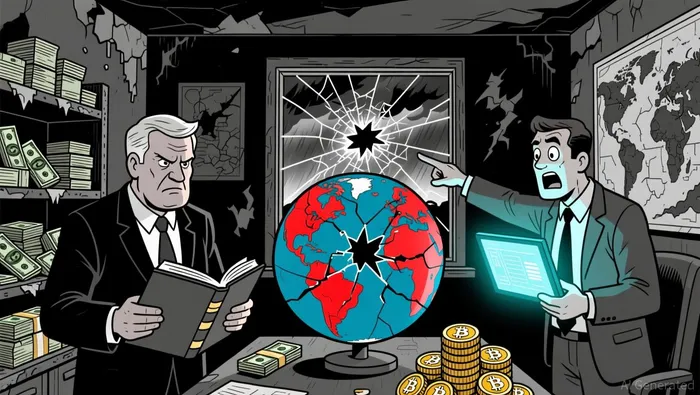
However, Bitcoin's role as a hedge is not without contradictions. While it thrives on decentralization, its adoption as a hard asset depends on the very institutions it seeks to challenge. For example, the Basel Committee's 2025 reassessment of prudential rules for cryptoBTC-- exposures has forced banks to treat Bitcoin as a high-risk asset, complicating its integration into traditional financial systems. This regulatory friction highlights a paradox: Bitcoin's credibility as a hard asset is both bolstered and constrained by the central banks it aims to displace.
Geopolitical Risk and the Dual-Edged Nature of Crypto's Growth
The geopolitical landscape has further complicated Bitcoin's journey. On one hand, the decentralization of digital assets offers a refuge in regions with unstable currencies or authoritarian regimes. On the other, the same attributes make cryptocurrencies a tool for illicit finance and geopolitical destabilization. A 2025 Forbes analysis warns that the crypto boom introduces "geo-strategic perils," as decentralized networks challenge state control over capital flows and monetary sovereignty. For instance, sanctions evasion and cross-border money laundering have forced governments to accelerate regulatory crackdowns, creating a volatile environment for Bitcoin's adoption.
Yet, this tension also underscores Bitcoin's unique position. In jurisdictions where central bank independence is compromised-such as nations with hyperinflation or politically driven currency devaluations-Bitcoin has seen surges in adoption. El Salvador's 2023 adoption of Bitcoin as legal tender, while controversial, demonstrated how clear regulatory frameworks can balance innovation with consumer protection. The country's experience, though mixed, has become a case study for how geopolitical risk can drive demand for decentralized assets while also exposing their limitations in real-world governance.
The Path Forward: Credibility Through Regulation or Resistance?
Bitcoin's struggle for credibility hinges on its ability to navigate these competing forces. Central banks, for all their flaws, remain the gatekeepers of financial legitimacy. If Bitcoin is to be recognized as a hard asset, it must either co-opt the regulatory frameworks that central banks enforce or reject them entirely. The 2025 Global Crypto Policy Review suggests a middle path is emerging: jurisdictions that adopt innovation-friendly regulations-like El Salvador's-tend to see higher institutional adoption of Bitcoin, while those clinging to restrictive policies risk stifling growth.
At the same time, geopolitical risks will continue to shape Bitcoin's trajectory. As the U.S. and China vie for technological dominance, and as conflicts in Eastern Europe and the Middle East disrupt traditional financial systems, Bitcoin's role as a "store of value" will be tested. Will it become a tool for financial resilience in a fractured world, or will its association with volatility and regulatory uncertainty relegate it to the fringes?
Conclusion
Bitcoin's credibility as a hard asset is inextricably linked to the health of the central banking system it seeks to disrupt. Central bank independence, geopolitical stability, and regulatory evolution are not just external factors-they are the very forces that will determine whether Bitcoin becomes a cornerstone of the new monetary order or a relic of its instability. For investors, the key lies in understanding this duality: Bitcoin is both a product of the current system's flaws and a potential solution to them.






Comentarios
Aún no hay comentarios