
Bitcoin's Structural Impact on Global Capital Allocation: A New Asset Class Disrupting Traditional Portfolio Dynamics
Bitcoin's emergence as a distinct asset class has catalyzed a seismic shift in global capital allocation, challenging the long-standing dominance of traditional portfolios. From institutional adoption to corporate treasury strategies, Bitcoin's integration into mainstream finance has redefined risk-return paradigms and diversified investment frameworks. This analysis explores how Bitcoin's structural attributes-its deflationary design, low correlation to traditional markets, and regulatory legitimization-are reshaping capital allocation strategies across institutional, corporate, and academic domains.
Institutional Adoption and the ETF Revolution
The approval of U.S. spot BitcoinBTC-- ETFs in early 2024 marked a watershed moment, transforming Bitcoin from a speculative asset into a regulated financial instrument. These ETFs, now holding over $138 billion in assets, have democratized access for registered investment advisers (RIAs), hedge funds, and pension funds, reducing Bitcoin's volatility to levels comparable to the S&P 500 and gold, according to the Global Bitcoin Treasury Playbook. By mid-2025, Bitcoin's 30-day rolling volatility had stabilized, enhancing its viability as a medium of exchange and store of value.
Institutional allocations have surged, with 59% of institutional investors dedicating at least 10% of their portfolios to Bitcoin and digital assets by Q2 2025, according to a Voya analysis. BlackRock's iShares Bitcoin Trust (IBIT) alone attracted $18 billion in assets under management (AUM) by Q1 2025, underscoring the appetite for structured Bitcoin exposure. This shift is not merely speculative; it reflects a strategic reallocation of capital toward assets with asymmetric tail risk mitigation and inflation-hedging properties, as discussed in Bitcoin as a financial asset.
Corporate Treasury Strategies and Jurisdictional Innovation
Public companies have restructured balance sheets to incorporate Bitcoin as a strategic reserve asset. Firms like Strategy (formerly MicroStrategy), Metaplanet, and The Blockchain Group have leveraged jurisdiction-specific tools-such as Japan's NISA accounts and the UK's ISA/SIPP eligibility-to optimize tax efficiency and attract investors, as detailed in the Global Bitcoin Treasury Playbook. These strategies highlight Bitcoin's role in capital stack engineering, enabling firms to raise equity and debt while maximizing Bitcoin per share.
Small businesses have also embraced Bitcoin, with 75% of business clients (primarily those with fewer than 50 employees) allocating 10% of their net income to Bitcoin as a treasury asset, according to a Bitcoin adoption study. This trend underscores Bitcoin's utility as a hedge against currency devaluation and a tool for intergenerational wealth preservation, consistent with observations in the Voya analysis.
Academic Perspectives: Speculation vs. Safe Haven
Academic research in 2025 has crystallized Bitcoin's dual identity as both a speculative and a safe-haven asset, as discussed in Bitcoin as a financial asset. On one hand, its price jumps and volatility are driven by investor sentiment and attention cycles. On the other, Bitcoin exhibits negative correlations with traditional assets, offering diversification benefits during market downturns. A 2025 study in Financial Innovation notes that Bitcoin's asymmetric tail dependence makes it a compelling hedge, particularly in portfolios with high equity exposure.
BlackRock's 2025 analysis further validates this duality, demonstrating that a 2% Bitcoin allocation can enhance risk-return dynamics, with higher allocations (up to 20%) offering trade-offs between returns and volatility. This aligns with broader academic consensus that Bitcoin should be treated as a distinct asset class in modern portfolio theory.
Regulatory Clarity and Future Implications
Regulatory developments have accelerated Bitcoin's integration into traditional finance. The Trump administration's 2025 executive order emphasized support for open public blockchains, while the establishment of a U.S. Strategic Bitcoin Reserve in March 2025 positioned Bitcoin as a sovereign hedge against inflation, a finding noted in the Bitcoin adoption study. These moves have reduced institutional hesitancy, with Bitcoin's correlation to the S&P 500 dropping to near-zero by mid-2024, according to the same study.
Looking ahead, innovations like altcoin ETFs and liquid staking tokens may expand Bitcoin's utility beyond its current role. However, cross-chain adoption via wrappers and bridges raises concerns about custodial risk and centralization, as noted in the Global Bitcoin Treasury Playbook. Institutions must balance innovation with adherence to Bitcoin's foundational principles of decentralization.
Conclusion
Bitcoin's structural impact on global capital allocation is undeniable. By reducing volatility, offering diversification, and attracting institutional and corporate capital, Bitcoin has disrupted traditional portfolio dynamics. As regulatory clarity and infrastructure improvements continue, its role as a store of value and inflation hedge will likely expand. However, the path forward requires balancing innovation with risk management, ensuring Bitcoin's unique attributes are preserved while integrating it into the broader financial ecosystem.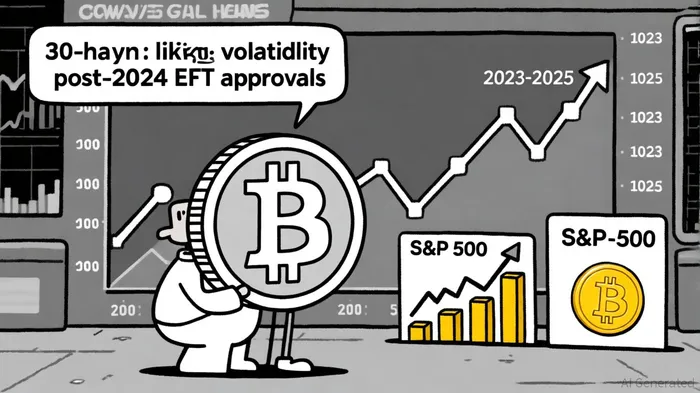







Comentarios
Aún no hay comentarios