
Bitcoin's Structural Crossroads: Assessing the Bottom and the Rotation Catalyst
Bitcoin's immediate setup is one of tension between a potential technical bounce and deep-seated structural concerns. The asset is currently trading near $90,605, having shed approximately 28% from its October 2025 all-time high of $126,198. This places it squarely within a critical battleground zone, where the market's next directional move hinges on a fragile support level.
On one side, a specific technical pattern offers a bullish narrative. Analysts point to Bitcoin's return to the so-called "Crash Line," a trendline that has historically acted as critical reload point during bull cycles. The theory is that each return to this line has preceded a sharp correction followed by a powerful rally, suggesting the current dip could be a buying opportunity to reload for the next leg up.
On the other side, the immediate technical structure is under severe pressure. The key support zone is now defined as $88,000 to $85,000. Holding above this range is essential to keep short-term recovery attempts alive; a decisive weekly close below $85,000 risks renewed selling pressure and deeper downside. This creates a clear conflict: the bullish Crash Line theory versus the bearish need to defend a critical floor.
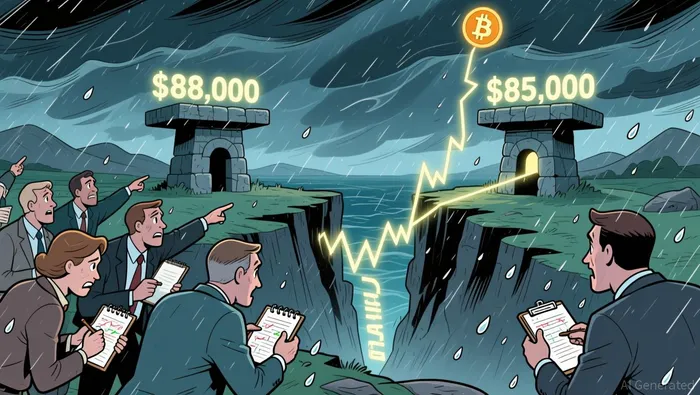
From a broader perspective, the analyst view remains skeptical. Despite the technical chatter, BitcoinBTC-- is seen as structurally weak with no credible bottom in sight. Rebounds are framed not as the start of a new trend, but as technical reactions within a downtrend. This outlook is shaped by a broken cycle narrative, where the traditional post-halving rally pattern failed in 2025, and the market's new, more deliberate institutional structure lacks the emotional fuel for a rapid reversal. The current price action, therefore, is less a signal of strength and more a test of whether this structural weakness can be overcome.
Institutional Flows and the Rotation Thesis
The immediate price action is being driven by a powerful but fickle force: exchange-traded fund inflows. The early momentum was explosive, with roughly $1.2 billion flowing into U.S. spot bitcoin ETFs over the first two trading days of 2026. That capital fueled a rally that briefly approached $95,000. Yet the market's reaction has been a classic test of conviction. After that initial surge, flows turned negative for a second straight session, and prices have since fallen back below the $90,000 level. This volatility underscores a fragile setup where institutional capital is willing to enter but not yet committed to a sustained trend.
This dynamic fuels a central debate. One narrative is one of capital rotation. A recent framework posits that as gold hits all-time highs and regulatory clarity improves, institutional money could funnel into digital assets. The model projects a potential Bitcoin price range of $175,000 to $200,000 by mid-2026 under this scenario. It argues that Bitcoin's historical beta during monetary regime shifts-running 2.5 to 3.0 times gold's movements-suggests a powerful repricing event if the rotation gains traction. The thesis challenges the outdated four-year cycle, framing the current market as a new, more deliberate institutional structure.
The counter-narrative is one of structural weakness, where the rotation thesis is a hopeful projection, not a guaranteed path. The failure of the traditional cycle in 2025 is the clearest evidence. Bitcoin ended that year down about 6.3%, marking its first annual loss in its typical cycle and a stark break from the post-halving rally pattern. This outcome is attributed to a fundamental shift in market structure, where large institutional players now dominate. Their more deliberate, less emotional approach helps stabilize the asset long-term but also slows the kind of rapid, speculative rallies that characterized earlier cycles. In this view, the $1.2 billion ETF inflow is a tactical event, not the start of a new, powerful trend. The market's choppy, gap-filling behavior suggests it is still rebuilding conviction after a weak year, with macro pressures remaining the dominant driver.
The bottom line is a conflict between a hopeful model and a broken pattern. The rotation thesis offers a compelling structural catalyst for a major move, but it requires a sequence of favorable macro conditions and a decisive shift in capital allocation. The alternative view, supported by 2025's results, argues that the market's new institutional DNA makes such a rapid, cycle-driven repricing unlikely. For now, the price is caught between these two narratives, with ETF flows acting as the short-term trigger that can validate either story.
Market Sentiment and Positioning
The sustainability of any recovery hinges on a market caught between deep-seated fear and a crowded, leveraged trade. The dominant sentiment is one of caution, as the Crypto Fear and Greed Index continues to reflect "Fear." This psychological backdrop is critical, as it shapes how traders react to volatility and whether new capital is willing to step in.
Positioning data reveals a market primed for turbulence. Nearly 70% of Binance traders with open BTC positions are long, creating a classic crowded trade. This level of bullish concentration is a vulnerability. It means the market has limited room to the upside without triggering a wave of profit-taking, and it increases the risk of a sharp, cascading liquidation if prices reverse. The recent 24-hour period provided a stark preview of this risk, with over $140 million wiped out in liquidations. This massive forced selling highlights the extreme volatility and the fragility of the current setup, where even a modest price move can trigger significant pain.
This dynamic also reveals a potential rotation within the broader crypto market. While Bitcoin has slipped back below $90,000, EthereumETH-- rallied over 5.6% on Sunday. This divergence is telling. It illustrates how capital can flow between assets even within a broader risk-off environment, with Ethereum's price action suggesting it may be absorbing some of the selling pressure that Bitcoin cannot. This pattern aligns with the historical tendency for Ethereum to lag Bitcoin early in a cycle, as capital rotates from the perceived "safe haven" of Bitcoin into the more speculative, utility-driven altcoin space once Bitcoin momentum begins to cool.
The bottom line is a market with low conviction and high leverage. The fear sentiment provides a floor for accumulation, but the crowded long positions and recent liquidation data point to a high risk of further volatility. For a recovery to be sustainable, it will need to break through this psychological and technical overhang, likely requiring a decisive shift in macro sentiment or a new catalyst to draw capital away from the crowded Bitcoin trade.
Catalysts, Scenarios, and Key Watchpoints
The path forward is defined by a handful of critical factors that will determine whether the current price action signals a true bottom or the start of a deeper decline. The immediate catalyst is clear: upcoming exchange-traded fund flow data. Analysts stress that this will prove critical in determining whether fresh institutional capital returns to digital assets or caution continues to dominate positioning. After the initial $1.2 billion inflow in early January, the market's reaction has been a test of conviction. Sustained positive flows are needed to validate the rotation thesis and provide the momentum for a breakout. Persistent outflows, however, would confirm the structural weakness narrative and likely fuel renewed selling pressure.
Technically, the market is balanced on a knife's edge. The key level to watch is a weekly close below $85,000. Holding above the $88,000 to $85,000 zone is essential to keep short-term recovery attempts alive. A decisive break below that floor risks triggering a wave of profit-taking and technical selling, which could accelerate the price toward the next major support zone. Analysis suggests this could target the $68,000 to $74,000 area, a region defined by April 2025 lows. This level represents a significant downside move from current prices and would signal that the current consolidation is a failed bounce.
Beyond the immediate price action, the broader macro backdrop is shifting in a way that could support Bitcoin's long-term narrative. Two reinforcing trends are emerging: a steepening yield curve and a structurally weaker dollar. The Treasury curve has moved decisively out of its inverted state, while the dollar has depreciated roughly 9% from January 2025 levels. Analysts note that this configuration-a softer dollar and elevated long-term yields-rewards assets with defensive characteristics and near-term cash flows. For Bitcoin, this environment could provide a supportive tailwind, even as financial conditions remain tighter than headline rate cuts suggest. This macro shift is a structural factor that could underpin a longer-term recovery, but it must first overcome the near-term technical and sentiment headwinds.
The bottom line is a market at a crossroads. The setup requires a confluence of factors: positive ETF flows to re-ignite institutional momentum, a decisive hold above the $85,000 technical floor, and a macro environment that continues to favor risk assets. Without this alignment, the path of least resistance remains lower.






Comentarios
Aún no hay comentarios