
Bitcoin's Strategic Edge in a Debanking Era: Eric Trump's Crypto Play as a Macro Hedge
The erosion of traditional banking systems, accelerated by macroeconomic instability and technological disruption, has created a fertile ground for alternative wealth strategies. BitcoinBTC-- and tokenization are emerging as critical tools for institutional and personal investors seeking to hedge against systemic risks. This analysis explores how these innovations are reshaping financial paradigms, with a focus on Eric Trump's crypto-driven ventures and broader institutional adoption trends.
The Debanking Era: A Shift in Financial Power
Traditional banking is under siege. From 2023 to 2025, digital banking has captured 77% of consumer preference, with millennials leading the charge. The rise of digital-only banks-now accounting for 3.9% of total assets in the euro area-reflects a structural shift toward decentralized systems. Meanwhile, physical branches are disappearing: 9% of U.S. bank branches closed between 2017 and 2021. This "de-banking" trend is not merely a technological shift but a response to systemic risks, including currency devaluation, geopolitical volatility, and regulatory uncertainty.
Bitcoin's emergence as a macroeconomic hedge is a direct consequence of this erosion. By 2025, 55% of traditional hedge funds had exposure to digital assets, up from 47% in 2024, as investors seek uncorrelated assets to protect against fiat instability. Bitcoin's fixed supply and decentralized design make it a compelling counter-reserve asset in a world where central bank digital currencies and multipolar systems are redefining monetary order.
Tokenization: Democratizing Access to Institutional-Grade Assets
Tokenization is bridging the gap between traditional and digital finance. Eric Trump's ventures exemplify this trend. Through World Liberty FinancialWLFI-- (WLFI), he has tokenized real estate assets, including a building under development and the Trump International Hotel & Tower in Dubai. These projects allow fractional ownership starting at $1,000, democratizing access to high-value real estate while leveraging blockchain for liquidity and transparency.
This strategy aligns with broader institutional adoption. BlackRock and Franklin Templeton are exploring tokenized assets. Smaller hedge funds and macro strategy managers are particularly enthusiastic, with one-third actively pursuing tokenization initiatives. The appeal lies in operational efficiency: tokenized structures reduce settlement times, lower transaction costs, and enable 24/7 trading.
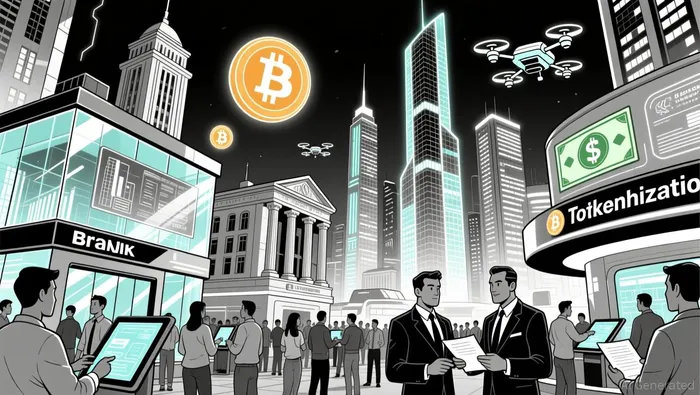
Eric Trump's USD1USD1-- stablecoin further underscores the macroeconomic potential of tokenization. By accepting cryptocurrency for property purchases in Dubai, his projects tap into a $1 billion market, leveraging regulatory-friendly environments to scale adoption. Institutional interest is growing: Abu Dhabi's DWF Labs recently purchased $25 million in World Liberty tokens, signaling confidence in the model.
Regulatory Dynamics: A Double-Edged Sword
Regulatory clarity is a linchpin for institutional adoption. Nearly half of surveyed investors cite U.S. regulatory developments as a catalyst for increased digital asset allocations. However, the sector remains fraught with challenges. Alt5 Sigma, a Trump-linked crypto firm, faced SEC scrutiny over CEO suspension filings, highlighting compliance risks. Such incidents underscore the need for robust governance frameworks as tokenization scales.
Despite these hurdles, the macroeconomic narrative for Bitcoin and tokenization is gaining traction. Rising global tensions have amplified concerns over currency devaluation, making Bitcoin's fixed supply more attractive. Speculative forecasts suggest Bitcoin could reach $250,000 in a systemic macroeconomic reset, though volatility and limited real-world use cases remain barriers.
Strategic Implications for Investors
For institutional and personal investors, the strategic edge lies in diversification. Bitcoin and tokenization offer asymmetric upside in a world of systemic uncertainty. Key considerations include:
1. Hedging Against Fiat Erosion: Bitcoin's scarcity and borderless nature make it a hedge against inflation and currency devaluation.
2. Liquidity via Tokenization: Fractional ownership and 24/7 trading enhance liquidity in traditionally illiquid assets like real estate.
3. Regulatory Preparedness: Investors must navigate evolving compliance landscapes, prioritizing platforms with transparent governance.
Eric Trump's ventures illustrate these principles in action. His Bitcoin mining company, American BitcoinABTC-- Corp., reported $3.5 million in Q3 2025 net income while holding 3,418 BTC. This dual strategy-mining Bitcoin for long-term value and tokenizing real estate for liquidity-positions him as a macro hedge against both economic and regulatory headwinds.
Conclusion
The de-banking era is not a passing trend but a structural reordering of financial systems. Bitcoin and tokenization are at the forefront of this shift, offering institutional and personal investors tools to navigate a world of systemic risk. As traditional banks grapple with digital disruption and regulatory scrutiny, those who embrace decentralized, blockchain-enabled strategies will likely outperform. Eric Trump's crypto play, while emblematic of broader trends, also highlights the need for caution: the path to macroeconomic resilience is paved with both opportunity and volatility.





Comentarios
Aún no hay comentarios