
Bitcoin May Near Short-Term Rebound as On-Chain Flows Strengthen and Trump's Credit Cap Boosts Crypto Adoption
Bitcoin's on-chain activity indicates a potential short-term rebound with inflows stabilizing since December 24, 2025. Trump's proposed 10% credit card interest rate cap could shift financial behavior toward BitcoinBTC-- and DeFi lending platforms. Historical miner behavior, institutional accumulation, and on-chain metrics like STH-SOPR suggest Bitcoin may be near a cycle low.
Bitcoin's price appears to be approaching a short-term recovery, supported by on-chain data showing a stabilization in investor inflows since late 2025. Analysts like Willy Woo highlight the role of miner behavior in maintaining a floor as production costs approach $101,000 per BTC. This suggests a cautious window for potential upward movement, though broader liquidity trends remain a concern.
Meanwhile, President Trump's proposed credit card interest rate cap at 10% may indirectly boost crypto adoption. This policy could push consumers with lower credit scores toward alternative financial systems like Bitcoin and DeFi platforms according to analysis. Analysts note that this shift could create a "seamless adoption cycle" for digital assets and stablecoins as reported.
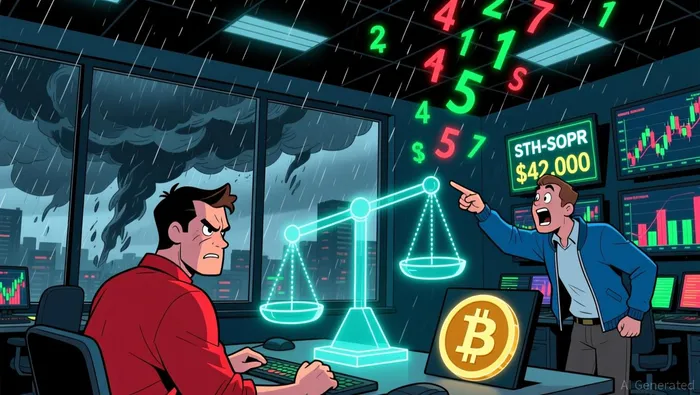
On-chain metrics such as the STH-SOPR (Short-Term Holder Spent Output Profit Ratio) also suggest a potential reversal in sentiment as the ratio recently crossed above 1.0 . This marks a notable shift since October 2025, indicating a possible trend change for Bitcoin. Additionally, Bitcoin's price near the 4.5% annual price flip point suggests a possible catalyst for a new bull phase .
Despite these potential bullish signals, Bitcoin's 2026 rally remains fragile. U.S. spot Bitcoin ETFs have seen heavy outflows in recent days, contradicting the price action and signaling nervous repositioning. This divergence between retail-driven price surges and institutional disengagement underscores the tension between speculative flows and long-term capital as noted.
Is Bitcoin's Price Recovery Sustainable in the Near Term?
Bitcoin's potential price rebound is supported by a combination of miner behavior, on-chain flow dynamics, and speculative activity. However, analysts remain cautious. Willy Woo has noted that while Bitcoin bottomed in late 2025, broader liquidity flows have weakened relative to price momentum, which may limit the sustainability of a rally according to analysis. The STH-SOPR and NVT ratio also suggest improving sentiment, but the market is still in a consolidation phase .
Some analysts believe that Bitcoin has already begun to consolidate above $42,000, a level that may encourage a return to mining activity as indicated. This could create a self-reinforcing cycle as mining output increases and new supply enters the market. However, if prices drop below $105,000, bearish momentum could resume .
What Role Could Trump's Credit Card Policy Play in Bitcoin's Future?
Trump's proposed credit card interest rate cap could drive millions of Americans toward alternative financial systems. The 10% cap, set to take effect in January 2026, may restrict traditional credit access for those with credit scores below 780, pushing them toward DeFi platforms like AaveAAVE-- and CompoundCOMP-- according to analysis. This shift could increase demand for stablecoins and yield-generating assets like Bitcoin.
Banks such as Visa and Mastercard could face short-term volatility as they adjust to the new policy. The offloading of low-credit-rated customers may also lead to increased competition in the DeFi space, potentially boosting liquidity and participation in Bitcoin-based financial systems as reported.
Despite these potential benefits, some critics argue that the policy may reduce credit availability for vulnerable borrowers and push them toward high-risk alternatives like payday loans . Additionally, the implementation of the policy will depend on congressional action and regulatory support .
Is the 2026 Bitcoin Rally Built on Conviction or Speculation?
The current rally in Bitcoin appears to be driven by speculative activity rather than broad-based institutional conviction. Smaller altcoins like XRPXRP-- have outperformed BTCBTC-- in recent weeks, suggesting a rotation into higher-risk assets according to analysis. This pattern is often associated with retail-driven markets where sentiment and narratives can drive short-term price movements.
Meanwhile, ETF outflows have raised questions about the sustainability of the rally. While Bitcoin and EthereumETH-- prices have surged, institutional funds have been pulling back, signaling a lack of long-term confidence as noted. This divergence may continue to create volatility as the market tries to establish a new equilibrium.
Critics argue that the current rally may be more of a technical reaction than a structural bottom for Bitcoin. The market remains in a delicate balance, with speculation and regulatory uncertainty shaping price action according to analysis.
In the coming weeks, the implementation of Trump's credit card cap and ongoing regulatory developments could provide additional clarity. For now, investors remain cautious, balancing optimism about potential adoption with concerns about liquidity and institutional support.






Comentarios
Aún no hay comentarios