
Bitcoin's Short Squeeze Potential Amid ETF-Driven Liquidity Shifts
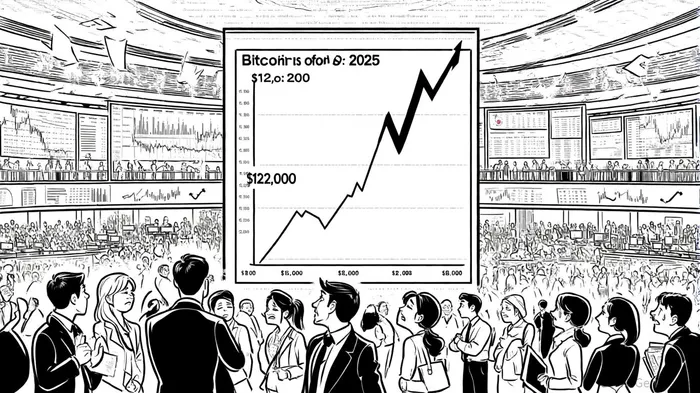
The approval of U.S. spot BitcoinBTC-- ETFs in early 2024 marked a seismic shift in the cryptocurrency market, catalyzing a structural transformation in liquidity, volatility, and institutional participation. By August 2025, these ETFs had amassed over $81 billion in assets under management (AUM), with BlackRock's iShares Bitcoin Trust (IBIT) alone holding $80 billion-nearly 6.5% of the total Bitcoin supply, according to a BeinCrypto analysis. This influx of institutional capital has not only stabilized Bitcoin's price but also created a unique market environment ripe for short squeeze dynamics.
Market Structure: ETFs as a Liquidity Engine
Bitcoin ETFs have become the primary conduit for institutional capital, acting as a bridge between traditional finance and the crypto market. According to an Aurpay report summarizing Analytics Insight, ETF inflows in 2025 surpassed $14.83 billion, with U.S. spot ETFs controlling 1.296 million BTC-approximately 6.5% of the circulating supply. This dominance has tightened bid-ask spreads and reduced volatility compared to earlier speculative cycles. For instance, Bitcoin's annualized volatility dropped 75% in 2025 as professional investors acted as "strong hands," absorbing retail-driven volatility, a BeinCrypto analysis found.
The regulatory environment further amplified this shift. The SEC's approval of in-kind creation and redemption mechanisms for crypto ETFs in 2024 improved efficiency, enabling seamless arbitrage and liquidity provision, as noted in a Tech VentureSpot listing. Meanwhile, the passage of the GENIUS Act in July 2025 provided stablecoin issuers with clear reserve requirements, bolstering institutional confidence, Tech VentureSpot reported. These developments have positioned Bitcoin as a core asset class, with 59% of institutional investors allocating at least 10% of their portfolios to digital assets by August 2025, according to the BeinCrypto analysis.
Short Squeeze Dynamics: A Structural Imbalance
The interplay between ETF inflows and derivatives markets has created a fertile ground for short squeezes. In Q3 2025, Bitcoin's price surged to a record $126,000, triggering over $330 million in short liquidations as bearish positions were unprepared for the bullish breakout, Aurpay reported. This event mirrored a classic short squeeze, where ETF-driven demand outpaced supply, forcing short sellers to cover positions at escalating prices.
A case study from September 2025 illustrates this dynamic: a $2.7 billion inflow into Bitcoin ETFs pushed the price to $110,000, effectively acting as an "algorithmic wrecking ball" for short positions, according to a Dexlaro case study. The report noted that market makers exacerbated the squeeze by narrowing bid-ask spreads to 0.01% to swallow sell orders, while volatility tamed as S&P 500 funds added BTC hedges. The result was a technical ambush, with whales stacking 18,000 BTC pre-breakout to form a golden cross pattern, signaling a sustained uptrend, the Dexlaro case study observed.
Short-Term Reversal Strategies: Exploiting ETF Liquidity
Traders and institutions have developed sophisticated strategies to capitalize on ETF-driven liquidity shifts. One approach involves leveraging short Bitcoin ETFs, such as the ProShares Short Bitcoin Strategy ETF (BITI) and UltraShort Bitcoin Strategy ETF (SBIT), which offer –1x and –2x inverse exposure to Bitcoin's daily price movements, as detailed by Tech VentureSpot. These instruments, which use a mix of futures (78%), swaps (18%), and cash collateral (4%), enable hedging during market corrections, per Tech VentureSpot. For example, BITI's $73.49 million AUM and 1.03% expense ratio make it ideal for quick, low-cost hedging, Tech VentureSpot noted.
Another strategy focuses on timing ETF inflows. Historical data shows that inflows exceeding $1 billion often coincide with Bitcoin reaching new all-time highs, as seen in 2024 and 2025, the BeinCrypto analysis found. Traders monitor these inflows to identify potential short squeeze triggers, such as liquidity clusters above the spot price or key support levels like $118,000–$122,000, Aurpay observed. Additionally, arbitrage unwinding by hedge funds-driven by elevated funding rates (24%) and basis spreads (16%)-has become a critical factor in ETF outflows and market sentiment shifts, the Dexlaro case study reported.
Contrarian Perspectives: Caution Amid Optimism
While the bullish narrative is compelling, contrarian voices highlight risks. Jim Bianco, a macro strategist, argues that Bitcoin may have already absorbed much of the demand from ETFs, suggesting the price impact of future inflows could be muted, as outlined in Jim Bianco's contrarian view. Similarly, Allen Farrington critiques the philosophical contradiction of investing in Bitcoin ETFs while adhering to Bitcoin's decentralized ethos, advocating for self-custody over centralized structures, Farrington wrote. These perspectives underscore the need for balanced risk management, particularly as ETFs re-centralize Bitcoin's liquidity.
Conclusion
Bitcoin's short squeeze potential in 2025 is a product of ETF-driven liquidity shifts, institutional adoption, and regulatory clarity. While the market structure favors bullish momentum, traders must remain vigilant about short-term reversals and contrarian risks. As ETF inflows continue to reshape Bitcoin's price dynamics, the interplay between liquidity, volatility, and positioning will remain a critical focal point for investors navigating this evolving landscape.





Comentarios
Aún no hay comentarios