
Bitcoin's Sensitivity to Macroeconomic Volatility and Digital Asset Security Risks: Assessing Long-Term Hodler Resilience
In the ever-evolving landscape of digital assets, Bitcoin's interplay with macroeconomic volatility and security risks has become a focal point for investors and institutions alike. As of October 2025, BitcoinBTC-- has surged past $100,000, driven by a confluence of factors including softer-than-expected U.S. inflation data, anticipated Federal Reserve rate cuts, and a weakening U.S. dollar. However, this growth trajectory is not without its challenges. The cryptocurrency's resilience in the face of macroeconomic turbulence and digital asset security risks-such as exchange hacks and regulatory shifts-has tested the adaptability of long-term hodlers. This analysis explores how these dual pressures shape Bitcoin's trajectory and the strategies employed by investors to navigate a turbulent market environment.
Macroeconomic Volatility: A Double-Edged Sword
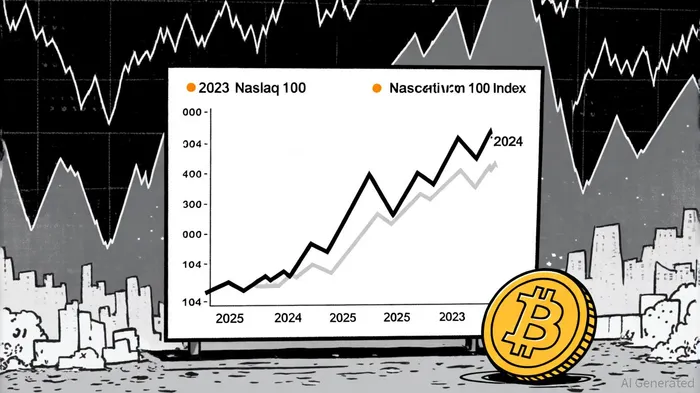
Bitcoin's price dynamics in 2025 have been deeply intertwined with macroeconomic indicators. A 30-day correlation coefficient of 0.70 between Bitcoin and the Nasdaq 100 Index underscores the cryptocurrency's alignment with U.S. tech sector performance, reflecting its growing integration into traditional financial markets, according to a Blockhead report. The Federal Reserve's anticipated rate cuts, beginning in September 2025, have further bolstered Bitcoin's appeal. Lower borrowing costs reduce the opportunity cost of holding high-risk assets, while the potential for inflationary pressures-driven by accommodative monetary policy-has reinforced Bitcoin's role as a hedge, as explained in a Davos Traders analysis.
However, this macroeconomic sensitivity introduces volatility. For instance, the U.S. Dollar Index (DXY) has shown a weakening trend year-to-date, which has historically favored Bitcoin's price performance. Yet, unexpected GDP growth in Q2 2025-surpassing 3%-delayed the urgency for rate cuts, creating a mixed environment where Bitcoin's growth was more structurally driven (e.g., ETF inflows and corporate treasury adoption) than directly correlated with GDP, according to an Amberdata analysis. This duality highlights the complexity of Bitcoin's macroeconomic exposure, where favorable conditions can coexist with structural headwinds.
Digital Asset Security Risks: A Persistent Challenge
While macroeconomic factors shape Bitcoin's price, security risks remain a critical concern for long-term hodlers. The 2025 Bybit hack, which resulted in a $1.4 billion theft, exemplifies the vulnerabilities of centralized custodial systems, as detailed in a ResearchGate paper. Such incidents have prompted a shift toward institutional-grade custody solutions, including multi-signature hardware wallets, air-gapped storage, and geographic redundancy. For large holders, securing Bitcoin requires "military-grade precision," as threats like quantum computing risks and social engineering attacks evolve, according to a Bitcoin security guide.
Regulatory changes have further complicated the security landscape. The U.S. Congress's passage of the GENIUS and CLARITY Acts in 2025 introduced transparency requirements for stablecoins and DeFi platforms, fostering institutional confidence while also creating compliance challenges for privacy-focused projects, as noted in a CoinEdition recap. These developments underscore the need for hodlers to balance regulatory compliance with robust security practices, particularly as geopolitical tensions and cyberattacks intensify.
Long-Term Hodler Resilience: Adapting to Dual Pressures
The resilience of long-term hodlers in 2023–2025 has been shaped by their ability to navigate both macroeconomic and security risks. Behavioral studies reveal that hodlers often exhibit anchoring and herding biases during crises, yet institutional investors have increasingly adopted data-driven strategies to mitigate these tendencies, according to a peer-reviewed study. For example, public companies collectively held 159,107 BTC by Q2 2025-a 23% quarterly increase-leveraging Bitcoin as a strategic hedge against inflation and currency volatility, according to an Analytics Insight article.
Technological innovations have also bolstered resilience. The Bootstrap TARCH model, which captures Bitcoin's volatility clustering and leverage effects, has enabled more accurate risk management, as shown in a volatility study. Meanwhile, the rise of Bitcoin ETFs-surpassing $50 billion in net inflows by 2025-has created a structural tailwind, with institutions like BlackRock's iShares Bitcoin Trust (IBIT) leading the charge (coverage in Analytics Insight has highlighted these ETF flows). These tools and strategies have allowed hodlers to weather macroeconomic turbulence while safeguarding against security threats.
Conclusion: A Path Forward
Bitcoin's sensitivity to macroeconomic volatility and digital asset security risks underscores the need for a multifaceted approach to long-term hodling. While macroeconomic tailwinds-such as rate cuts and ETF inflows-have driven price appreciation, security risks like exchange hacks and regulatory shifts demand vigilance. The resilience of hodlers lies in their ability to adapt: leveraging advanced custody solutions, adopting data-driven risk models, and aligning with macroeconomic trends. As Bitcoin continues to evolve from a speculative asset to a strategic reserve, its long-term viability will depend on balancing these dual pressures with innovation and institutional-grade safeguards.






Comentarios
Aún no hay comentarios