
Bitcoin's "Season of Soul": Institutional Adoption and Hidden Market Drivers Reshape the Crypto Landscape
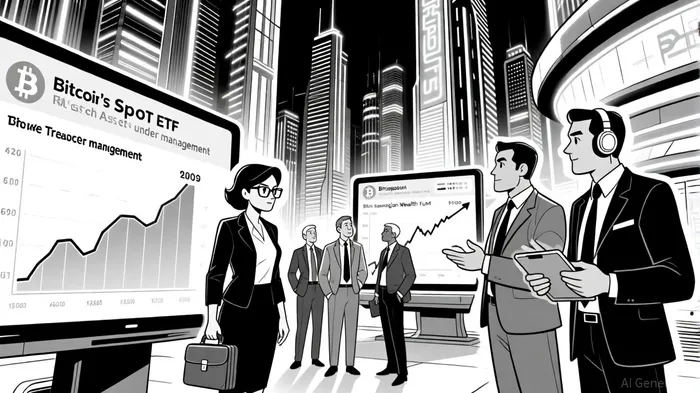
The year 2025 marks a pivotal turning point in Bitcoin's journey from speculative asset to institutional cornerstone. Dubbed the “Season of Soul” by market observers, this period reflects a profound shift in how global capital markets perceive and integrate BitcoinBTC--. At the heart of this transformation lies a confluence of institutional adoption, regulatory clarity, and hidden market drivers that are redefining Bitcoin's role in the financial ecosystem.
Institutional Adoption: From Skepticism to Strategic Allocation
By mid-2025, over 59% of institutional investors have allocated at least 10% of their portfolios to Bitcoin and digital assets[2]. This shift is not driven by short-term speculation but by a strategic reevaluation of Bitcoin's utility as a hedge against inflation, currency devaluation, and geopolitical instability[3]. Spot Bitcoin ETFs, such as BlackRock's iShares Bitcoin Trust (IBIT), have been instrumental in this transition. By April 2025, these ETFs had amassed over $65 billion in assets under management (AUM) globally, with IBITIBIT-- alone securing $18 billion in Q1 2025[1]. These products offer institutions a familiar, regulated framework to access Bitcoin without the complexities of direct custody or exchange exposure[2].
Sovereign wealth funds (SWFs) and corporate treasuries are also reshaping Bitcoin's narrative. SWFs, managing trillions in assets, have quietly entered the market, viewing Bitcoin as a non-correlated store of value[3]. Meanwhile, corporations are adding Bitcoin to their balance sheets, treating it as a reserve asset alongside gold and fiat currencies[2]. This institutional validation has not only legitimized Bitcoin but also reduced its volatility by 75% compared to earlier cycles, as large investors exhibit “strong hands” during market corrections[1].
Hidden Market Drivers: Beyond ETFs and Regulations
While regulatory clarity—such as the U.S. GENIUS Act's framework for stablecoins—has been a catalyst[1], deeper forces are propelling Bitcoin's institutional ascent.
Technological Advancements: Innovations in custody solutions, such as multi-jurisdictional quorum models, have addressed institutional concerns about asset seizure and regulatory capture. These models distribute private keys across regulated entities in different jurisdictions, offering legal and geographic diversification[4]. Additionally, Bitcoin's integration into financial infrastructure—such as its use as collateral for bonds or mortgages—has expanded its utility beyond a mere reserve asset[1].
ESG Considerations: As Bitcoin mining becomes increasingly energy-efficient, institutions are incorporating it into ESG-aligned portfolios. Sustainable mining practices and carbon-neutral operations have mitigated earlier criticisms, allowing Bitcoin to coexist with green investment strategies[5].
Macroeconomic Tailwinds: Persistent inflation, currency volatility, and geopolitical tensions have amplified Bitcoin's appeal. Institutions now view it as a hedge against traditional market risks, particularly in an era of monetary expansion and currency devaluation[2].
Market Impact and Price Projections
The institutional influx has fundamentally altered Bitcoin's price dynamics. Analysts project Bitcoin could reach $200,000 to $210,000 within 12 to 18 months, driven by sustained demand, macroeconomic tailwinds, and post-halving supply tightening[1]. This growth is further supported by the maturation of infrastructure, including institutional-grade custody and tokenized real-world assets (RWAs), which are attracting blue-chip investors to the broader crypto ecosystem[3].
Conclusion: A Structural Shift in Global Finance
Bitcoin's “Season of Soul” is not a fleeting trend but a structural shift in how capital markets interact with blockchain technology. As regulatory frameworks evolve and infrastructure matures, the momentum behind institutional adoption is set to accelerate. For investors, this signals a new era where Bitcoin is no longer a speculative outlier but a core asset class—a digital gold standard in a world increasingly defined by uncertainty.





Comentarios
Aún no hay comentarios