
Bitcoin's Scarcity Challenged: Schiff Slams Ease of Meme Coin Creation on Solana
Generado por agente de IAHarrison Brooks
domingo, 26 de enero de 2025, 11:53 pm ET1 min de lectura
BTC--
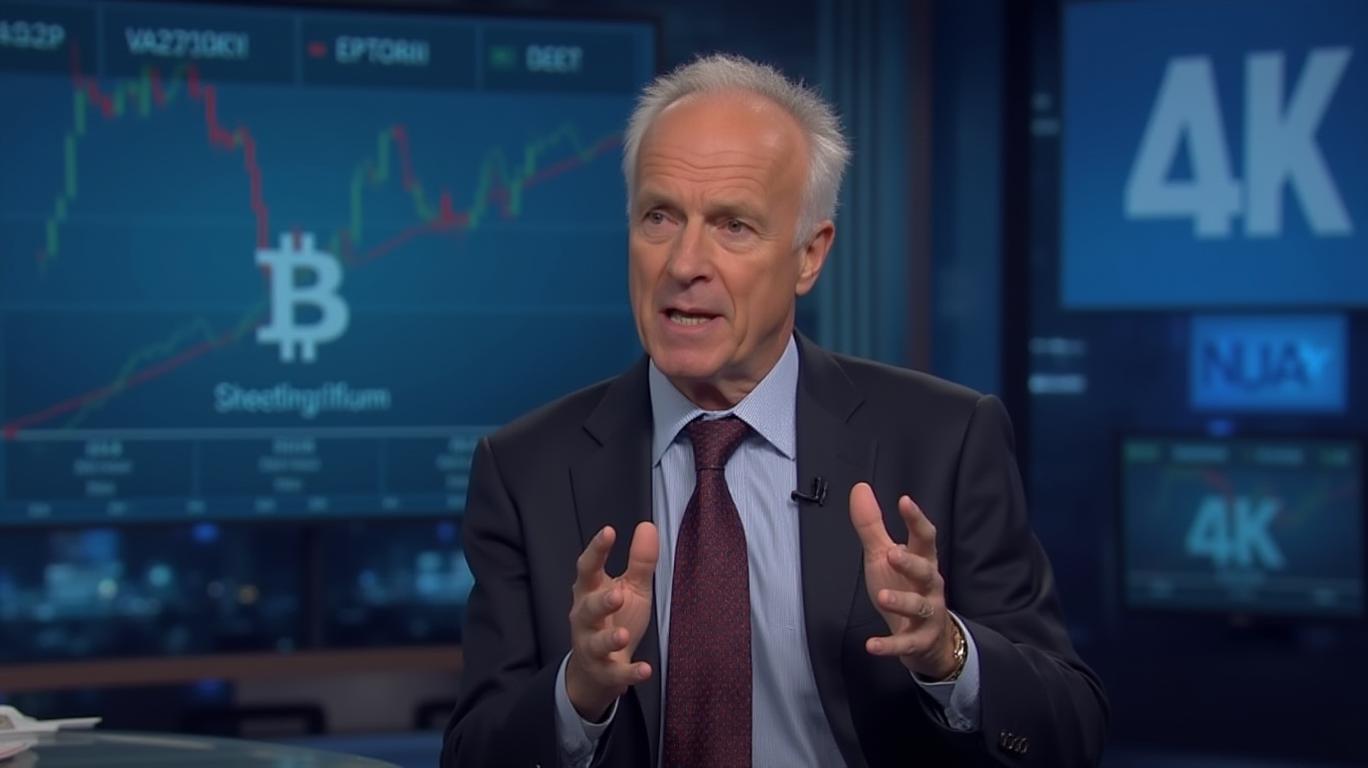
Bitcoin's scarcity, a cornerstone of its value proposition, has been called into question by economist Peter Schiff. In a recent tweet, Schiff argued that the ease of creating meme coins with a fixed supply on the Solana blockchain undermines Bitcoin's narrative of scarcity. This claim has sparked debate within the crypto community, with some agreeing with Schiff's perspective while others defend Bitcoin's fixed supply model.
Schiff's argument is based on the fact that anyone with a Solana address can create a meme coin with a fixed supply. This ease of creation, he believes, leads to an "off the charts" inflation rate, which challenges the value proposition of digital assets, including Bitcoin. Schiff also criticized Bitcoin's proof-of-work mechanism, comparing it to digging a hole and filling it back up, arguing that energy is consumed but nothing of value is created.
However, Schiff's argument does not take into account the unique features of Bitcoin, such as its decentralized nature, resistance to censorship, and potential as a store of value in an uncertain economic environment. Furthermore, the ease of creating new tokens on the Solana blockchain does not necessarily diminish the value of Bitcoin, as the two assets have different use cases and characteristics.
The debate over Bitcoin's fixed supply has been ongoing, with some arguing that it is a fundamental characteristic that is unlikely to be changed without significant consensus within the community. Super Testnet, a Bitcoin developer, has argued that any change to Bitcoin's fixed supply would require consensus among community members, including node operators, core developers, miners, and investors. Such a change would likely involve a hard fork of the blockchain, creating a new chain with different rules. However, Super Testnet has also pointed out that even if this is theoretically possible, the resulting new chain would no longer be considered Bitcoin.
In conclusion, while Peter Schiff's argument challenges the narrative of Bitcoin's scarcity, it is essential to consider the unique features and use cases of both Bitcoin and the meme coins created on the Solana blockchain. The debate over Bitcoin's fixed supply will likely continue as the crypto ecosystem evolves, and it will be important to monitor these dynamics and address any potential challenges that may arise.
SOL--
Bitcoin's scarcity, a cornerstone of its value proposition, has been called into question by economist Peter Schiff. In a recent tweet, Schiff argued that the ease of creating meme coins with a fixed supply on the Solana blockchain undermines Bitcoin's narrative of scarcity. This claim has sparked debate within the crypto community, with some agreeing with Schiff's perspective while others defend Bitcoin's fixed supply model.
Schiff's argument is based on the fact that anyone with a Solana address can create a meme coin with a fixed supply. This ease of creation, he believes, leads to an "off the charts" inflation rate, which challenges the value proposition of digital assets, including Bitcoin. Schiff also criticized Bitcoin's proof-of-work mechanism, comparing it to digging a hole and filling it back up, arguing that energy is consumed but nothing of value is created.
However, Schiff's argument does not take into account the unique features of Bitcoin, such as its decentralized nature, resistance to censorship, and potential as a store of value in an uncertain economic environment. Furthermore, the ease of creating new tokens on the Solana blockchain does not necessarily diminish the value of Bitcoin, as the two assets have different use cases and characteristics.
The debate over Bitcoin's fixed supply has been ongoing, with some arguing that it is a fundamental characteristic that is unlikely to be changed without significant consensus within the community. Super Testnet, a Bitcoin developer, has argued that any change to Bitcoin's fixed supply would require consensus among community members, including node operators, core developers, miners, and investors. Such a change would likely involve a hard fork of the blockchain, creating a new chain with different rules. However, Super Testnet has also pointed out that even if this is theoretically possible, the resulting new chain would no longer be considered Bitcoin.
In conclusion, while Peter Schiff's argument challenges the narrative of Bitcoin's scarcity, it is essential to consider the unique features and use cases of both Bitcoin and the meme coins created on the Solana blockchain. The debate over Bitcoin's fixed supply will likely continue as the crypto ecosystem evolves, and it will be important to monitor these dynamics and address any potential challenges that may arise.


Divulgación editorial y transparencia de la IA: Ainvest News utiliza tecnología avanzada de Modelos de Lenguaje Largo (LLM) para sintetizar y analizar datos de mercado en tiempo real. Para garantizar los más altos estándares de integridad, cada artículo se somete a un riguroso proceso de verificación con participación humana.
Mientras la IA asiste en el procesamiento de datos y la redacción inicial, un miembro editorial profesional de Ainvest revisa, verifica y aprueba de forma independiente todo el contenido para garantizar su precisión y cumplimiento con los estándares editoriales de Ainvest Fintech Inc. Esta supervisión humana está diseñada para mitigar las alucinaciones de la IA y garantizar el contexto financiero.
Advertencia sobre inversiones: Este contenido se proporciona únicamente con fines informativos y no constituye asesoramiento profesional de inversión, legal o financiero. Los mercados conllevan riesgos inherentes. Se recomienda a los usuarios que realicen una investigación independiente o consulten a un asesor financiero certificado antes de tomar cualquier decisión. Ainvest Fintech Inc. se exime de toda responsabilidad por las acciones tomadas con base en esta información. ¿Encontró un error? Reportar un problema




Comentarios
Aún no hay comentarios