
Bitcoin's Role as a Geopolitical Hedge: How U.S. Government Instability Reshapes Digital Asset Demand
In the volatile landscape of 2023–2025, BitcoinBTC-- has emerged as a compelling case study in the evolution of digital assets as geopolitical hedges. As U.S. government shutdowns and global instability have eroded trust in traditional financial systems, Bitcoin's price and adoption trends reveal a shifting paradigm. During the October 2025 government shutdown, Bitcoin surged to within 1% of its all-time high, trading above $116,000 and reaching a peak of $123,874 in mid-October, according to a Galaxy report. This rally, driven by investors seeking alternatives to uncertain markets, underscores Bitcoin's growing role as a decentralized safe-haven asset.
U.S. Government Instability and Bitcoin's Safe-Haven Appeal
The October 2025 shutdown, which delayed critical economic data releases and disrupted federal operations, created a "positive liquidity impulse" in the crypto market, according to a Bitwise analysis. Investors flocked to Bitcoin as a hedge against the unpredictability of U.S. fiscal policy, with spot Bitcoin ETFs attracting $430 million in inflows during the period, according to a World Economic Forum article. This contrasts sharply with Bitcoin's 9% decline during the 2018 shutdown, highlighting a maturation in its perceived utility, as noted by the World Economic Forum. Analysts attribute this shift to Bitcoin's structural advantages: its fixed supply, censorship resistance, and independence from central bank policies, according to a ScienceDirect study.
The U.S. government shutdown is not an isolated event. Similar patterns emerged during the 2023 regional banking crisis and the Russia-Ukraine war, where Bitcoin prices surged as confidence in traditional banking systems waned, as documented in the Bitwise analysis. These episodes suggest that Bitcoin is increasingly viewed as a counterparty-risk-free alternative during periods of systemic stress.
Global Geopolitical Risks and Bitcoin's Resilience
Beyond U.S. borders, Bitcoin's role as a geopolitical hedge has been tested in diverse scenarios. During the 2020–2025 period, Bitcoin demonstrated resilience amid U.S.-China trade tensions, the Syrian conflict, and the Brexit vote, outperforming gold and tech stocks while exhibiting declining volatility compared to traditional indices, as described in the Galaxy report. However, its effectiveness as a hedge is not universal. For instance, Bitcoin's price did not consistently rise during the 2014 Crimea annexation or the early stages of the COVID-19 pandemic, a pattern highlighted in the ScienceDirect study. These mixed results highlight the interplay between Bitcoin's structural attributes and broader market sentiment.
A key differentiator is Bitcoin's 24/7 global accessibility, which allows it to react instantaneously to geopolitical events. During the Ukraine-Russia conflict, individuals and entities used Bitcoin to transfer assets out of conflict zones, bypassing traditional banking systems affected by sanctions, as the Bitwise analysis details. This functionality positions Bitcoin as a forward-looking indicator of macroeconomic sentiment, particularly in regions with limited financial infrastructure or capital controls, a point emphasized by the World Economic Forum.
Regulatory Evolution and Institutional Adoption
The regulatory landscape for Bitcoin is rapidly evolving, with significant implications for its geopolitical hedge potential. The European Union's Markets in Crypto-Assets Regulation (MiCA), implemented in May 2023, has provided a clearer framework for institutional adoption, while the U.S. remains mired in legislative gridlock, according to the Galaxy report. Despite regulatory uncertainty, spot Bitcoin ETFs have gained traction, signaling a shift in how institutional investors perceive Bitcoin-from speculative asset to strategic portfolio diversifier, a trend noted by the World Economic Forum.
However, challenges persist. Agencies like the SEC and CFTC operating at reduced capacity during shutdowns have raised concerns about regulatory clarity and enforcement, according to Cointelegraph. These uncertainties could temper Bitcoin's adoption in the short term, though long-term demand may remain resilient as geopolitical instability persists.
Implications for Investors
For investors, Bitcoin's dual role as a hedge and speculative asset presents both opportunities and risks. While its performance during the October 2025 shutdown demonstrated strong short-term resilience, its volatility and regulatory exposure remain critical factors. Studies suggest that Bitcoin functions best as a hybrid asset-offering above-average returns during acute geopolitical crises but correlating with broader risk sentiment in calmer periods, according to the ScienceDirect study.
Institutional adoption and technological advancements, such as improved scalability and energy efficiency, will likely enhance Bitcoin's long-term viability as a hedge, as observed by the World Economic Forum. However, investors must balance these factors with macroeconomic conditions, including inflation and monetary policy, which continue to influence Bitcoin's price dynamics, per the Bitwise analysis.
Conclusion
The October 2025 U.S. government shutdown and broader geopolitical tensions have accelerated Bitcoin's transition from speculative asset to strategic hedge. Its decentralized nature, scarcity, and global accessibility make it uniquely positioned to address the financial uncertainties of the 21st century. While regulatory and market challenges persist, the growing institutional embrace of Bitcoin-coupled with its performance during systemic risks-suggests that its role as a geopolitical hedge will only strengthen in the years ahead.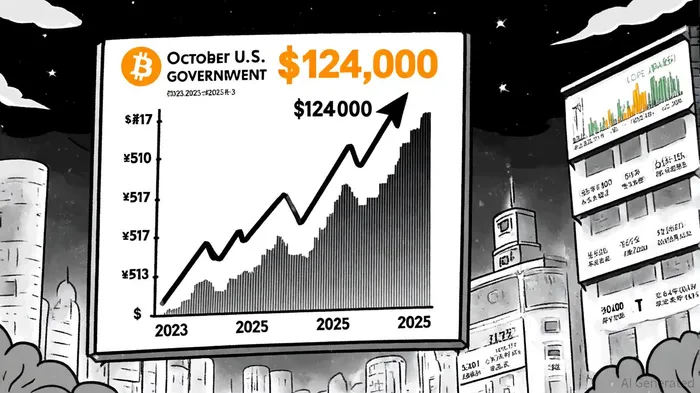






Comentarios
Aún no hay comentarios