
Bitcoin's Resurgence Amid a Temporary Gold Correction: Reallocating Risk Assets in a Shifting Macro Landscape
The shifting macroeconomic landscape in Q3 2025 has triggered a notable reallocation of risk assets, with BitcoinBTC-- emerging as a focal point amid a temporary correction in gold prices. This divergence reflects broader investor sentiment shifts driven by central bank policies, institutional adoption, and evolving perceptions of safe-haven assets.
Gold's Record High and Signs of Correction
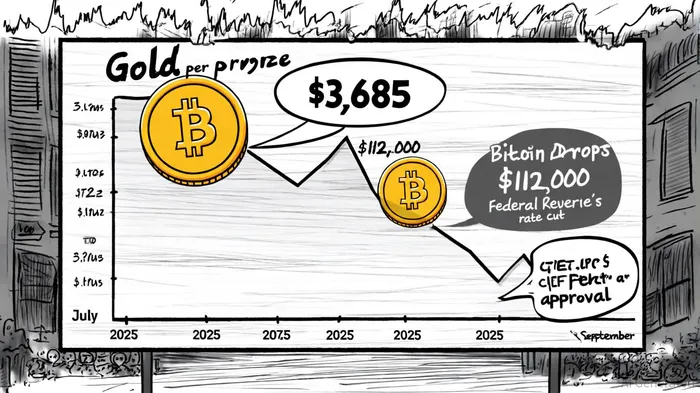
Gold prices surged to an all-time high of $3,685.20 per troy ounce on September 16, 2025, fueled by expectations of a Federal Reserve rate cut and weak U.S. jobs data[1]. However, this rally has shown signs of fragility. While gold remains a traditional hedge against inflation and geopolitical uncertainty, its performance has diverged from other precious metals like silver and platinum, which experienced declines during the same period[2]. Analysts suggest this volatility signals a short-term correction rather than a structural shift in demand.
Bitcoin's Volatility and Institutional Catalysts
Bitcoin's Q3 2025 trajectory has been equally turbulent. After reaching a peak of $118,000 in early September, the cryptocurrency fell below $112,000 by late September, marking a $200 billion sell-off in the broader crypto market[3]. This correction coincided with the Federal Reserve's 25-basis-point rate cut and a stabilization phase following the FOMC meeting[2]. Yet, Bitcoin's long-term fundamentals remain intact. The U.S. Securities and Exchange Commission's (SEC) approval of generic listing standards for crypto ETFs has been a game-changer, reducing barriers for institutional investors and paving the way for products like BlackRock's spot Bitcoin ETF, which now holds nearly 750,000 coins[2].
Investor Sentiment: From Gold to Digital Alternatives
The interplay between gold and Bitcoin in Q3 2025 underscores a strategic reallocation of risk assets. While gold's appeal as a store of value persists, Bitcoin's integration into institutional portfolios has accelerated. Data from investment research platforms indicates a marked shift toward alternative assets, with investors favoring Bitcoin's programmable nature and potential for capital appreciation over gold's more static returns[3]. This trend is amplified by macroeconomic uncertainties, including climate-driven disruptions and trade tensions, which have eroded confidence in traditional assets[1].
Macro Factors Driving the Shift
The Federal Reserve's dovish pivot and global economic reforms—such as Nigeria's fuel subsidy removal and Peru's fiscal consolidation—have created a backdrop where diversification into non-correlated assets is prioritized[1]. Bitcoin's limited supply and decentralized structure position it as a counterbalance to fiat currency devaluation risks, while gold's liquidity and historical role as a crisis asset ensure its continued relevance. However, the crypto market's recent volatility highlights the need for caution, as short-term corrections may persist until institutional infrastructure matures[2].
Conclusion
Bitcoin's resurgence amid a temporary gold correction illustrates a broader recalibration of risk assets in Q3 2025. While gold retains its status as a safe-haven asset, Bitcoin's institutional adoption and regulatory progress are reshaping investor strategies. As macroeconomic uncertainties persist, the interplay between these two assets will likely remain a key barometer for market sentiment. Investors must balance gold's time-tested resilience with Bitcoin's innovation-driven potential, navigating a landscape where diversification is both a necessity and an opportunity.






Comentarios
Aún no hay comentarios