
Bitcoin's Resilience in a Shifting Macro Environment
In 2025, the global macroeconomic landscape is defined by two dominant forces: oil price volatility and U.S. dollar instability. As central banks grapple with inflationary pressures and geopolitical tensions disrupt energy markets, investors are rethinking their portfolio allocations. BitcoinBTC--, once dismissed as a speculative asset, has emerged as a critical tool for hedging against these uncertainties. This article explores how Bitcoin's unique properties-its low correlation with traditional assets, its inverse relationship with the U.S. dollar, and its sensitivity to energy markets-make it a cornerstone of modern portfolio repositioning strategies.
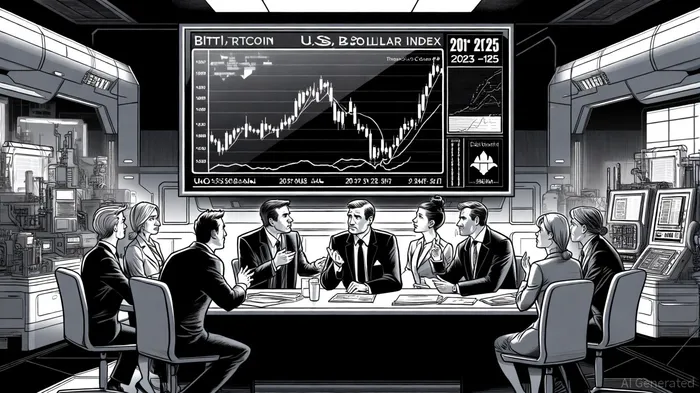
The Bitcoin-Oil Correlation: Energy Costs and Market Dynamics
Bitcoin's price movements in 2025 have shown a complex interplay with crude oil prices. Higher oil costs directly impact Bitcoin mining profitability, as energy expenses constitute a significant portion of operational costs for miners, as the Cryptofylab analysis notes. For instance, that analysis found a surge in WTI crude oil prices in Q3 2025 led to a 12% increase in Bitcoin's production costs, temporarily dampening miner revenues. However, this relationship is not linear. During periods of geopolitical instability-such as the U.S. airstrike on Iran in June 2025-oil prices spiked, but Bitcoin's response was muted, underscoring its evolving role as a decoupled asset class.
The CoinGecko report confirmed that Bitcoin's correlation with the S&P 500 had dropped to near zero in Q3 2025, while its correlation with gold reached a historical high. This shift reflects Bitcoin's maturation as a digital store of value, increasingly insulated from traditional commodity cycles. Yet, energy markets remain a wildcard. A sustained oil rally could indirectly boost Bitcoin's price by driving inflation and eroding the dollar's purchasing power, creating a self-reinforcing cycle of demand, as noted in the Cryptofylab analysis.
Bitcoin as a Hedge Against U.S. Dollar Volatility
The U.S. dollar's dominance as a global reserve currency has been challenged in 2025 by fiscal deficits, trade tariffs, and the rise of alternative assets. Bitcoin's inverse relationship with the dollar has become a defining feature of its price action. When the U.S. Dollar Index (DXY) weakens, Bitcoin often rallies, acting as a decentralized counterbalance to fiat devaluation, according to a KensonInvestments update. This dynamic was evident in mid-2025, when the Federal Reserve's dovish monetary policy pushed Bitcoin to a peak of $112,000, a move highlighted in the Cryptofylab analysis.
Institutional adoption has further solidified Bitcoin's role as a dollar hedge. The approval of spot Bitcoin ETFs by the SEC in early 2025-led by BlackRock's $98.6 billion IBIT fund-has normalized Bitcoin's inclusion in institutional portfolios, as noted in the KensonInvestments update. Asset managers now allocate 1–7.5% of portfolios to Bitcoin, depending on risk tolerance, leveraging its low correlation with equities and bonds to enhance risk-adjusted returns, according to the Cryptofylab analysis. This shift mirrors gold's historical role as a safe-haven asset but with the added advantage of Bitcoin's programmable and borderless nature, a point underscored by the CoinGecko report.
Portfolio Repositioning Strategies: Diversification and Asymmetric Hedges
To navigate the dual risks of oil price swings and dollar volatility, investors are adopting multi-layered strategies. Diversification remains key: pairing Bitcoin with stablecoins like USDCUSDC-- and USDTUSDT-- provides liquidity during market dips, while allocations to EthereumETH-- and high-potential altcoins (e.g., SolanaSOL--, Cardano) balance growth and stability, consistent with findings in the CoinGecko report. For example, a 2025 portfolio might allocate 50% to Bitcoin, 20% to Ethereum, 15% to stablecoins, and 15% to a basket of altcoins and traditional assets like gold, an allocation mix discussed in the CoinGecko analysis.
Dollar-cost averaging (DCA) and asymmetric hedges are also gaining traction. DCA mitigates the risk of poor market timing by spreading investments over time, while small allocations to high-risk, high-reward tokens (e.g., MAGACOIN FINANCE) offer outsized gains if Bitcoin's bull run continues. Additionally, options strategies like covered calls and protective puts provide downside protection during volatile periods, a tactic highlighted in the Cryptofylab analysis.
The Strategic Case for Bitcoin in 2025
Bitcoin's resilience in 2025 is not accidental but a product of structural shifts. Regulatory clarity, institutional adoption, and macroeconomic tailwinds have transformed it from a speculative asset to a strategic reserve. As oil markets remain volatile and the dollar's hegemony wanes, Bitcoin's role as a hedge will only strengthen. For investors, the key lies in dynamic portfolio repositioning-leveraging Bitcoin's unique properties while mitigating its inherent risks through diversification and disciplined risk management.






Comentarios
Aún no hay comentarios