
Bitcoin's Resilience Amid Market Volatility: Strategic Entry Points and Long-Term Accumulation Opportunities
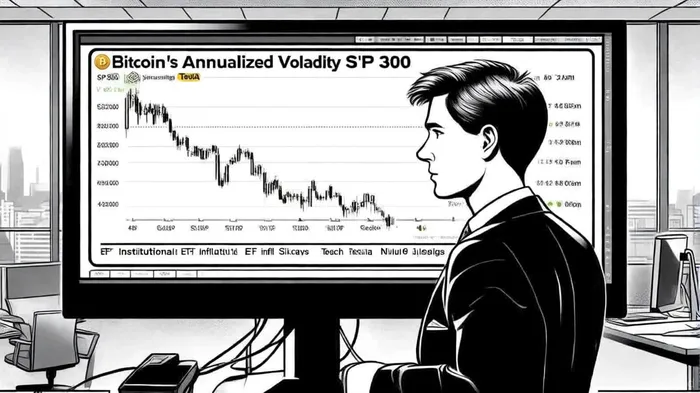
Bitcoin's journey through 2025's market turbulence has underscored its evolving role as both a speculative asset and a strategic reserve. While its volatility remains a defining trait—averaging 35.5% annualized in 2025 compared to the S&P 500's 7.9%—the cryptocurrency has demonstrated resilience amid macroeconomic headwinds, regulatory shifts, and geopolitical shocks. This resilience, however, is not without nuance. For investors seeking to capitalize on Bitcoin's long-term potential, understanding its volatility profile, institutional adoption trends, and quantitative entry strategies is critical.
Volatility: A Double-Edged Sword
Bitcoin's volatility has historically outpaced traditional assets, but recent data suggests a maturing market. In 2025, its volatility stood at 3.6–5.1 times higher than gold and global equities, respectively[3]. Yet, this gap has narrowed as institutional adoption and ETF inflows have stabilized its price. For instance, Bitcoin's annualized volatility dropped by 75% compared to historical averages, aligning it with high-volatility tech stocks like Tesla and NVIDIA[4]. This shift reflects growing institutional confidence, with spot BitcoinBTC-- ETFs attracting $14.83 billion in inflows by mid-2025[2].
However, volatility remains a wildcard. During April 2025's market instability, the S&P 500's seven-day realized volatility spiked to 169%, surpassing Bitcoin's 83%—a reversal of traditional assumptions[2]. This highlights Bitcoin's dual nature: a macro-sensitive asset that can act as a hedge during crises but remains vulnerable to sentiment-driven swings. For example, during the June 2025 Middle East tensions, Bitcoin dipped 5% while gold and oil surged[5].
Strategic Entry Points: Navigating the Noise
Identifying strategic entry points in Bitcoin's volatile landscape requires a blend of quantitative models and on-chain analysis. A time-weighted valuation model successfully identified bear market bottoms in 2015, 2018, 2020, and 2022 by tracking on-chain metrics like realized price and miner fee revenue[6]. Similarly, quantile regression models using high-frequency data have shown predictive power for Bitcoin's return distributions, enabling data-driven decisions[7].
On-chain indicators further refine entry strategies. The Mayer Multiple (a ratio of price to 150-day moving average) and whale accumulation activity have historically signaled market floors. For instance, large entities withdrawing BTCBTC-- from exchanges in 2025—such as MicroStrategy's 11,000 BTC purchase in January—served as bullish signals[1]. These tools, combined with GARCH-type volatility forecasting models, allow investors to balance risk and reward[5].
Long-Term Accumulation: From Speculation to Strategy
Bitcoin's long-term appeal lies in its role as a hedge against inflation and monetary debasement. Over the past decade, Bitcoin delivered a 38,000% total return compared to the S&P 500's 148%[1]. Yet, its path has been marked by extreme drawdowns, such as the 2018 and 2022 crashes. For investors, the key is to adopt accumulation strategies that mitigate short-term volatility while capitalizing on Bitcoin's long-term trajectory.
Institutional players have pioneered this approach. MicroStrategy's “digital gold” strategy—leveraging corporate treasuries to accumulate Bitcoin—has been replicated by firms like Tesla and BlackRock[2]. Meanwhile, the “Mine and Hodl” model, where miners sell only enough BTC to cover operational costs, has yielded substantial returns. A case study using the Antminer S17 over one year showed this strategy outperformed alternatives by balancing cash flow with long-term growth[4].
Retail investors, too, are adopting disciplined accumulation tactics. Long-term holders (LTHs) increased their Bitcoin stakes in 2025, with reduced selling activity indicating strong conviction[2]. This behavior contrasts with previous cycles, where LTHs often exacerbated sell-offs.
Challenges and Considerations
Despite its resilience, Bitcoin's long-term viability as a safe-haven asset remains unproven. While it outperformed traditional equities in 2024–2025, its 12-month performance during major 2025 conflicts lagged behind gold and the Swiss Franc[5]. Additionally, regulatory shifts—such as the U.S. government's exploration of a Strategic Bitcoin Reserve—add uncertainty. Investors must also contend with macroeconomic risks, including Federal Reserve policies and global trade tensions[3].
A diversified approach is essential. Combining Bitcoin with traditional safe-havens like gold and stable currencies can optimize risk management. For example, during the Russia-Ukraine conflict in 2022, Bitcoin saw increased inflows, but its volatility limited its effectiveness as a standalone hedge[2].
Conclusion
Bitcoin's resilience in 2025's volatile markets underscores its growing integration into institutional portfolios and its potential as a macro hedge. While its volatility remains a challenge, strategic entry points and long-term accumulation strategies—backed by quantitative models and on-chain data—offer pathways to mitigate risk. As the market matures, investors must balance Bitcoin's speculative allure with disciplined, data-driven approaches to navigate its unique risks and rewards.






Comentarios
Aún no hay comentarios