
Bitcoin's Resilience Amid FUD and Political Volatility in 2025: Strategic Buying Opportunities in a Macro-Driven Market
The Anatomy of 2025's FUD-Driven Market Dislocations
Bitcoin's 2025 price trajectory has been shaped by a unique confluence of political volatility and fear-driven retail behavior. The Trump administration's 100% tariffs on Chinese goods in October 2025 triggered a ~10% crash, wiping out $19–20 billion in leveraged positions, according to BitcoinBTC-- price predictions (Bitcoin price predictions). Such events, however, have historically created asymmetric opportunities for strategic buyers. Santiment analyst Brian Q notes that "smart traders" exploit these FUD-driven selloffs, purchasing Bitcoin when retail panic pushes prices below critical support levels, according to a Cointelegraph report (Cointelegraph report). For instance, after the October crash, Bitcoin stabilized above $95K within a week, with technical indicators like the RSI (Relative Strength Index) signaling oversold conditions and a bullish reversal, according to a Bitget analysis (Bitget analysis).
Technical Indicators as a Compass for Dips
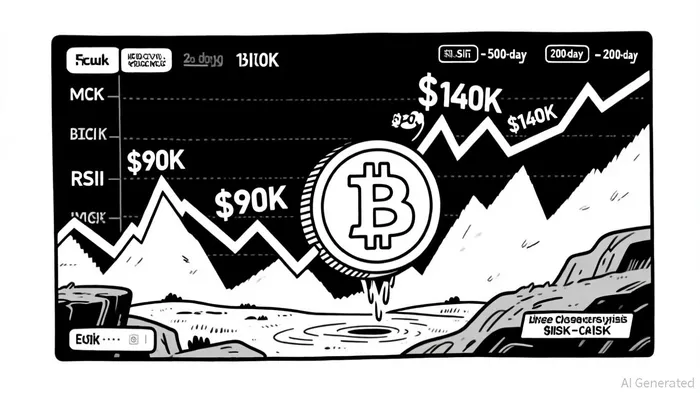
Bitcoin's recovery patterns post-FUD events are deeply rooted in technical analysis. In April 2025, a 10% weekly rebound validated the 50-day moving average as a dynamic support level, as noted by Bitget. By July, the price consolidated above $119K, forming a bull pennant pattern with a projected $140K breakout target, according to Bitcoin price predictions. Short-term moving averages (e.g., 50-day SMA) often diverge from medium- to long-term trends during crises, creating a "buy-the-dip" narrative. For example, during the October 2025 selloff, Bitcoin's price fell below the 200-day MA (~$80K) but rebounded sharply as the RSI crossed into oversold territory (below 30), signaling a potential 20% rebound, as the Cointelegraph report described.
Institutional Adoption and Macroeconomic Tailwinds
While short-term volatility persists, macroeconomic fundamentals are aligning to support Bitcoin's long-term resilience. The Federal Reserve's dovish pivot in September 2025, including rate cuts and accommodative policy, has reduced the opportunity cost of holding non-yielding assets like Bitcoin, according to Bitcoin price predictions. Regulatory clarity, exemplified by the U.S. passing the GENIUS Act in July 2025, has further accelerated institutional adoption. U.S. spot Bitcoin ETFs and corporate holdings now control ~12.2% of total supply, with companies like MicroStrategy expanding their Bitcoin reserves, per Bitcoin price predictions. These developments suggest that Bitcoin's institutional demand is becoming a stabilizing force, mitigating the impact of retail-driven FUD.
Geopolitical Uncertainty and Safe-Haven Demand
Bitcoin's role as a geopolitical hedge has gained traction in 2025. During the October tariff crisis, gold prices surged to $4,000 per ounce, but Bitcoin also saw a surge in demand from institutional investors seeking diversification, according to Bitcoin price predictions. Historical precedent shows that Bitcoin often outperforms traditional safe-haven assets during prolonged geopolitical crises, particularly as central bank policies erode fiat value. This dynamic positions Bitcoin as a dual-purpose asset: a hedge against inflation and a store of value in a fragmented global economy.
Strategic Entry Points for 2025–2026
For investors navigating 2025's volatile landscape, the key lies in leveraging technical indicators to identify high-probability entry points. The following strategies are supported by recent data:
1. Dips Below 200-Day MA: Historically, Bitcoin has rebounded strongly when falling below the 200-day MA (~$80K in early 2025), particularly when RSI confirms oversold conditions, as the Cointelegraph report outlines.
2. Bullish Divergences in RSI: A lower price low paired with a higher RSI low (as seen in March 2025) signals weakening bearish momentum, noted in the Cointelegraph report.
3. Golden Cross Confirmation: The April 2025 golden cross (50-day SMA crossing above 200-day SMA) validated a medium-term bullish trend, according to a FixioMarkets analysis (FixioMarkets analysis).
4. Volume-Driven Breakouts: Surges in on-chain volume during FUD events (e.g., October 2025) often precede sharp rebounds, as seen in the $111K–$112K recovery, detailed by Cointelegraph.
Conclusion: A Bullish Outlook Amid Short-Term Noise
While 2025's political volatility has created turbulence, Bitcoin's structural advantages-regulatory progress, institutional adoption, and macroeconomic tailwinds-position it for a sustained bull run. Investors who adopt a disciplined approach to technical analysis and macroeconomic signals can capitalize on FUD-driven dislocations, turning short-term fear into long-term gains. As the Fed continues its dovish trajectory and geopolitical uncertainty persists, Bitcoin's role as a systemic hedge and store of value will only strengthen.






Comentarios
Aún no hay comentarios