
Bitcoin's Resilience in a Dovish Fed Environment: Strategic BTC Entry Points Amid Macro-Driven Opportunities
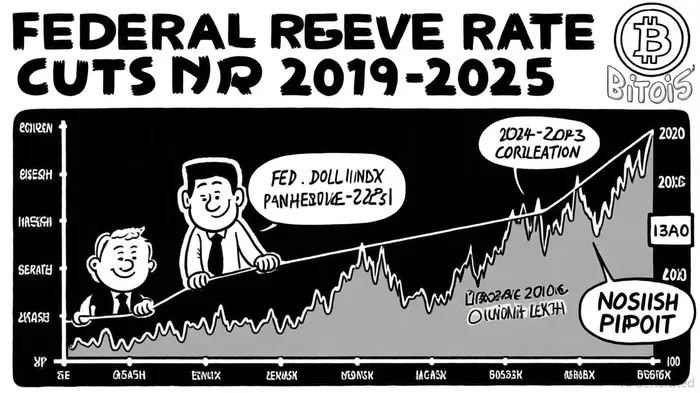
The Federal Reserve's recent shift toward a dovish policy in 2025 has reignited debates about Bitcoin's role as a macro-driven asset. With the central bank reducing rates by 25 basis points in September 2025 and signaling further cuts by year-end, the cryptocurrency market is recalibrating to a new era of accommodative monetary policy. This analysis explores how Bitcoin's historical performance during dovish cycles, combined with evolving macroeconomic dynamics, creates strategic entry points for investors seeking to allocate BTC in a risk-on environment.
The Fed's Dovish Pivot: A Tailwind for Bitcoin
The September 2025 rate cut marked a pivotal shift in the Fed's stance, reducing the federal funds rate to 4.00%-4.25% after months of hawkish caution[1]. This decision, framed as a response to cooling inflation and a softening labor market, aligns with broader trends of monetary easing observed in 2024-2025[2]. While the immediate market reaction was muted—crypto prices failed to surge post-announcement due to pre-priced expectations—the long-term implications are clear: a weaker dollar, lower borrowing costs, and increased liquidity are likely to favor risk assets like Bitcoin[3].
Historically, BitcoinBTC-- has shown a nuanced but statistically significant correlation with Fed rate cuts. A 2025 white paper estimates that a 1% reduction in the federal funds rate could drive Bitcoin's price up by 13.25% to 21.20%, with projections suggesting a potential 30% surge under favorable conditions[4]. This sensitivity stems from Bitcoin's inelastic supply and its role as a hedge against fiat debasement. For instance, during the 2020 pandemic emergency cuts, Bitcoin initially plummeted but later surged to $28,000 amid aggressive monetary stimulus[5]. Similarly, the 2024 50-basis-point cut triggered a $59K-to-$62K rally, underscoring liquidity-driven demand[6].
Macroeconomic Indicators: The Dovish Framework
Bitcoin's performance in dovish environments is further amplified by its inverse relationship with the U.S. Dollar Index (DXY) and its positive correlation with equity indices like the Nasdaq 100[7]. A weaker dollar reduces the opportunity cost of holding non-yielding assets, while lower rates make traditional safe havens (e.g., Treasuries) less attractive. This dynamic was evident in September 2025, when the dollar's decline post-rate cut coincided with a modest Bitcoin price uptick[8].
However, the Fed's communication remains critical. While the September 2025 rate cut was dovish, Chair Jerome Powell's “more balanced” tone during the press conference tempered expectations of aggressive easing[9]. This highlights the importance of parsing Fed messaging: rate cuts perceived as emergency measures (e.g., 2020) tend to drive stronger Bitcoin rallies than those framed as routine adjustments[10].
Strategic BTC Entry Points: Dollar-Cost Averaging and Institutional Flows
For investors, the dovish cycle presents opportunities to strategically allocate BTC. Historical data suggests that Bitcoin's most robust gains occur when rate cuts are paired with broader macroeconomic stability. For example, the 2024-2025 rally to $116,000 was fueled not only by Fed easing but also by institutional adoption and corporate interest in digital assets[11].
A disciplined approach to entry points includes:
1. Dollar-Cost Averaging (DCA): Allocating fixed amounts at regular intervals to mitigate volatility risks.
2. Macro-Driven Triggers: Entering positions when the Fed signals additional cuts (e.g., the projected two more 25bps reductions by year-end[12]).
3. Liquidity Metrics: Monitoring the U.S. Dollar Index and Treasury yields to gauge risk appetite.
Caution is warranted, however. Stagflation risks and regulatory uncertainties could dampen Bitcoin's rally if economic conditions deteriorate[13]. Investors should balance short-term volatility with long-term fundamentals, such as Bitcoin's scarcity and its growing role in institutional portfolios.
Conclusion: Navigating the Dovish Landscape
Bitcoin's resilience in a dovish Fed environment underscores its evolution from speculative asset to a macro-sensitive store of value. While historical patterns suggest a bullish bias during rate cuts, success hinges on aligning allocations with broader economic signals. As the Fed continues its accommodative pivot, investors who adopt a strategic, data-driven approach to BTC entry points may position themselves to capitalize on the next phase of Bitcoin's journey.






Comentarios
Aún no hay comentarios