
Bitcoin's Prolonged Stagnation and Its Implications for Crypto Portfolio Strategy
The Volatility Conundrum
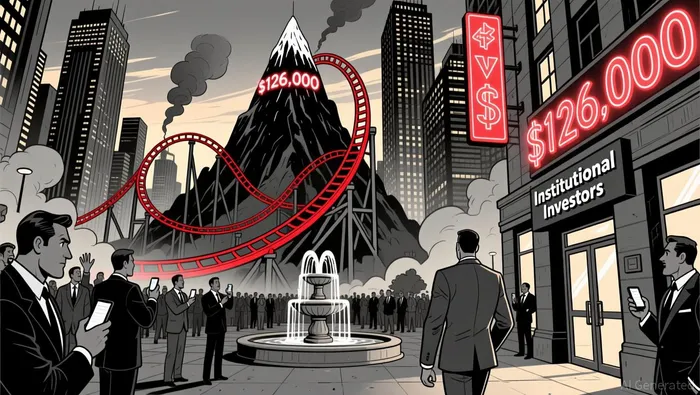 Bitcoin's volatility has resurfaced as a critical concern. Implied volatility levels reached 60% in early November 2025, signaling a return to pre-ETF-era market dynamics. Analysts like Jeff Park of Bitwise note that Bitcoin's price action is increasingly driven by options markets, reminiscent of the speculative fervor of 2021. This volatility contrasts with earlier optimism that ETF approvals would stabilize the asset. Meanwhile, technical indicators like the Fear & Greed Index (37) and a 14-day RSI (46.37) suggest a bearish sentiment, complicating long-term investment theses.
Diversification: Beyond Bitcoin
Institutional investors are increasingly allocating capital to alternative digital assets to hedge against Bitcoin's volatility. A 2025 report by Sygnum reveals that 26% of institutional investors now show interest in tokenized real-world assets (RWAs), a 20% increase since 2024. These assets, including tokenized U.S. Treasuries and private credit, offer lower volatility and stable returns compared to BitcoinBTC--. For instance, tokenized U.S. Treasuries have demonstrated minimal price fluctuations, serving as a safe-haven asset amid macroeconomic uncertainty.
Ethereum and DeFi tokens, while still volatile, present a nuanced case. Ethereum's price dipped below $3,000 in November 2025, but its 46.3% return in 2024 highlights its growth potential. DeFi tokens, however, remain highly sensitive to protocol-specific events and macroeconomic shifts, making them less reliable as hedges.
Tokenized RWAs: A New Frontier
Tokenized RWAs have emerged as a compelling diversification tool. The RWA market expanded from $5-10 billion in 2022 to over $24 billion by mid-2025, driven by institutional adoption and blockchain infrastructure advancements. These assets, backed by traditional financial instruments, offer risk-adjusted returns that contrast with Bitcoin's speculative nature. For example, tokenized private credit provides yields of 8-12% with reduced liquidity constraints compared to traditional private credit.
Portfolio Strategies for 2025
A well-structured crypto portfolio in 2025 typically allocates 60-70% to core assets like Bitcoin and EthereumETH--, with 20-30% in altcoins and 5-10% in stablecoins. However, the growing RWA market suggests a shift toward a 60/30/10 core-satellite model: 60% in BTC and ETH, 30% in satellite diversifiers (e.g., RWAs, DeFi tokens), and 10% in stablecoins or tokenized yield products. This structure balances growth opportunities with risk management, leveraging RWAs' stability and Ethereum's innovation potential.
The Road Ahead
While Bitcoin's long-term fundamentals remain intact, its recent volatility underscores the importance of diversification. Institutional investors are adopting active strategies like arbitrage, sector rotation, and thematic tilts to navigate market turbulence. For example, thematic portfolios focused on DeFi or RWAs allow investors to capitalize on specific narratives while mitigating Bitcoin's downside risk.
Conclusion
Bitcoin's prolonged stagnation in 2025 is a wake-up call for investors to rethink portfolio construction. Alternative assets-particularly tokenized RWAs-offer a viable hedge against Bitcoin's volatility, providing stable returns and regulatory clarity. As the crypto market matures, a balanced approach that combines Bitcoin's growth potential with the stability of RWAs and the innovation of Ethereum will be key to achieving long-term success.






Comentarios
Aún no hay comentarios