
Bitcoin's Price Resilience and Whale Activity: A Near-Term Breakout Analysis
Bitcoin's price resilience in Q3 2025 has sparked intense debate among investors, with on-chain metrics, whale behavior, and institutional positioning painting a nuanced picture of near-term breakout potential. While the asset's valuation appears structurally sound, shifting dynamics in whale activity and ETF flows suggest both opportunities and risks for market participants.
On-Chain Metrics and Whale Behavior: A Tale of Two Chains
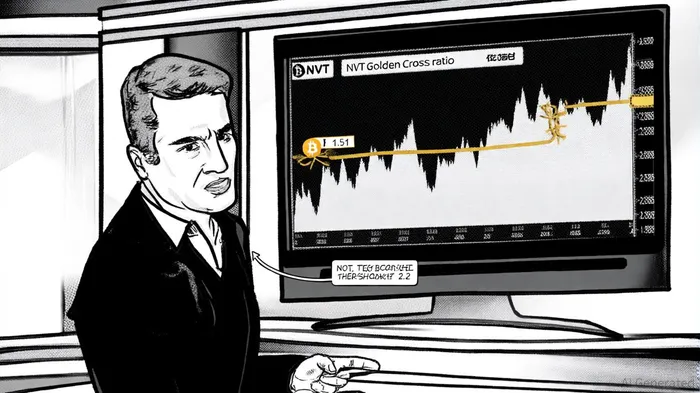
Bitcoin's on-chain data reveals a market in transition. The Network Value to Transactions (NVT) Golden Cross ratio stands at 1.51, well below the 2.2 threshold historically associated with overbought conditions[3]. This suggests that Bitcoin's valuation remains within sustainable parameters, even as prices approach all-time highs. Meanwhile, Ethereum's NVT ratio has plummeted to historic lows (37), signaling undervaluation relative to transaction volume and reinforcing a bullish narrative for the second-largest cryptocurrency[1].
Whale activity further complicates the narrative. In July 2025, BitcoinBTC-- saw a surge in exchange inflows totaling $45 billion—a pattern historically linked to market tops[2]. This behavior, coupled with the 11.3% discount in Bitcoin's realized price (a metric mirroring bear market capitulation), raises concerns about profit-taking and short-term selling pressure[2]. Conversely, EthereumETH-- whales have adopted a more strategic approach, withdrawing 1.2 million ETH (~$6 billion) from exchanges and staking it, reducing immediate sell pressure and signaling long-term confidence[1].
Institutional Positioning and ETF Inflows: A New Era of Legitimacy
Institutional adoption has been a cornerstone of Bitcoin's 2025 resurgence. U.S. spot Bitcoin ETFs attracted $118 billion in institutional inflows during Q3 2025, a figure that underscores the asset's growing acceptance as a mainstream portfolio diversifier[1]. This influx, driven by regulatory clarity and macroeconomic tailwinds, has pushed Bitcoin to record highs above $124,000[1]. Notably, corporate treasuries have accumulated 847,000 BTC (6% of total supply), further cementing Bitcoin's role as a corporate treasury asset[4].
However, Ethereum's institutional narrative is gaining momentum. Ethereum ETFs attracted $33 billion in Q3 2025, outpacing Bitcoin's $1.17 billion in outflows[5]. This shift reflects Ethereum's technological upgrades, higher staking yields (3.8% annualized), and robust DeFi infrastructure, which are increasingly appealing to institutional investors[1]. The interplay between Bitcoin and Ethereum ETF flows highlights a maturing market where institutional capital is diversifying its crypto exposure.
Near-Term Breakout Potential: Balancing Bulls and Bears
Bitcoin's near-term trajectory hinges on the interplay between bullish fundamentals and bearish technical signals. On-chain accumulation patterns, such as the Value Days Destroyed (VDD) Multiple entering the “green zone” and increased activity from the 1–2 year holding cohort, suggest a potential resumption of the bull trend[1]. However, technical indicators like a confirmed head-and-shoulders pattern at $113K and bearish RSI divergence point to heightened correction risks[2].
Macroeconomic factors add another layer of complexity. Bitcoin's correlation with U.S. equities means a global recession or equity market downturn could cap its upside[1]. While institutional adoption and regulatory clarity remain bullish drivers, volatility risks persist if macro conditions deteriorate.
Conclusion: A Market at a Crossroads
Bitcoin's price resilience in Q3 2025 is underpinned by strong institutional inflows and on-chain accumulation, yet whale activity and technical indicators suggest caution. The asset's near-term breakout potential depends on whether institutional confidence and favorable regulatory developments outweigh macroeconomic headwinds. For Ethereum, the combination of deflationary mechanics, staking yields, and ETF inflows positions it as a compelling alternative to Bitcoin in the institutional space.
As the crypto market continues to evolve, investors must remain agile, balancing long-term fundamentals with short-term volatility. The coming months will test whether Bitcoin can sustain its bull run or if a correction looms, but one thing is clear: institutional-grade adoption is reshaping the landscape.






Comentarios
Aún no hay comentarios