
Bitcoin's Performance in a Dovish Monetary Policy Environment: A Macro-Driven Allocation Strategy
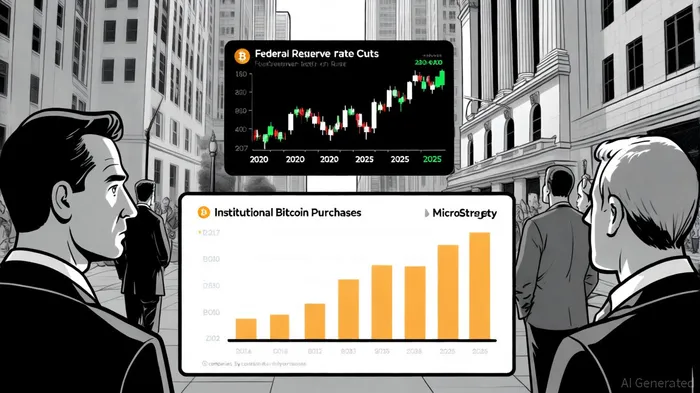
Bitcoin's ascent as a macro-driven asset has been inextricably linked to dovish monetary policy environments. From 2020 to 2025, the cryptocurrency demonstrated a robust positive correlation with Federal Reserve rate cuts, surging approximately 30% for every 1% reduction in the federal funds rate[2]. This dynamic was amplified by liquidity injections and risk-on sentiment, particularly during the Fed's 2025 dovish pivot as inflation eased to 2.7%[2]. The interplay between monetary easing and Bitcoin's price action underscores its role as a high-beta asset, sensitive to both traditional market forces and macroeconomic tailwinds.
Dovish Policy and Bitcoin's Bullish Catalysts
The 2024–2025 period marked a turning point for Bitcoin's integration into macro-informed portfolios. The approval of BitcoinBTC-- spot ETFs and corporate adoption—exemplified by MicroStrategy's aggressive Bitcoin accumulation[3]—created a structural tailwind. Simultaneously, the fourth halving event in April 2024 reduced Bitcoin's supply, reinforcing its scarcity narrative[3]. These factors, combined with the Fed's rate-cutting cycle, positioned Bitcoin as a liquidity-driven asset. For instance, during China's “double reduction” policy in May 2025—where the People's Bank of China lowered reserve requirements and interest rates—Bitcoin surged toward $100,000, reflecting global risk appetite and a shift toward alternative assets[2].
Portfolio Management in Dovish Regimes
Macro-driven strategies increasingly allocate Bitcoin to hedge against inflation and currency devaluation. In stagflationary environments, Bitcoin's non-yielding nature becomes a counterbalance to traditional assets under pressure from high inflation[3]. Institutional adoption has accelerated this trend: regulatory milestones, such as 401(k) access to Bitcoin and the normalization of crypto ETFs[3], have legitimized its inclusion in diversified portfolios. Galaxy Asset Management's April 2025 commentary highlighted Bitcoin's resilience amid trade war anxieties and shifting rate expectations, noting that ETF inflows offset macroeconomic headwinds[3].
However, Bitcoin's risk profile remains distinct. Its strong correlation with equity indices like the S&P 500 and Nasdaq-100[2] underscores its role as a risk-on asset, diverging from traditional safe-haven properties. Portfolio managers must balance its volatility with strategic hedging, particularly in geopolitical contexts. For example, Trump's 2025 tariff policies reignited trade tensions, causing Bitcoin to dip in early April 2025 as protectionist measures introduced market uncertainty[3]. Yet, this volatility also highlights Bitcoin's potential as a neutral settlement mechanism in a post-dollar world[3].
Challenges and Future Outlook
While Bitcoin's performance in dovish environments is compelling, its beta nature demands caution. The cryptocurrency's sensitivity to macroeconomic signals—such as inflation data or geopolitical shifts—requires dynamic rebalancing. For instance, the Fed's March 2025 rate-cut expectations stabilized Bitcoin prices despite inflationary risks[3], illustrating the importance of forward-looking policy analysis.
Looking ahead, the alignment of Bitcoin's “September to May” bullish cycle with dovish monetary regimes suggests a potential move toward $160,000 by late 2025[1]. However, investors must remain vigilant against regulatory shifts and geopolitical volatility. The normalization of Bitcoin in institutional portfolios, coupled with its role as a hedge against currency devaluation, positions it as a strategic asset in macro-driven allocation strategies—provided risk-adjusted returns are carefully managed.
Conclusion
Bitcoin's performance in dovish monetary environments reflects its dual identity as both a speculative asset and a macroeconomic hedge. As central banks continue to navigate inflation and growth uncertainties, Bitcoin's integration into diversified portfolios will likely deepen. Yet, its success hinges on disciplined risk management and a nuanced understanding of its correlation with traditional markets. For investors, the key lies in leveraging Bitcoin's unique properties while mitigating its inherent volatility—a challenge that defines the evolving landscape of macro-driven digital asset allocation.






Comentarios
Aún no hay comentarios