
Bitcoin's Path Out of Extreme Fear: A Contrarian Buying Opportunity?
Bitcoin's current market environment, marked by extreme fear metrics and a sharp price correction, has reignited debates about its potential as a contrarian buying opportunity. Historical precedents from the 2020 pandemic crash and the 2022 post-FTX collapse suggest that BitcoinBTC-- often rebounds after periods of severe bearish sentiment. However, the interplay of macroeconomic dynamics, technical levels, and evolving market structure in 2025 demands a nuanced analysis to assess whether this correction signals a durable bottom or a temporary setback.
Historical Precedents: Fear as a Precursor to Recovery
Bitcoin has historically demonstrated resilience during extreme fear phases. In March 2020, the pandemic-induced crash drove Bitcoin to a low of $4,000, with the Fear and Greed Index hitting 8-a level of "extreme fear." The subsequent recovery, fueled by Federal Reserve liquidity injections and a shift in risk appetite, saw Bitcoin surge to $60,000 by early 2021. Similarly, the post-FTX collapse in late 2022 pushed Bitcoin below $17,000, with the index dropping into the low teens. While the recovery was slower, Bitcoin eventually surpassed $73,000 by March 2024 and reached $100,000 in December 2024, driven by structural demand and spot ETF approvals.
In 2025, Bitcoin has again entered "extreme fear," with the index hitting 10 as the price fell below $93,000. This correction, however, differs from prior crashes. Unlike the 2020 liquidity crisis or the 2022 exchange-specific collapse, the 2025 downturn was triggered by macroeconomic pressures, including ETF outflows and a broader risk-asset selloff. A $19 billion liquidation wave in October 2025 further exacerbated the decline, though the market's resilience-evidenced by the absence of an "extreme fear" reading during the liquidation-suggests a maturing ecosystem.
Current Sentiment and Technical Indicators
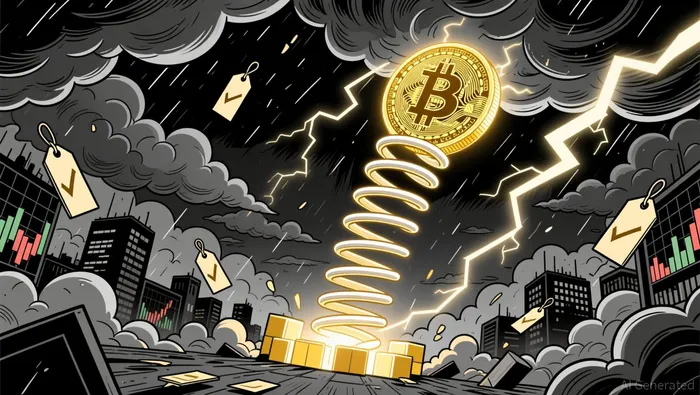
The Fear and Greed Index has recently moved out of the "extreme fear" zone, signaling early signs of stabilization. However, Bitcoin remains below critical psychological levels of $95,000–$100,000 and a year-long trendline, raising questions about the durability of the recovery. Technically, Bitcoin's price action reflects a "compressed spring" dynamic, as described by Bitwise's André Dragosch, implying a potential sharp rebound if macroeconomic conditions improve.
Meanwhile, the Altcoin Season Index at 22 underscores that capital remains concentrated in Bitcoin, with smaller altcoins underperforming-a trend often observed during bear markets. This "Bitcoin Season" dynamic could reinforce Bitcoin's dominance as the market reallocates capital toward perceived safer assets during volatility.
Macroeconomic Tailwinds and Risks
Bitcoin's pricing currently assumes a global recession is imminent, despite improving macroeconomic indicators. The CME FedWatch Tool suggests a high probability of a December 2025 rate cut, which could stabilize traditional financial markets and provide a tailwind for Bitcoin. A reduction in interest rates typically lowers the opportunity cost of holding non-yielding assets like Bitcoin, historically supporting price recovery.
However, risks persist. ETF outflows and leveraged positions remain fragile, and Bitcoin has yet to retest key support levels. As noted by analysts, durable recoveries require both psychological capitulation and liquidity stabilization-a combination seen in 2020 and 2024 but absent in 2025 so far.
Contrarian Opportunity: Weighing the Evidence
For contrarian investors, the current environment presents an asymmetric risk-reward setup. Historical patterns indicate that extreme fear metrics often precede recoveries, though these can be delayed by 30 days or more. The surge in buying activity on Indian exchanges during the November 2025 downturn further suggests that some investors view the correction as a short-term buying opportunity.
Yet, caution is warranted. Bitcoin's ability to reclaim $95,000–$100,000 will be a critical test of market sentiment. Failure to do so could prolong the bearish phase, while a successful breakout might signal the start of a broader bull cycle.
Conclusion
Bitcoin's path out of extreme fear hinges on macroeconomic stabilization, technical retesting, and renewed risk appetite. While historical precedents and current sentiment suggest a potential rebound, investors must remain vigilant about structural risks. For those with a long-term horizon, the current correction-coupled with Bitcoin's "compressed spring" dynamics-could represent a compelling entry point, provided macroeconomic conditions align with a recovery trajectory.






Comentarios
Aún no hay comentarios