
Bitcoin News Today: Malaysia's $1B Power Theft Crisis: Hidden Crypto Rigs Threaten Grid Stability
Malaysia's national utility, Tenaga Nasional Berhad (TNB), has confirmed losses exceeding $1.1 billion in electricity revenue from illegal cryptocurrency mining operations between 2020 and August 2025. The energy ministry disclosed in a parliamentary reply that 13,827 premises were identified as siphoning power to mine BitcoinBTC-- and other cryptocurrencies, with the theft posing a significant threat to grid stability and economic security. The scale of the theft, amounting to 4.57 billion ringgit ($1.1 billion), has prompted a multi-agency crackdown and technological upgrades to combat the surge in power fraud.
The illegal mining operations often involve bypassing electricity meters or tapping directly into the grid, methods classified as criminal offenses under Malaysia's Electricity Supply Act. Authorities report that these setups are frequently hidden in low-traffic locations such as warehouses, homes, or shops, with operators using industrial cooling systems and soundproofing to avoid detection according to reports. 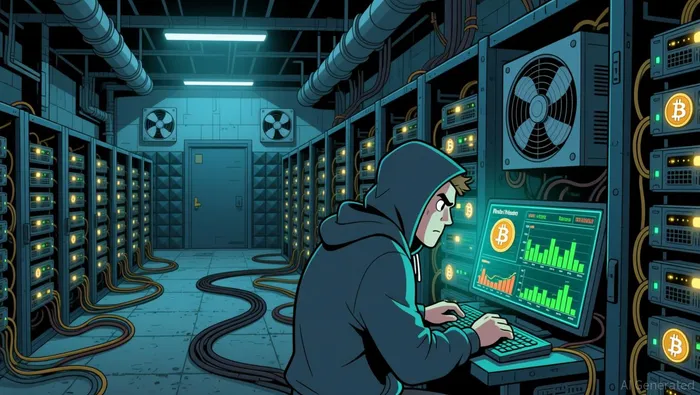 The problem has grown rapidly: power theft cases linked to crypto mining surged 300% between 2018 and 2024, with an average of 2,303 annual cases recorded from 2020 to 2024.
To address the crisis, TNB has deployed smart meters and launched a "Distribution Transformer Meter" pilot program to monitor energy usage in real time and detect anomalies. The utility has also created an internal database tracking property owners and tenants suspected of involvement in electricity theft, serving as a reference for targeted inspections. Collaborative raids by TNB, police, and anti-corruption agencies have resulted in the seizure of thousands of mining rigs, including a 2024 operation that destroyed 900 Bitcoin machines worth $482,160.
The economic and infrastructural risks of unchecked theft have galvanized policy responses. The energy ministry emphasized that the losses strain TNB's annual revenue and could drive up electricity costs for legitimate users. While crypto mining itself remains unregulated in Malaysia, the government has hinted at potential reforms including licensing frameworks and sustainable energy pricing models, to formalize the industry and curb illicit activity.
Globally, Malaysia's predicament mirrors challenges in countries with subsidized electricity, such as Iran, Russia, and Paraguay, where illegal mining operations exploit weak oversight. Analysts note that without stricter enforcement, and regulatory clarity, the profitability of Bitcoin mining will continue to incentivize theft, particularly as energy costs remain low in regions like Southeast Asia.






Comentarios
Aún no hay comentarios