
Bitcoin News Today: Global Crypto Landscape Shaped by Divergent Regulations and Political Shifts
Five years ago, global financial institutions and policymakers began formalizing their stance on cryptocurrency, with the IMF proposing a new regulatory framework and the U.S. president addressing the industry, albeit with skepticism. As the crypto space evolved, it became increasingly entangled with global politics, leading to a divergence in regulatory approaches between different nations [1].
In the U.S., the political landscape around crypto has undergone a significant transformation. The country, once resistant to crypto innovation, has shifted toward a more favorable stance in recent years. This includes the passage of bipartisan stablecoin legislation and the approval of the first spot Bitcoin ETFs in January 2024. The turning point came in August 2023 when a federal judge ruled the SEC’s rejection of Grayscale’s ETF application as arbitrary, triggering a regulatory thaw [1].
This shift was driven, in part, by the growing adoption of crypto by retail investors and the rise of dollar-backed stablecoins, which have reinforced the dollar’s global dominance. What was once a niche topic in financial circles has now become a central issue in American politics, with a president running on a pro-crypto platform, launching a memecoin, and planning a utility token for his social media platform [1].
Despite this progress, the U.S. crypto landscape remains politically volatile. The rise of populist movements has aligned retail and tech capital with pro-crypto policies, but the anti-capitalist left continues to view the “crypto bro” archetype with disdain. Additionally, regulatory uncertainty persists, especially under a potential Trump administration, which could see a more lenient SEC approach and a surge in scams. Prominent critics, such as Senator Elizabeth Warren, have already hinted at a potential crackdown should institutionalist forces regain control [1].
Meanwhile, the dollar dilemma remains a key concern. Proponents of a pro-crypto Trump administration suggest that aggressive fiscal policies, a national Bitcoin reserve, and investment accounts for newborns could drive Bitcoin’s price to unprecedented levels. Others fear a scenario where U.S. debt spirals out of control, leading to a global shift toward alternative currencies. In this context, the U.S. and China are seen as entering a "Bitcoin Cold War," with both nations accumulating significant BTC reserves and positioning themselves for a post-Bretton Woods financial order [1].
On the other side of the globe, traditional financial powers are tightening their grip on crypto. The UK, EU, Japan, and South Korea have all implemented stricter regulations, including high compliance burdens and consumer protections. These nations, particularly Japan and South Korea, remain bearish on crypto’s long-term potential, with South Korea’s central bank opposing stablecoin legalization over capital control concerns [1].
China, once a major hub for crypto activity, has retreated from the space after a sweeping ban. It now focuses on its state-backed digital yuan, which has grown to nearly $1 trillion in value by 2024. However, despite these efforts, the digital yuan and BRICS Pay remain unable to challenge the dominance of the U.S. dollar and stablecoins. Political fragmentation and technical limitations continue to hinder these initiatives from achieving global currency status [1].
Russia, India, and Brazil represent a new wave of outsider nations that are cautiously integrating crypto into their financial systems. Russia has rolled out a digital ruble and permitted crypto mining for cross-border trade, while India and Brazil have imposed heavy taxes on crypto but allowed limited adoption. South Africa and Vietnam are also taking steps toward a regulated crypto environment, suggesting that nations with less geopolitical leverage are more open to innovation [1].
While earlier crypto-friendly nations like Singapore, Switzerland, and Malta are becoming increasingly regulatory focused, a new class of sovereign innovators has emerged. El Salvador, under President Nayib Bukele, has taken the boldest step by adopting Bitcoin as legal tender and building a geothermal-powered Bitcoin mining industry. Other countries, including Bhutan, Pakistan, and Argentina, are following suit with their own sovereign crypto strategies [1].
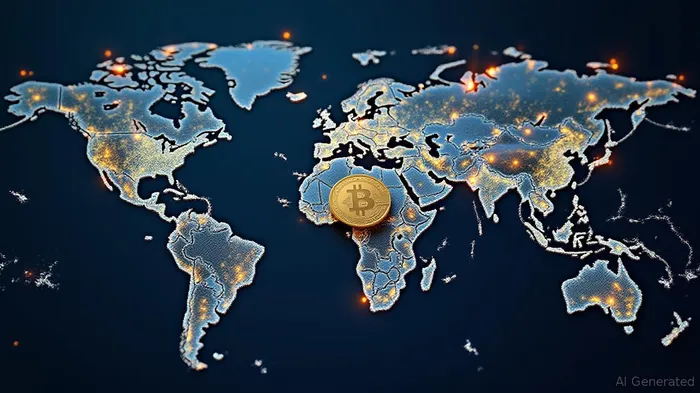
The global crypto landscape is now defined by a complex interplay between regulatory conservatism, political populism, and sovereign innovation. As the next five years unfold, the key players will be those nations that can adapt quickly to shifting policy environments and use crypto not just as a financial tool, but as a strategic asset in an increasingly multipolar world [1].
Source:
[1] "Insiders, Outsiders and Experimenters, Revisited" (https://cointelegraph.com/news/insiders-outsiders-experimenters-revisited)







Comentarios
Aún no hay comentarios