
Bitcoin News Today: Fed Delays and $1.2B ETF Exodus Fuel Bitcoin's 26% Plunge
Bitcoin logs its longest losing streak since 2024 as the Federal Reserve's shifting policy outlook fuels cautious optimism about a potential rebound. The cryptocurrency, which has lost 26% of its value since the end of October, is now trading near $83,000, according to CoinDesk. The decline has outpaced broader market turbulence, with the S&P 500 down 4.3% in November through Thursday, according to the same report, as investors grapple with the implications of delayed U.S. jobs data and a softening appetite for risk assets.
The Fed's delayed rate-cut timeline has been a key driver of the sell-off. After missing its October jobs target, the central bank signaled a more cautious approach to easing, with Vanguard's Sara Devereux warning that only one or two cuts may materialize in 2026. This hawkish pivot, combined with a $1.2 billion net outflow from U.S. spot bitcoin ETFs over four consecutive weeks, has deepened concerns about liquidity fragility. BlackRock's IBIT, the largest ETF, saw $1.09 billion in outflows last week, its second-largest on record.
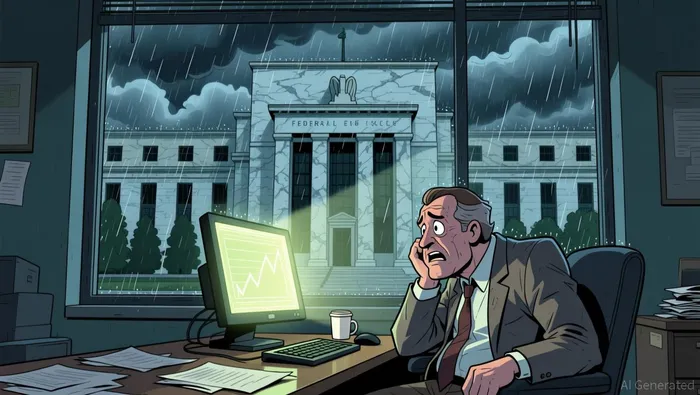
The cryptoBTC-- market's downturn has also sparked fresh fears of a crash reminiscent of 2018, with Bloomberg's Mike McGlone noting structural parallels and projecting a potential drop to $10,000. Meanwhile, bullish forecasts from figures like Cathie Wood—recently revised from $1.5 million to $1.2 million for 2030—have drawn criticism, including a veiled jab from CNBC's Jim Cramer. Despite the bearish momentum, New York Fed President John Williams has reignited hopes of a December rate cut, pushing bitcoinBTC-- back above $84,000 after a brief dip below $81,000.
The sell-off has rippled across the financial ecosystem. JPMorgan faces a boycott from Bitcoin advocates after suggesting that crypto treasury firms like MicroStrategy could be excluded from major indexes if their crypto holdings exceed 50% of assets. This has intensified scrutiny of index inclusion policies, with Michael Saylor arguing that Strategy's model as a "Bitcoin-backed structured finance company" defies traditional fund classifications.
In the broader market, the S&P 500's November performance has highlighted a shift toward defensive sectors, with the information-technology and consumer-discretionary sectors among the hardest hit. Amazon and Tesla, which account for 42% of the XLYXLY-- ETF, have dragged down the consumer discretionary index, underscoring the interconnectedness of tech and crypto markets.
Looking ahead, investors will closely watch inflation data and manufacturing indicators, with Germany's November CPI and the U.S. Chicago PMI set for release in early December. These metrics could further shape the Fed's path and, by extension, the trajectory of bitcoin's recovery.





Comentarios
Aún no hay comentarios